


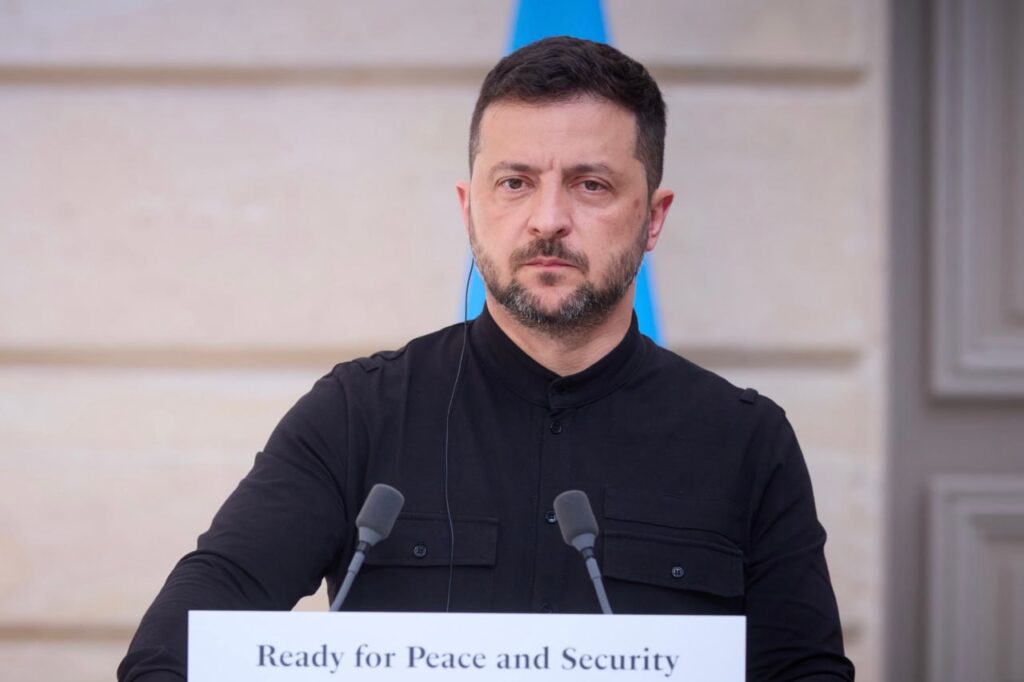
After constant urging by businesses, President Volodymyr Zelenskyy told the UN that Ukraine would reopen weapon exports, banned after Russia’s full-scale invasion.
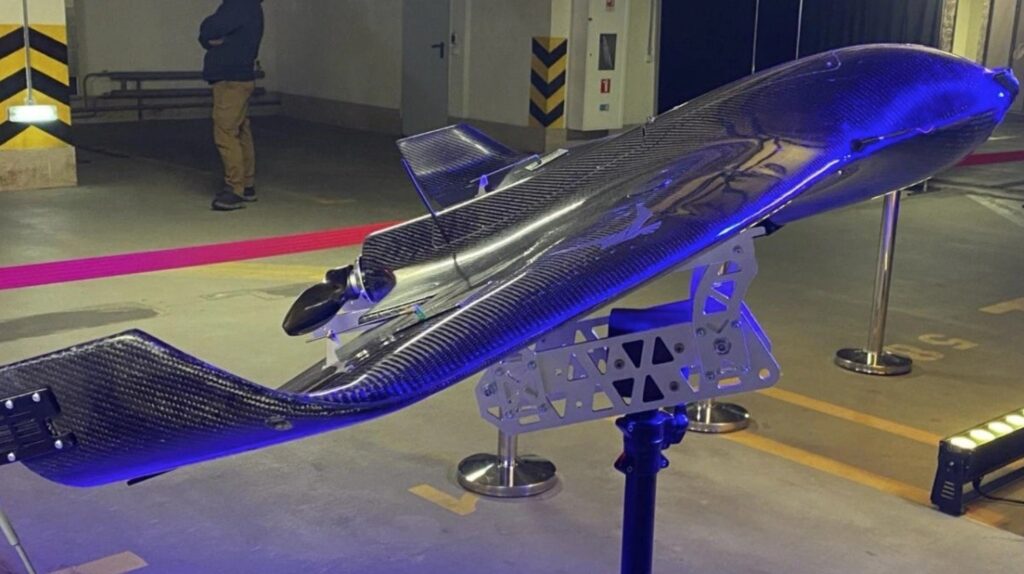
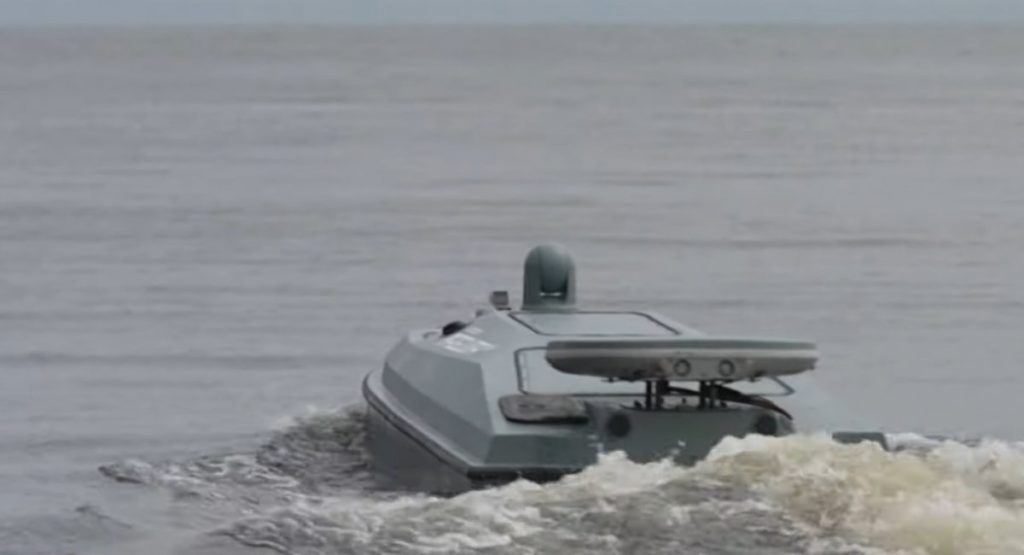
Ukrainian arms makers have $2 billion in unused export potential, according to industry group Technological Forces of Ukraine (TFU) — money that could fund more weapons, pay soldiers, and keep factories running at capacity the government can't currently afford.
The problem is that, for now, there is no working system to make this happen. The bureaucratic machinery that exists is plagued by bribery risks, overlapping authorities, and Soviet-era procedures that could strangle the initiative.
“Opening up exports… could become another way for various officials to make money through corruption” if the framework isn’t sound, a source in the Ministry of Defense told Euromaidan Press. They requested not to be identified by name for security.
What Ukraine stands to gain—or lose
The government is strapped for cash and can’t pay Ukrainian arms makers to produce at full capacity. The idea is that exports can generate revenue, letting Ukraine produce more weapons to fight Russia, and pay for other critical needs.
But weapons exports require something Ukraine lacks — a predictable, transparent system that foreign buyers can trust and Ukrainian manufacturers need to export their weapons.
Without it, potential customers will look elsewhere, and Ukraine's defense industry will remain stuck producing below capacity while the war drains the treasury.
“Producers need a clear understanding of the requirements for obtaining a license, as well as the circumstances under which applications may be denied,” Kateryna Mykhalko, director of TFU told Euromaidan Press.
“Effective regulation and a transparent competitive policy are exactly what international partners will be closely monitoring.”
A system designed for dysfunction
Right now, it’s not clear when the government will be ready with a plan. What is clearer, from interviews, are the ways in which the government can potentially screw it up.
- Putting monopoly power into the hands of a few “special exporters” or a single government agency.
- Not clearly dividing responsibilities between the different government stakeholders.
- Failing to establish transparent criteria for how exportable goods and foreign buyers are selected.
- Failing to walk the line between the needs of military secrecy and the need of companies to showcase what their technologies can do.
- Failing to implement mechanisms for timely exports that don’t require months of deliberation for every piece of tech.
- Copying old Soviet bureaucratic models instead of using export practices from NATO and the EU.
- Forgetting to institute transparent export tracking, industry feedback, and review by independent organizations, including trustworthy civil society organizations.
Overlapping obstacles to export
The main body that decides what’s exportable is the Service for Export Control, daughter of the Ministry of Economy.
Before reaching a verdict, the service compiles lists of items up for export. It then sends these lists to the Ministry of Defense, the Security Service of Ukraine (SBU), the intelligence services, and others.
This procedure doesn’t strictly define which agencies must be consulted, or set response deadlines. This creates a very unpredictable playing field for would-be exporters, the MOD source said. Any of these bodies can stop export in its tracks — often for legitimate reasons, but sometimes for reasons that are less clear-cut.

“For example, they can send the list to the MOD and ask: do we have enough of the following things for this year?” the source said. “Let’s say we need two thousand missiles, but only have enough money for one thousand. We already bought that thousand. There are no funds for anything else.”
“However, the Ministry of Defense can say that our demand isn’t met,” and that can lead to those missiles being prohibited from export.
“The SBU can write that it’s against the export of something because there is a suspicion” against one of the entities involved. “Then, once these suspicions are resolved, the service gives its permission, even when the situation hasn’t changed at all.”
High stakes, weak oversight
The Export Control Service has other problems. Despite partnering with the US to digitize before the war, much of the work is still done on paper, reducing efficiency.
“They regularly had complaints against them," said Olena Tregub, executive director of the Independent Anti-Corruption Commission, a Ukrainian NGO.
Tregub used to work at the Ministry of Economy and is familiar with the export service. “Different stakeholders were complaining about the quality of the work.”
Most important is the lack of sufficient oversight. The service faces pressure from multiple parties to either approve certain exports or block competitors.
Commission members can be offered bribes or extort bribes from Ukrainian companies, as they are an important link in the decision chain, Tregub said.
“The service is highly bureaucratic, with high corruption risks,” the MOD source agreed.
“If you make an agreement with the service — you know what I’m talking about — then [export] permission is granted. If not, they can take [your goods] off the list.”
The commission that meets once every five months
Ukraine also has the Interdepartmental Commission on Military-Technical Cooperation Policy abbreviated as MKVTS, an advisory body whose decisions carry real weight.
It includes representatives from the ministries of defense and economy, the SBU, the General Intelligence Directorate, the foreign intelligence service, the export control service, the customs service, the National Security and Defense Council, and the Office of the President.
“The idea of this commission is actually rather good because any model where there are multiple agencies involved, it reduces corruption risk,” Tregub said.
“But at the same time it makes it not very operable because it includes so many stakeholders that they only make decisions on important matters.”
Getting everyone to agree, when some people don’t fully understand strategic nuance and may kibosh exports for reasons they don’t fully understand creates another barrier to companies trying to close deals on a timeline foreign buyers expect.
“The commission may not meet for five months and until it gathers and decides, the permission isn’t granted,” the MOD source said.
Fear of special monopoly exporters
What businesses dread most are so-called “special exporters” — government-sanctioned middlemen through whom exports must flow.
Before the full-scale invasion, half a dozen state companies had a monopoly on military-related exports. While they weren’t for-profit entities, private companies had to go through them and pay them a commission.
These entities still exist, but now mainly handle imports of critical weapons.
Trending Now
Industry fears that any special exporter could disrupt business and create new corruption opportunities.
“We caution against the risks of establishing a single special exporter with a monopoly position,” Mykhalko said. “Such a model could create artificial barriers between businesses and the market, increasing the risk of corruption.”
“A single state arms exporter could create new problems if proper control and transparency are not ensured. The monopolization of this market destroys competition and, therefore, incentives for improving efficiency,” Serhiy Honcharov, the executive director at industry group NAUDI wrote for Mezha Media.
“The lack of public reporting on contracts, prices, and end users raises suspicions of corruption and can lead to political scandals or sanctions from partners. In addition, excessive dependence on a state intermediary limits the possibilities for international cooperation between private companies.”
What experts say must not happen
According to sources interviewed by Euromaidan Press, whatever system the government creates, it would do best to avoid the following mistakes.
A monopoly of special exporters
One or several sanctioned middlemen could create opportunities for patronage, kickbacks, and other forms of corruption.
Middlemen could also raise the risk of non-transparent pricing and gatekeeping of export opportunities that may not be well-received by foreign counterparties.
Overcentralization of decisionmaking
A similar issue may arise if the power over exports is placed in the hands of a single ministry or agency.
“If everything is routed through a single authority – delays, bureaucracy, and monopolisation will kill the process before it starts,” the MOD source said.
Failure to clearly divide responsibilities
It is very likely that multiple ministries and agencies will need to be involved in the process of deciding what’s up for export and how these deals will be executed. But if each body’s role isn’t clearly defined, they may get in each other’s way, paralyzing the system.
“Various government bodies have overlapping functions—the Ministry of Defense, the Ministry of Economy, the Security Service, the Foreign Intelligence Service, as well as interdepartmental commissions with obscure functions and powers,” Honcharov wrote.
“This creates an administrative burden, increases the risk of subjective decisions, and opens the door to abuse.”
Failure to make transparent criteria for choosing clients, partners and pricing
Without objective criteria that anyone can see and review, decisions can be made based on personal ties, informal influence, or simple poor judgment.
“The lack of effective end-use controls on weapons, opaque financial transactions—whether in cash or offshore—and the absence of a real whistleblower protection mechanism can create the conditions for abuse and undermine trust in the system among international partners,” Ihor Fedirko, director of the Ukrainian Council of Weaposmiths, wrote for Mezha.
Keeping military secrecy rules too rigid
This could prevent companies from showing their technologies to foreign buyers. Excessively strict secrecy rules can make export impossible – companies won’t even be able to demonstrate products or disclose specifications.
Also, no fast-track mechanism for contracts under wartime conditions could hurt. If every deal needs months of approvals, the whole initiative may die.
Copying old bureaucratic models
…Instead of using NATO or EU export practices. Trying to “modernize” while keeping Soviet-style procedures could lead to failure.
The same goes for ignoring compliance and end-user control mechanisms. If Ukraine doesn’t ensure export tracking and end-use monitoring, partners can lose trust — and if they do, sanctions may follow.
Feedback loop and overall transparency
No industry feedback loop. If the legal framework is created without direct input from private companies, it will be detached from reality, the MOD source said.
“Producers need a clear understanding of the requirements for obtaining a license, as well as the circumstances under which applications may be denied. Effective regulation and a transparent competitive policy are exactly what international partners will be closely monitoring,” Mykhalko said in a statement.
Government moving slowly on designing the new system
Despite Zelenskyy’s promise that exports could begin in November, the government has so far done very little that’s publicly visible, besides a presidential order that made minor wording changes to the regulations governing the interdepartmental commission. The MOD source called these changes “cosmetic.”
According to Euromaidan Press’s sources, the government’s current working model is based on a proposal by Anna Gvozdyar, the Minister of Strategic Industries, but the specifics haven’t been made public.
Industry groups are likely weighing in, but have unequal access to the government, as a function of their size and level of influence, Tregub said.
Civil society engagement has been limited—partly because groups have been consumed by other work, including the recent Mindichgate scandal, multiple sources confirmed.
Tregub said it would greatly benefit any export framework to have input from civil society groups and it should be transparent enough for them to review once implemented.
“Equally important is ensuring a level playing field for all industry players, meaning manufacturers must have equal access to export opportunities,| Mykhalko said. Comprehensive monitoring, anti-corruption safeguards, and intellectual property protection must also be in place.”


