Much has already been written about President Trump's new National Security Strategy, so this article will focus on what it means for Ukraine and Europe. Whatever strengths this document has (and they are hard to come by), its assessments of Europe, Russia, and Ukraine are deficient or absent.
The conclusion is inescapable: Europe and Ukraine are now on their own.
Washington has made clear—in writing—that it will pursue a deal with Moscow at Ukraine's expense, blame European democracies for resisting, and begin withdrawing forces from the continent.
If Europe and Ukraine want to thwart Russia's imperial ambitions, they will have to do it themselves, and quickly.
When your national security strategy earns applause from the Kremlin, something has gone badly wrong.
To begin with, the document, like so much of this administration's work, is written in a sycophantic and fact-free tone. Trump has not ended eight wars, nor has international order improved since he took power.
Arguably, things have gotten worse—Hamas has made clear that it dismisses Trump's peace plan and will not surrender, making a resumption of hostilities more likely.
Moscow, however, is pleased. Kremlin spokesperson Dmitry Peskov praised the document, saying it "corresponds in many ways to our vision." He specifically welcomed language about "ending the perception, and preventing the reality, of NATO as a perpetually expanding alliance"—a long-standing Russian demand.
When your national security strategy earns applause from the Kremlin, something has gone badly wrong.
A genuflection to Europe's illiberal forces
Regarding Europe, the sycophantic tone continues as the document embraces the worldview of the European right: that Europe faces "civilizational erasure" unless it rejects migration, dismantles its democratic protections, and repudiates European integration.
Former French ambassador to the United States Gérard Araud called it "a far-right pamphlet" that "largely confirms" perceptions of Trump as "an enemy of Europe."
Although Europe assuredly confronts a serious migration issue, this strategy offers nothing but a genuflection to the illiberal and anti-democratic forces in Europe. It reflects a reactionary, regressive worldview that rejects Europe's great accomplishments since 1945 while threatening to abandon the continent to its own devices.
The document warns that "should present trends continue, the continent will be unrecognizable in 20 years or less." It raises the specter that "within a few decades at the latest, certain NATO members will become majority non-European"—and treats this as a security threat, questioning whether such countries would "view their alliance with the United States in the same way."
CNN noted this language borrows from the racist "great replacement" theory.
The NSS also openly advocates intervention in European domestic politics, committing to "cultivating resistance to Europe's current trajectory within European nations." It implicitly advocates the breakup of the EU—another triumph of US policy dating back to the 1950s that this administration seems eager to discard.
Trump's NSS reflects a reactionary, regressive worldview that rejects Europe's great accomplishments since 1945
Where do these ideas come from? They reflect a worldview Trump has held for decades.
In 1973, the Justice Department sued Donald Trump, his father Fred, and Trump Management for systematically refusing to rent apartments to Black applicants. A building superintendent told federal investigators: "I'm only doing what my boss told me to do—I am not allowed to rent to black tenants."
The case settled in 1975 with what the Justice Department called "one of the most far-reaching" consent decrees ever negotiated.
Silence on Russia—except for "strategic stability"
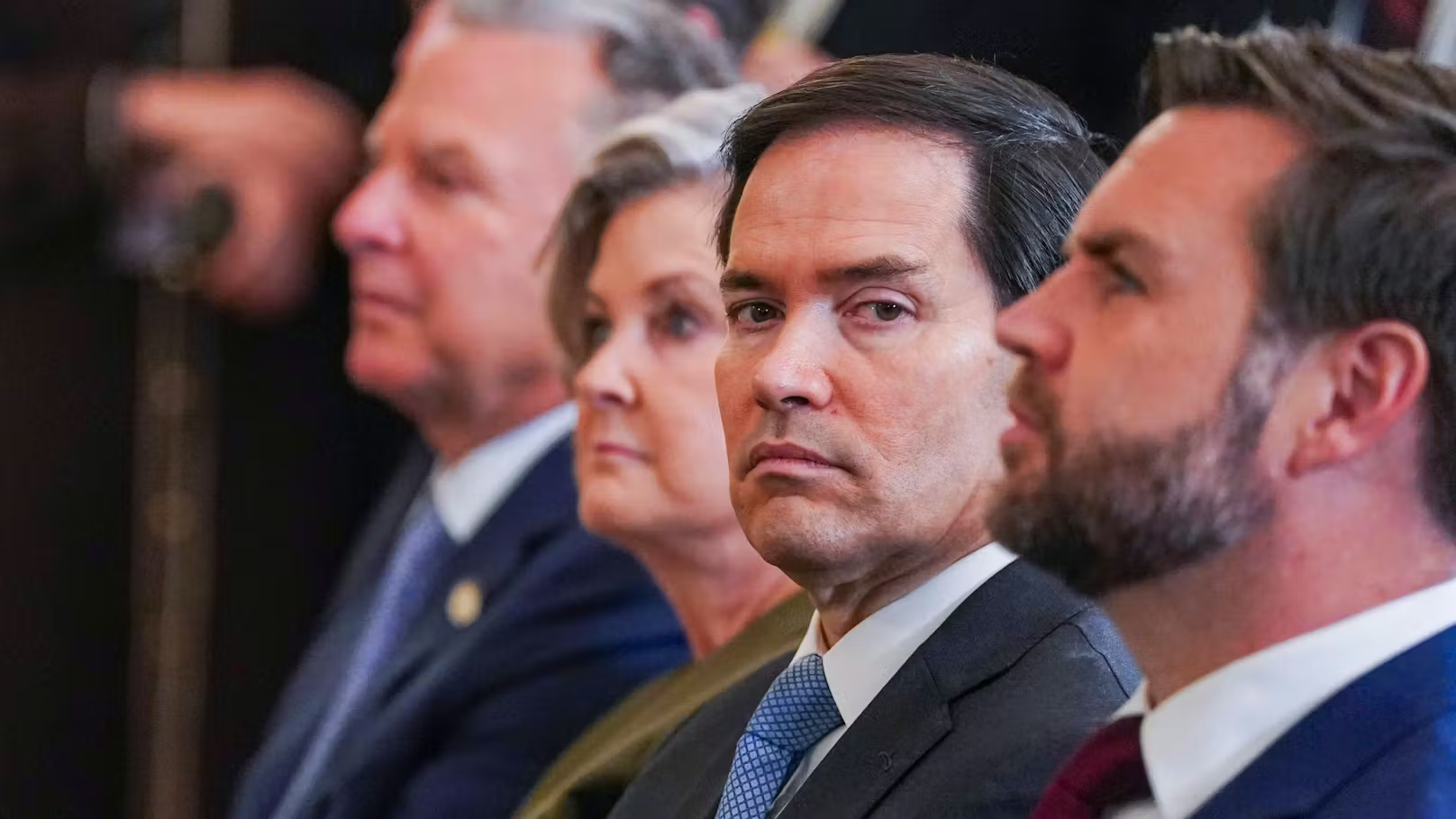
The strategy offers no suggestions as to how Europe might cope with its challenges or, for that matter, with the war in Ukraine. Indeed, it is virtually silent on both. All it says about Russia is that Washington wants "strategic stability"—a phrase that means nothing when one side is actively waging war against a European neighbor.
The document wholly ignores Russia's growing dependence on China and its alignments with Iran and North Korea, not to mention Moscow's role in supporting nuclear proliferation to those states. It says nothing about Russia already waging non-kinetic war against Europe and the United States while preparing for potential combat operations within the next decade.
The NSS's only substantive mention of Ukraine is a single sentence stating it is "a core interest of the United States to negotiate an expeditious cessation of hostilities in Ukraine, in order to stabilize European economies, prevent unintended escalation or expansion of the war, and reestablish strategic stability with Russia."
Note what's missing: any mention of Ukrainian sovereignty, territorial integrity, or victory.
The document even describes the war as having "the perverse effect of increasing Europe's, especially Germany's, external dependencies"—framing Russian aggression as a problem Europe brought on itself.

The real goal: a deal at Ukraine's expense
The strategy's silence on defeating Russia is not an oversight. As the Wall Street Journal reported, Trump and his "kitchen cabinet" want to make a deal with Moscow at Ukraine's expense so that they can gain access to Russian raw materials, rare earths, and other resources—make lots of money—and reinstate Moscow as a member in good standing in the G-8.
This supposedly will foster strategic stability and break up the Russia-China tandem.
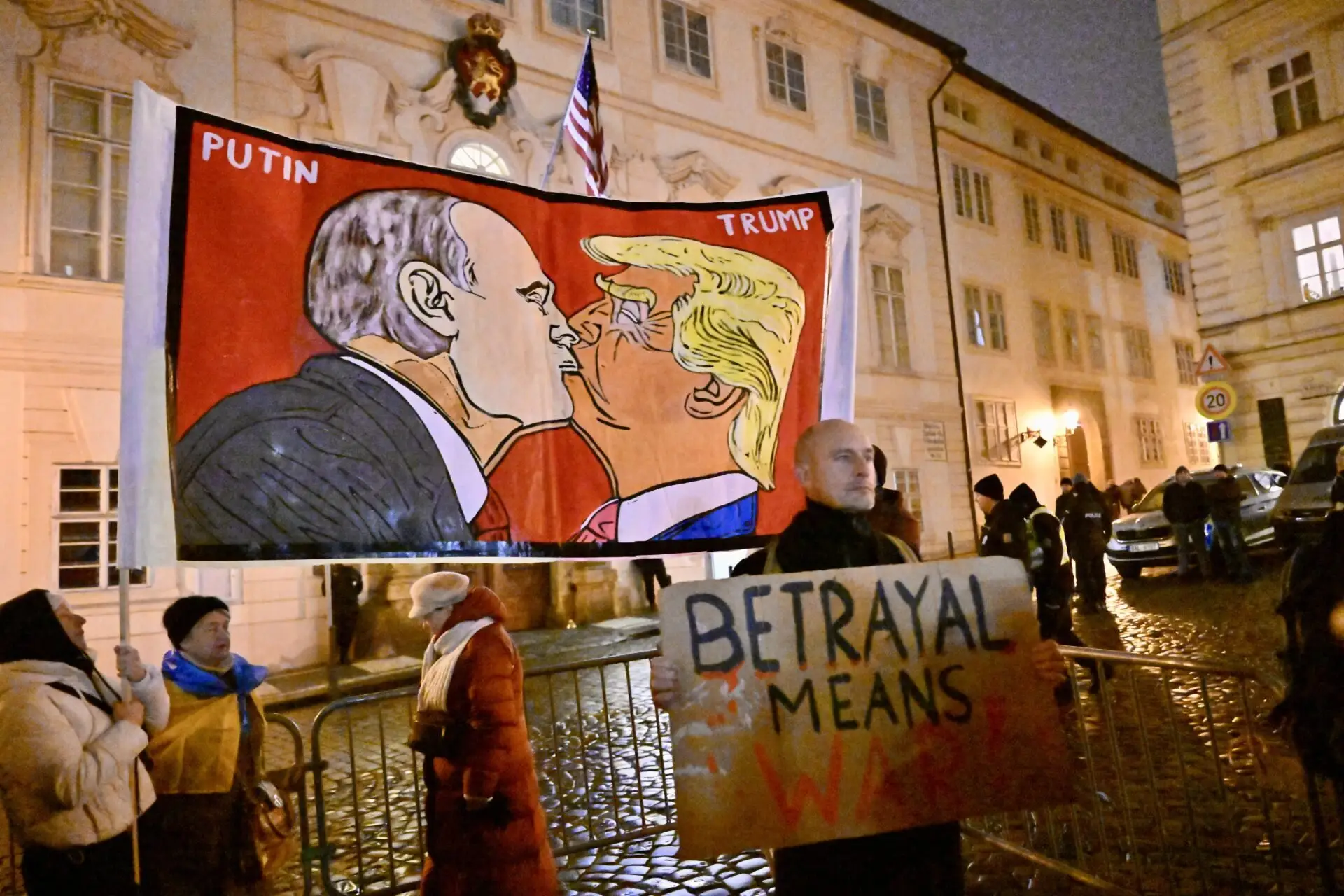
Realization of this fantasy is already on the table. European leaders have warned President Zelenskyy that Washington might betray Ukraine, sign a deal with Russia, and leave Ukraine bereft of the security guarantees it needs—not to mention NATO membership, which any deal with Russia will forbid.
Zelenskyy has pivoted to Europe, opening a new diplomatic week with consultations focused on "security issues, support for our resilience, and support packages for our defense."
At the same time, Washington has notified its NATO allies that in 2027 it will begin to reduce its forces across Europe, forcing Europe to increase its defense burden. The administration has apparently not bothered to consult with its allies about the pace of these force reductions and how Europe will take up the ensuing slack.
A display of ignorance and incompetence
With regard to Ukraine, it is clear that Trump and his team neither understand the issues nor want to do so.
The administration has drafted plans in secret meetings with Russian envoys while largely excluding Ukraine from the process.
After European leaders reframed the Russian draft basis for negotiations over Ukraine (without Kyiv's participation) of 28 points into 19 points, Trump's negotiators—who clearly remain clueless about Russia—revised the document to comprise 27 points that were again unfavorable to Ukraine, offered them to Putin, and still got nowhere.
In the history of international relations, it is difficult to find cases rivaling this display of ignorance and incompetence.
Europe and Ukraine must save themselves
Thus Ukraine and Europe are already being left alone by their feckless nominal ally, the United States. It is, however, possible for them—if they seize the moment and act promptly and quickly—to unify their forces and thwart Russia's ongoing effort to regain its empire.
If Europe and Ukraine want to thwart Russia's imperial ambitions, they will have to do it themselves, and quickly.
Hitherto, to paraphrase Nelson at Trafalgar, Ukraine has saved itself by its exertions. But now Europe must join with Kyiv to save itself not only by its exertions but by its example.
As this document shows, Washington is chasing a dream of a world that regresses and recedes ever faster from it the harder it tries to grasp this fantasy. The Kremlin's enthusiastic reception tells you whose interests it serves.
For now, the United States will remain an ignorant administration chasing the mirage of reactionary and deluded unilateralism—leaving Europe and Ukraine to chart their own course, together.

Editor's note. The opinions expressed in our Opinion section belong to their authors. Euromaidan Press' editorial team may or may not share them.
Submit an opinion to Euromaidan Press