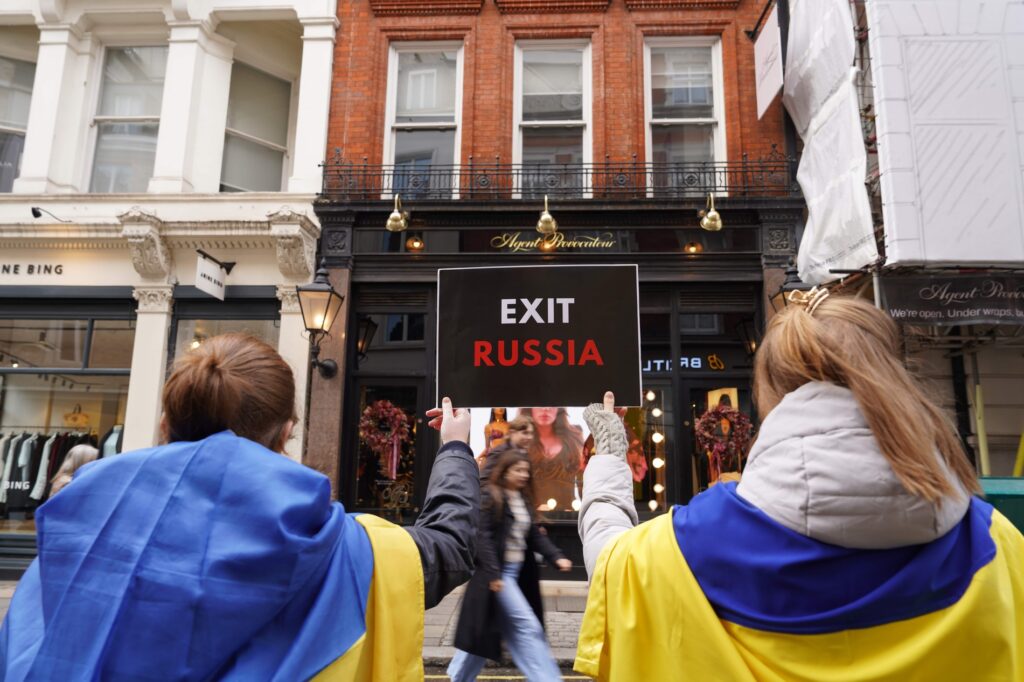


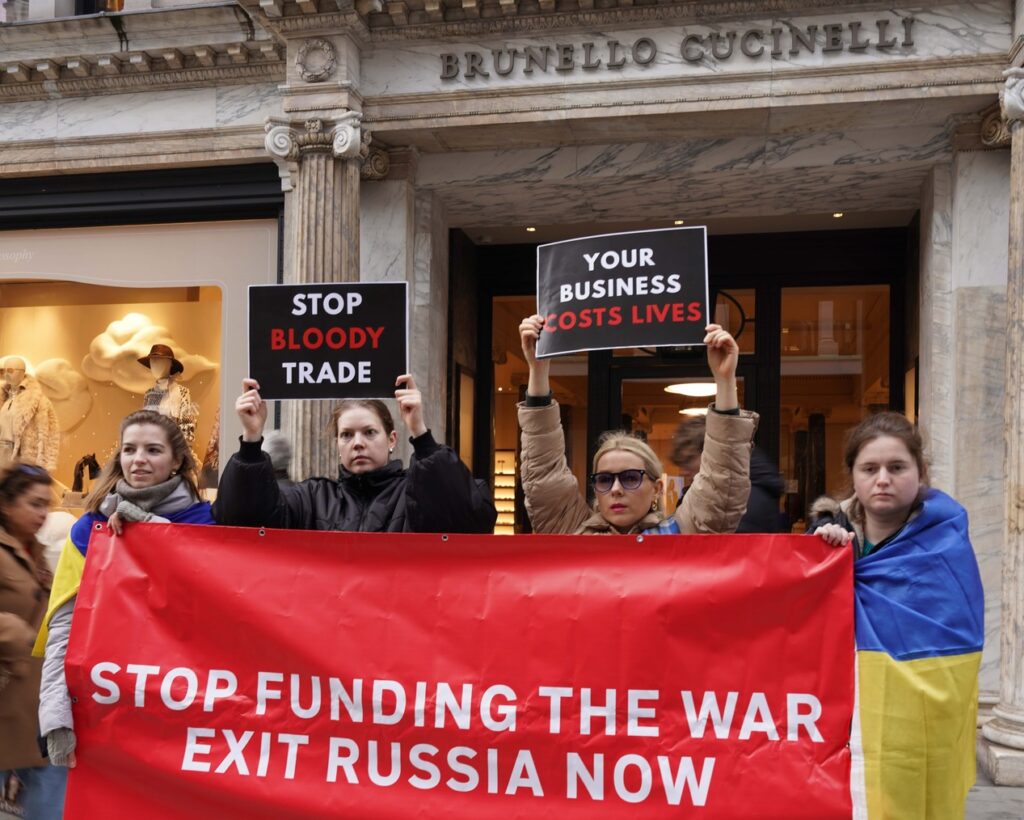
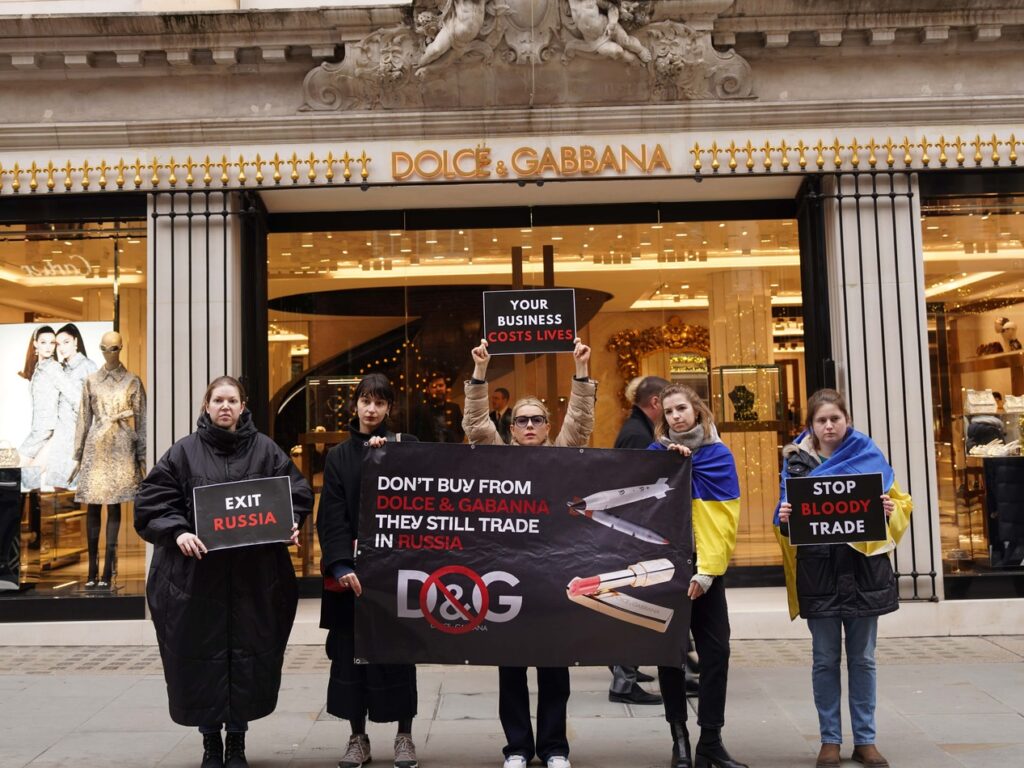
Ukrainian activists gathered outside the London storefronts of Brunello Cucinelli, Agent Provocateur, and Dolce & Gabbana on Saturday, demanding the luxury brands exit Russia, where their operations help finance Moscow's war machine.
The protest by Campaign for Ukraine highlights a broader problem: international companies have paid roughly $60 billion in profit taxes to the Kremlin over the past three years - nearly half of Russia's projected 2025 military budget, according to the B4Ukraine coalition.

Cucinelli faces regulatory scrutiny as luxury brands keep Russian stores open
Agent Provocateur, a British lingerie retailer, maintains 12 franchise stores in Russia. Franchisees pay royalties to use the brand while their operations generate taxes for the Russian state.
Dolce & Gabbana has not only stayed in Russia but substantially increased direct exports to the market, with no withdrawal plans, according to the Kyiv School of Economics.
Brunello Cucinelli faces the most serious scrutiny. Italy's financial regulator is examining whether the Italian cashmere brand misled investors about its Russian operations after investment research firm Morpheus Research accused it of "blatantly disregarding EU law by continuing to sell ultra high-value luxury goods in Russia." The allegations wiped more than €1 billion off the company's market value, the Financial Times reported.
Enough taxes to recruit a million soldiers
Russia currently offers $18,400 signing bonuses to military recruits. At that rate, B4Ukraine calculated, the taxes foreign companies paid in 2024 alone could have financed over one million new soldiers for Russia’s army.
"Companies that continue paying taxes in Russia are unquestionably helping the Kremlin finance its war," said Olena Ivashchenko, a Campaign for Ukraine activist. "It's the same war chest funding missiles that destroy Ukrainian cities."
Activists turn to consumer pressure as companies stay put
Beyond direct funding, continued brand presence sends a message, Ivashchenko argued: "It signals to Russian consumers, investors, and the global community that major companies remain indifferent to the country's aggression and fully militarized economy."
Russia's full-scale invasion, now approaching its fourth year, has killed tens of thousands of Ukrainian civilians and resulted in more than 200,000 documented Russian war crimes. Despite this, hundreds of Western companies remain in the Russian market - prompting activists to shift pressure from governments to consumers.