Drones have recently been spotted violating European airspace, testing the defense of airports, military facilities, and critical infrastructure. European leaders may not yet fully admit it, but they are already in the active phase of a hybrid war with Russia.
The purpose of these surveillance flights is clear: to identify vulnerabilities in Europe's energy and logistics systems, the arteries that sustain both its economy, and whose current usage supplies a portion of the Kremlin's revenues from fossil fuel exports.
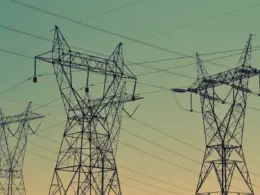
Even a partial Russian disruption of Europe's ports, LNG terminals, or pipelines during winter would create chaos in energy markets and also test the political resilience of the European Union. The continent's energy infrastructure is no longer just an economic asset; it has become a frontline target in a broader campaign to destabilize Europe.
On Monday, 20 October, EU Energy Ministers will meet in Luxembourg to vote on the REPowerEU Regulation—the legal framework that would ban new Russian gas contracts from 1 January 2026 and all Russian gas imports by 1 January 2028.
But the current draft contains a dangerous "security of supply" loophole that would allow countries like Hungary and Slovakia to suspend the ban indefinitely by claiming energy security threats—even though they have proven alternatives available.
REPowerEU's dangerous loopholes must be closed
That is why the EU's REPowerEU regulation, launched in 2022 to end dependence on Russian fossil fuels, now needs urgent strengthening.
What is REPowerEU?
- The EU's plan launched in May 2022 to end dependence on Russian fossil fuels after Russia's full-scale invasion of Ukraine
- Aims to phase out all Russian gas, oil, and coal imports by 2027-2028
- Includes diversifying energy sources, accelerating renewables, and improving energy efficiency
- Has reduced Russian gas imports from 45% (2021) to 13% (2025), but billions still flow to Moscow
Russia's full-scale invasion of Ukraine is in its fourth year, yet billions of euros still flow from European energy payments into the Kremlin's war chest. While Russia's share of EU gas imports has reduced from 45% in 2021 to about 13% in Q2 this year, loopholes remain wide enough to undermine the strategy's intent.
Since the start of the full-scale invasion, the EU has paid roughly €214 billion into Moscow's budget through fossil fuel imports, including €105 billion from gas. Taxes extracted from these ongoing sales are converted into drones and missiles that fall daily on Ukrainian homes and infrastructure.
The hypocrisy is stark: in 2024 alone, the EU spent €21.9 billion on Russian fossil fuels—€3.2 billion more than the €18.7 billion it allocated to help Ukraine defend itself.

President Zelenskyy has repeatedly warned Europe's nations to stop importing Russian fossil fuels. Continuing to buy Russian energy while condemning the invasion is nothing more than an act of hypocrisy. The EU must now use REPowerEU to make its energy independence irreversible.
That means moving up timelines, tightening up sanctions, and replacing dependence on Russian fossil fuels with gas demand reduction, energy efficiency, and scaling up renewables.
Three critical steps to strengthen REPowerEU
It is time to upgrade REPowerEU's ambitions. Monday's vote focuses on gas, but the EU must take three concrete steps to truly end Russian energy dependence:
- Complete Russian oil ban by 1 January 2026: Extend the upcoming EU Regulation on Russian gas to include a complete ban on Russian oil imports by 1 January 2026, without exceptions. Hungary and Slovakia's continued reliance on Russian crude has already brought Moscow at least €5.4 billion in tax revenues since the start of the war. These exemptions, justified on grounds of "energy security", have instead prolonged the EU's vulnerability and undercut its moral authority.
- Accelerate Russian LNG phase-out: Short-term gas contracts must end by 1 January 2026, with a full termination of long-term contracts and LNG terminal access by 1 January 2027. Any further delay simply allows Putin to keep earning billions while European consumers remain exposed to geopolitical blackmail and Kremlin-caused price spikes.
- Close the "security of supply" loophole: The proposal for an EU-wide ban contains a dangerous loophole, which would allow the suspension of the Regulation when the security of supply of an EU Member State is seriously threatened. Russia-friendly EU leaders like Orbán in Hungary and Fico in Slovakia could exploit this clause to keep their toxic dependence, despite having alternatives to Russian energy.
Hungary and Slovakia's exemptions serve no purpose but politics

True independence will require more than bans. Every member state should be mandated to publish transparent national plans, outlining concrete milestones for replacing Russian fossil fuels with cheaper renewable energy. The targets must be binding, public, and measurable.
Hungary and Slovakia have consistently exploited EU exemptions to maintain their dependence on discounted Russian oil through the Druzhba pipeline.
Despite having proven alternatives through the Adria pipeline from Croatia, which has sufficient capacity to supply both countries, they have instead increased their Russian crude reliance from 61% to 86% between 2021 and 2024.

Europe has the means—what it lacks is resolve
Europe has the means. What it lacks is resolve. The continent has weathered two winters while reducing Russian pipeline gas imports, proving that alternatives exist, notably from expanded renewables. The EU should aim for complete energy independence, not reliance on other petro-states.
While Brussels deliberates, several EU members have already demonstrated leadership in this transition. The Baltic States, Poland, and Finland have completely eliminated Russian gas imports, proving rapid disengagement is technically feasible when political will exists.
Ukraine needs action, not excuses
Ukraine needs action: close the remaining loopholes for Russian energy exports, cut off the Kremlin's lifelines, and reinvest in renewable infrastructure that can secure both energy and peace.
Strengthening REPowerEU is not just about climate targets or market stability. It is about defending democracy and ensuring that Europe's prosperity is no longer built on the fuel of dictatorship. Every pound or euro saved from Russian gas and oil is one that will not be turned into weapons, making Ukraine's victory closer.
Europe's strategic autonomy must yield tangible results. Energy independence is where it begins. The tools are ready, the technology exists, and the moral argument is clear. What remains is the will to act and the courage to make energy sovereignty Europe's new security doctrine.
Editor's note. The opinions expressed in our Opinion section belong to their authors. Euromaidan Press' editorial team may or may not share them.
Submit an opinion to Euromaidan Press