
On 17 October, a Polish court refused to extradite a Ukrainian man to Germany in connection with the 2022 Nord Stream pipeline attacks. The suspect was released from custody, according to Polish Prime Minister Donald Tusk.
Polish court blocks extradition in Nord Stream case
On 17 October, a court in Warsaw denied Germany’s request to extradite a 46-year-old Ukrainian citizen identified as Volodymyr Z. German authorities had issued a European arrest warrant accusing him of involvement in the bombing of the Nord Stream pipelines in the Baltic Sea in autumn 2022. Spiegel reports that he was arrested in Pruszków, near Warsaw, and had been held in pre-trial detention.
Spiegel notes that the German Federal Prosecutor’s Office in Karlsruhe considers the man a trained diver who was allegedly part of a group that placed explosives near the island of Bornholm. The charges include causing an explosives blast and anti-constitutional sabotage.
German authorities earlier claimed they had identified seven suspects, one of whom has since died. Among those identified were individuals linked to a private diving school in Kyiv. Germany, Denmark, and Sweden all opened investigations, but the Danish and Swedish probes closed in February 2024 without identifying any suspects.
Tusk: “Rightly so. The case is closed.”
Polish Prime Minister Donald Tusk commented on the court’s decision on 17 October. Posting on X, he wrote: “Polish court denied extradition to Germany of a Ukrainian national suspected of blowing up Nord Stream 2 and released him from custody. And rightly so. The case is closed.”
Spiegel also reported that, one day earlier, Italy’s highest court had halted the extradition of another suspect in the same Nord Stream investigation.
The Nord Stream attack
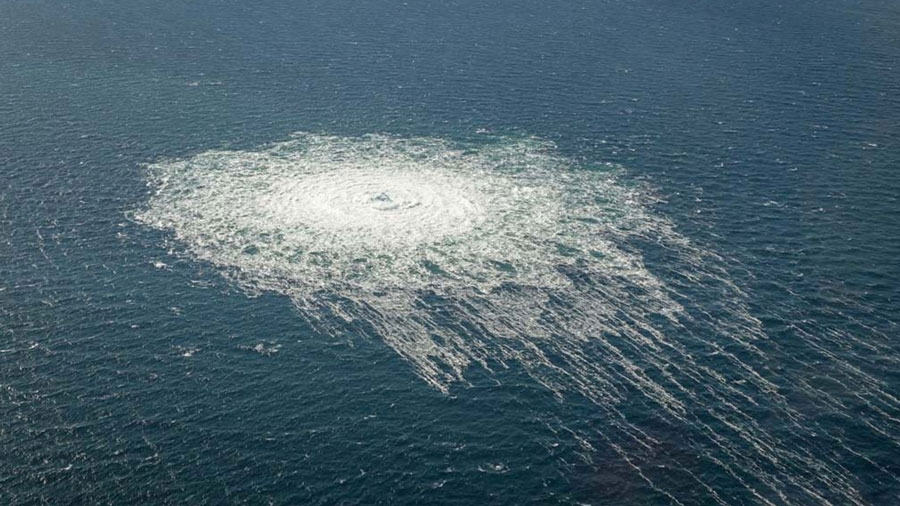
The Nord Stream pipelines, which connected Russia and Germany, were hit by a series of explosions on 26 September 2022, seven months after Russia launched its full-scale invasion of Ukraine. The blasts affected three of the four pipelines, rendering them inoperable. Nord Stream 1 was 51% owned by Gazprom, while Nord Stream 2 was 100% owned by the Russian state energy company.