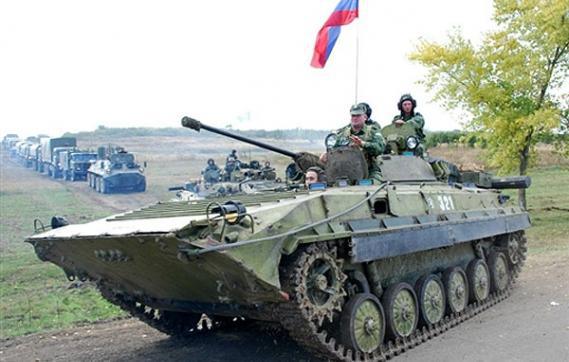
Dmitry Tymchuk’s Military Blog: Summary – August 15, 2014

Dmitry Tymchuk’s Military Blog: Summary – August 15, 2014

Brothers and sisters!

Here’s the Summary for August 15, 2014 (for previous summary, please see Summary for August 14).

The bad news:

1. The dirty business with Russian “humanitarian aid” continues. The Russian Ministry of Foreign Affairs was too quick to declare that the preparation for delivery of the so-called humanitarian aid to the residents of Donbas “has entered its final stage.”

Then, suddenly, Moscow started claiming that attempts would be made [by Ukraine] to destroy the convoy. Allegedly, they were “receiving reports that the subversive group of the Aidar punitive battalion planned to lay mines on certain sections of roads in Luhansk Oblast, in order to destroy vehicles with humanitarian cargo and its accompanying personnel, and then accuse the local militia of terrorism.”

And this statement by the Russian Foreign Ministry unveils the whole Kremlin’s agenda.

Firstly, the territory that the M-04 highway lies across, is controlled by insurgents. There is a section, which has been taken under control by the ATO [anti-terrorist operation] forces, but that only means fire control. To “explain” this, the Kremlin states that the subversive groups will do the job! But Moscow made a mistake by claiming it would beAidar [Battalion of Territorial Defense]. Had it blurted out [the accusations] aimed at, for example, the special forces of the Chief Directorate of Intelligence with the Ministry of Defense [GUR], that would be halfway believable, since these guys go through subversive training. Soldiers of Aidar [Battalion] do not. Had the Ukrainian authorities wanted to stage such a dirty and intentionally high-profile provocation, they would have sent professional subversives to do it.

Secondly, if Moscow is so worried about its cargo and personnel, then it’s completely incomprehensible as to why it is sending the convoy to Ukraine through an insurgent-controlled territory. They could have handed over the cargo, as they originally announced, to the Red Cross at the border of Kharkiv Oblast, loaded it on board of the ICRC [International Committee of the Red Cross] vehicles (as insisted upon by Kyiv), and slept peacefully. From then on, the cargo would be the headache of the ICRC and the Ukrainian government.

Thirdly, having the convoy travel through the terrorist-controlled territory makes any investigation impossible in the event of sabotage. We already witnessed that at the crash site of the [MH-17] Boeing. This means that the insurgents can blow up the convoy and then [Russia] can easily claim that this was done by the ATO forces, a group of Martians, or whoever else. And after the statement by the Russian Foreign Ministry, it is obvious who Moscow will try to blame.

To sum up, it is perfectly clear why Moscow started the whole malarkey with the “humanitarian aid.” [This is] very much true to form for Putin and the FSB. Quite cynical and treacherous–but clumsily done.

2. There was a strong reaction to the message by the British reporters from the Daily Telegraph and The Guardian newspapers, about the fact that last night, they had observed the Russian military equipment crossing the border into Ukraine. NATO went as far as to verify this information (and confirmed it successfully).

The degree of this reaction remains a mystery to me. We, the IR [Information Resistance] group, have confirmed facts of constant deployment of equipment and weapons from the Russian Federation to Donbas, since as early as April [of 2014]. Some time after that, our state authorities also began to talk about this repeatedly.

If the West had not trusted this information, that is exactly why the intelligence services of the Western countries employ high-brow, well-paid analysts. Over the past six months, they could have easily found out (even from publicly available sources), which military units of the Ukrainian Armed Forces were deployed to  Donetsk and Luhansk Oblasts. Based on that, [the analysts] would have concluded that the tanks, the cannons, the Grads [missile launchers], etc. that the terrorists have no shortage of, could not have been taken from the Ukrainian military. And there aren’t too many options left as to where the insurgents could have gotten this equipment from. It does not take an intelligence school to figure it out.

Based on this, I can hardly comprehend why our Western partners are so taken aback today.

3. It’s Christmas for the pro-Russian forces in Ukraine: the former Secretary of the National  Security and Defense Council [NSDC] Andriy Parubiy lost the court case against Viktor Medvedchuk, the head of the pro-Russian “Ukrainian Choice” organization. If the followers of Medvedchuk are to be believed, the court ruled that Parubiy’s claims that Medvedchuk–is a criminal involved in organizing a separatist movement–are false and “discredit the honor and dignity” of Medvedchuk.

I am baffled. If the court proved that Medvedchuk organized no separatist movements, then what is Moscow paying him for? Simply because he is Putin’s kum? In that case, congratulations, Viktor Volodymyrovych [Medvedchuk], you’ve set yourself up very well. But I’ll be honest–if Parubiy lied about Medvedchuk, then I don’t know what the truth is.

By the way, Petro Symonenko, the leader of Ukrainian communists complained that the General Prosecutor’s Office opened a criminal case against him. There is a God after all and, fortunately, he is not on the side of Orthodox communists.

read more

Dmitry Tymchuk, Coordinator, Information Resistance
Translated and edited by Voices of Ukraine

To suggest a correction or clarification, write to us here

You can also highlight the text and press Ctrl + Enter

Please leave your suggestions or corrections here


    Leave a Reply
    Euromaidan Press

    We are an independent media outlet that relies solely on advertising revenue to sustain itself. We do not endorse or promote any products or services for financial gain. Therefore, we kindly ask for your support by disabling your ad blocker. Your assistance helps us continue providing quality content. Thank you!

    Related Posts

    February 14: Russia’s aggression in Ukraine is part of a broader, and more dangerous, confrontation with the West

    February 14 – Prosecutor General of Ukraine in cooperation with Security Service of Ukraine has detained a former Chief of the Party of Regions Oleksandr Yefremov, – said Prosecutor General of Ukraine Viktor Shokin in his comment to Internet media "Ukrainska Pravda".

    February 14 – At 0:00 the Armed Forces of Ukraine will cease fire along the contact line, – stated the President of Ukraine Petro Poroshenko during his address from the General Staff on February 14th.

    February 14 – President of Ukraine Petro Poroshenko has said that peace agreements are in jeopardy as a result of the situation at Debaltseve lodgement. "The whole world is waiting tensely for tomorrow's morning with bated breath. Those who would like to derail the peace process at its outset, have been warned about the consequences. I am not going to say what Ukraine will do if the peace process is disrupted. I will say one thing – we will not turn another cheek if we are provoked and may the Lord forgive me for that", – said Poroshenko.

    February 14 – Battalion Donbas soldiers captured 17 fighters in the area of the village Lohvyn in Donetsk region.

    February 14 On February 14, terrorists are preparing a massive provocation, which may result in the entry of armed forces from RF. This was aired on Channel 5 by the spokesman of Sector M, Dmytro Chalyj. And they did accomplish this – they shelled with Hrads the Russian territory. Now Russia will blame the Ukrainian side for this.

    February 14 In the internet there appeared a video which testifies to the gathering of armored artillery by the Russian side from Crimea to the administrative border with Ukraine.

    February 14 – As a result of constant artillery shelling of Debaltsev by the fighters, "the city is burning", the building of the city police was hit directly by Hrad units. This was stated by the Head of the Regional Headquarters of MVS in Donetsk region, Viacheslav Abroskin.

    February 13 – 11 Ukrainian military were killed and 40 injured in the ATO area in the last 24 hours, – NSDC spokesman Andriy Lysenko.

    February 13 – According to new Minsk agreements, the city of Debaltseve should remain under Ukraine's control. However, Russian terrorists were given an order to gain control over the cities of Debaltseve and Mariupol by February 15th, – informed Deputy Minister of Defense of Ukraine Petro Mekhed: "According to information available and taking into account the fact that there has been an agreement to cease fire on February 15th (0:00), Russian troops and pro-Russian militants were ordered to occupy Debaltseve and Mariupol".

    February 13 – Soldiers of 79th brigade of Ukrainian army have detained a terrorist "Gnom" ("Dwarf") who is allegedly second in command at the detachment of Russian terrorists named "Somali". He personally participated in torturing Ukrainian military prisoners.

    February 13 – A tank battle for the village of Shyrokine and an artillery battle for the village of Stakhanka have taken place – both are located close to Mariupol, – reports Ukrainian regiment "Azov".

    February 13 – When the terrorists were shelling the town of Shchastya (Luhansk region), they killed and injured civilians at a local café.

    February 13 – Right wing party "Pravyi Sektor" believes that that any agreements with separatists are unconstitutional and thus the party reserves its right to active military operations, – stated party leader Dmytro Yarosh.

    February 13 – Russian terrorists have shelled the city of Artemivsk, which is located behind the combat line protected by Ukrainian forces.

    February 13 – 4 people were killed and 16 injured as a result of shelling by Russian terrorists at the city of Hirnyk (Donetsk oblast).

    February 13 – US Senate has passed a resolution on the release of Ukrainian pilot and member of Ukrainian Parliament Nadiya Savchenko.

    February 13 – In the last hours before the beginning of the ceasefire, foreseen by the mutual agreements in Minsk, the danger of bloodshed only increases. This was stated by the German official Gernot Erler, an advisor to Merkel on Russia, reported the Bayerischer Rundfunk: "The risk is truly very high. In the last hours before the ceasefire, there exists the danger that the sides will attempt to increase losses among each other," he said. According to him, the heightening may lead to the reality that the readiness for a ceasefire will dwindle to nothing. "There is a diffference between Minsk-1 and Minsk-2. I see more concrete definitions in the new agreement. Also, backing up the new document are three preidents and a chancellor," noted the politician.

    What Russia wants:From cold war to hot war

    Russia's aggression in Ukraine is part of a broader, and more dangerous, confrontation with the West

    Marco Bojcun: MINSK II: Land for a ceasefare, but not for pease

    Lithuania's view on Minsk2

    Putin's war on the West

    Flawed deal in Minsk

    Polish view on Minsk2

    Ukraine's other war – on corruption (NATO Review)

    Lilia Shevcova: The Kremlin Is Winning

    By Taras Kuzio

    What will the west do when Minsk-2 unravels?


    European leaders desperate to avoid going down an Iranian-style route of economic and financial sanctions and to dissuade the US from sending weapons signed a second agreement to end the fighting in Ukraine on Thursday in the Belarus capital, Minsk. But it will be as unworkable as the first Minsk agreement signed in September 2014. The new agreement has weaknesses similar to those of its predecessor and will unravel in the next few months.

    How will the weak Organisation for Security and Cooperation in Europe (OSCE) go about removing foreign troops and mercenaries? Will Russia really permit Ukraine to take control of its border next year, after local elections in March and the adoption of a new Ukrainian constitution that outlines some form regional devolution to the Donbas?

    Indeed, could elections ever be considered free and far if they are held under the barrel of a gun? With crime rampant in the separatist-controlled Donbas, will it be safe to transfer funds for social payments and pensions from Kiev to the region and for taxes to be transferred back to the central government?

    The reaction from leaders in the region was sceptical or cautious at best. Dalia Grybauskaitė, Lithuania's president, said Minsk-2 was a "weak" document; Bronisław Komorowski, Poland's president, said peace was still a faraway goal.

    The main reason Minsk-2 will not hold is that the person who began the conflict – Russian President Vladimir Putin – has not achieved his strategic goal of destroying Ukraine as an independent state. Western sanctions have not served as a deterrent.

    As Andrey Illarionov, a former economic adviser to Putin, reminded us this week:

    the goal of Putin's war against Ukraine is an attempt at the inclusion of it, Belarus, and also Russian-speaking enclaves in other countries in some kind of geopolitical union called 'the Russian world,' with the liquidation or at least the limitation of their sovereignty.

    The Donbas conflict will only end, he argues, if Putin gives up "the policy of denying the statehood, sovereignty and independence of Ukraine and other states with Russian or Russian speaking population".

    Putin has always confused Russian speakers in Ukraine with Russians, and has talked of "17m Russians" living in Ukraine. That this is a misnomer can be seen from the weak support for separatism in the six Russian-speaking regions of eastern and southern Ukraine outside the Donbas.

    US and EU leaders are unwilling to face the implications of a return to the Europe of the 1930s, with one country seeking to destroy another. They are desperate to put off the inevitable confrontation with Russia through negotiation. A year ago, when former US Secretary of State Hilary Clinton made an analogy between Nazi Germany and Putin's Russia defending their co-ethnics in other countries, she was ridiculed. But today, her critics agree with her.

    Putin's demand for Ukraine to become a federal state is a non-starter. It has no support among the Ukrainian public or its elites and is an attempt at 'Bosnianising' the country. No federal country in the world gives its provinces a veto over foreign and defence policy, as Putin is insisting the Donbas must be given in Ukraine.

    Putin's objective to install a pro-Russian leader, parliament and government presupposes the annulling of presidential and parliamentary elections held in May and October of last year that were recognised as free and fair by the OSCE, the Council of Europe and the EU. No sovereign country in the world would accept such a demand from its neighbour.

    Putin's paranoia about Nato and EU enlargement into what he views as Russia's 'zone of privileged interests' is a misnomer. Although an April 2008 Nato summit in Bucharest named Ukraine and Georgia as future members, France and Germany have said they would veto this. The EU has never offered membership to Ukraine.

    And who will persuade the Ukrainian parliament to overturn a December vote by a constitutional majority of 302 to move away from the non-bloc status that Putin wants Ukraine to return to?

    When Minsk-2 unravels, what will US and EU leaders do next?

    Ukraine will not agree to a Minsk-3. If Russia and the separatists again fail to implement the agreement, the only options open will be to remove Russia from the Swift international payments system, blacklist its president, prime minister and its foreign and defence ministers, and supply Ukraine with defensive military equipment, training and satellite intelligence.

    You can't make the same mistake twice. The second time you make it, it's no longer a mistake. It's a choice.

    Taras Kuzio is a research associate at the Centre for Political and Regional Studies, Canadian Institute for Ukrainian Studies, University of Alberta and non-resident fellow at the Center for Transatlantic Relations, School of Advanced International Relations, Johns Hopkins University.

    P.S.: Please spread this appeal as much as possible.

    Ads are disabled for Euromaidan patrons.

    Support us on Patreon for an ad-free experience.

    Already with us on Patreon?

    Enter the code you received on Patreon or by email to disable ads for 6 months

    Invalid code. Please try again

    Code successfully activated

    Ads will be hidden for 6 months.