Putin ‘played no less role’ in creation of ISIS than Stalin did in rise of Nazis, Shmulyevich says

Putin and Obama at G20 meeting
Putin ‘played no less role’ in creation of ISIS than Stalin did in rise of Nazis, Shmulyevich says


Vladimir Putin should be compared with Stalin rather than with Hitler, Avraam Shmulyevich says, not only because he is seeking to use an east-west alliance to legitimize his seizure of territory but also because Putin has played “no less a role” in the creation of ISIS than the Soviet dictator did in “the strengthening of German fascism.”
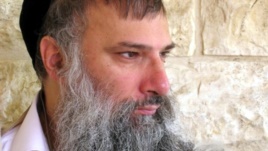
President of Israel's Institute for Eastern Partnership Rabbi Avraam Shmulyevich

In an interview with Kseniya Kirillova

posted on Krym.Realii, the Israeli rabbi and analyst approaches this issue with great caution, indicating what is known and what is only suspected because the Russian government has done little or nothing to dispel the suspicions its actions have generated.

“Radical Islamism began with the invasion of the USSR into Afghanistan,” the Israeli analyst says. “All the more radical Islamists including Ben Laden came out of the struggle with the Soviet Union. The second push to the growth of radicalism was given by the invasion of Russia into Chechnya.” In both cases, the Islamists saw Moscow as the enemy.

At the same time, “the largest number of ISIS militants are being recruited from Russia and the other countries of the post-Soviet space,” he says. “In part, this is connected with the fact that over the course of many years, the Russian special services have ‘pushed’ their own Islamists toward Syria and Iraq, putting before them the choice: emigration, jail or murder.”

“Of course,” Shmulyevich says, “we do not know the motives of the FSB in this: did they only want to cleanse their own territory of unsuitable elements or did they intend to strengthen ISIS. But whatever the case, it remains a fact that precisely the Russian special services sent there the most motivated and educated contingent of militants.”

The Israeli analyst says that he does not now have “any data about how much the Russian special services are today using their old ties with the Islamic State… or even how much ‘the Islamic underground’ in Russia is controlled by the special services.”

“However, if Russia wants to avoid accusations of cooperating with ISIS, it should at a minimum clarify this issue.” Instead, “Moscow in the course of several years has created ‘a green corridor’ for the militants who want to join the terrorists.” Moreover, Russian agencies undoubtedly have large dossiers on these people and “one would like to understand how they are using these.”

At present, Shmulyevich continues, “we can reliably assert only that Russia extended its hand toward the creation of ISIS” and “undoubtedly has some levers of influence” on the group. But that alone does not mean that Moscow necessarily is behind any particular action of the Islamic State.

Yet another fact which “does not speak in Russia’s favor,” Shmulyevich continues, is that it is precisely the country “which stands at the origins of Arab terrorism;” and “all those methods which Islamist terrorists use now, including the seizure of planes and suicide bombers were developed by the KGB and its satellites” in Soviet times.

Despite that, he says, he is “not inclined to consider that Putin stands behind the Paris terrorist attacks and supposes that they were completely organized by ISIS itself. However, “the Russian leader used the tragedy in his own interests to the maximum extent possible” and is seeking “to convince the West that Russia has become a reliable ally in the struggle with terrorism.”

The Kremlin leader is having success in that regard, especially since he appears to have accepted the idea that his ally Assad will have to leave office. But that will create problems for him: he will have to assume the difficult task of providing security in the region. At the same time, if he gets bases there, he will have achieved a longstanding Russian dream.

And “it is possible,” Shmulyevich continues, that the price for all this that Putin will extract from the West is Ukraine. Already it appears that “unfortunately” the West is moving in the direction on Ukraine that Moscow wants, and that risk “will increase with each new ISIS terror attack.”

To suggest a correction or clarification, write to us here

You can also highlight the text and press Ctrl + Enter

Please leave your suggestions or corrections here


    Leave a Reply
    Euromaidan Press

    We are an independent media outlet that relies solely on advertising revenue to sustain itself. We do not endorse or promote any products or services for financial gain. Therefore, we kindly ask for your support by disabling your ad blocker. Your assistance helps us continue providing quality content. Thank you!

    Related Posts

    February 11: The Russian proposal at the Summit in Minsk is unacceptable – president of Ukraine Poroshenko

    U.S., UK, Canada, Ireland, Australia, New Zealand, South Africa

    February 11 – The Russian proposal at the Summit in Minsk is unacceptable – president of Ukraine Poroshenko. Russia deliberately disrupts agreements.

    February 11 – 19 Ukrainian military were killed and 78 wounded as a result of shelling near the burial mound "Hostra Mogyla" close to Debaltseve and at other locations within ATO area, – informed the spokesman for the General Staff of the Armed Forces of Ukraine Vladyslav Seleznyov at a briefing on Wednesday morning.

    February 11 – In Donbas pro-Russian militants shelled the positions of Ukrainian troops 27 times on the night of February 11th. Most of the attacks occurred in the direction of Luhansk. 87 pro-Russian militants and 42 units of military equipment were destroyed in the last 24 hours (including 12 tanks, 14 multiple rocket launchers and 16 armored vehicles).

    February 11 – In Donetsk 6 people were killed and 8 wounded as a result of shelling at the bus station and entrance office of "Donetsk Metallurgical Plant".

    February 11 – President of Ukraine Petro Poroshenko spoke about a successful military operation at Debaltseve foothold: "Several successful operations were conducted yesterday at Debaltseve foothold. They allowed us to gain control over two municipalities and the contact line", – said Poroshenko.

    February 11 – "People's Republic of Luhansk" and "People's Republic of Donetsk" demand that Ukraine stops the ATO and are requesting autonomy and new elections, – as stated in a protocol draft handed over on Tuesday night by the leaders of the terrorists to the contact group in Minsk.

    February 11 – Russian Federal TV Station "Channel 5" has broadcast a story describing how quickly and easily Russian troops can enter European capitals and threatened the West with missile attacks. Show's authors vaguely disguised this information as campaign to hold "Victory Day parades" in the EU member-states capitals.

    February 11 – Russia implemented a direct military intervention during the battle at the city of Debaltseve, – stated Lieutenant General Ben Hodges, Commander of Allied Land Command (NATO).

    February 11 – Russian Foreign Ministry believes that border control issues should be should negotiated upon with the militants, which, in its turn, doesn't provide a solution to the problem, – stated Russia's Foreign Minister Sergei Lavrov.

    February 11 – Government is ready to establish martial law, should there be esalation of the situation in the east. This was stated by President Petro Poroshenko during a government meeting. Poroshenko emphasized that it is precisely "from the results of the summit that it will depend if we will be successful in stopping the aggressor by diplomatic means, or if we will switch into a very different course." I and the government, and Parliament are ready to make a decision to impose martial law in the entire territory of Ukraine," he noted.

    "In no way will I delay this decision, if the the irresponsible acts of the aggressor bring about a serious continued escalation of the conflict," he emphasized. "I am convinced that our country can protect itself and that every person will do whatever posssible in order to demonstrate that victory will be ours. However, I stress, that I am a president of peace, and thatn through army means, the situation in Donbas should not be decided," he added.

    Ukraine cannot be a buffer state

    Photo report from eastern Ukraine

    Help Ukraine seize this chance

    Economist Edward Lucas Attacks Russia's RT and Sputnik for "manufacturing lies" and those working there as "freaks and propagandists"

    Feature by BBC Monitoring on 9 February

    Russian state media have hit back strongly at British journalist Edward Lucas after he criticized them at the recent Munich Security Conference and suggested that journalists working for them should be ostracized. One top TV presenter went as far as to brand Lucas a "village idiot".

    At a panel discussion at the annual Munich Security Conference on 6 February, Lucas, a senior editor at The Economist and author of The New Cold War, accused the Kremlin's international media operations, RT (formerly known as Russia Today) and Sputnik (rebranded successor to the Voice of Russia) of "manufacturing lies".

    He said the people working for them were "freaks and propagandists", who should be the target of a campaign of ostracism, according to records of the discussion published by RT and Russian state news agency RIA Novosti.[1]

    "If anyone puts a CV on my desk and on that CV I see they worked for RT or Sputnik or one of these things, that CV is going into the bin," Lucas said. He added that people in the West were wrong to see working for the Kremlin's international media as a "first stage on the career ladder". "It's not, it's the last stage," he told the Munich conference.

    "Journalistic Joe McCarthy"

    Russian state media came back, all guns blazing, with Lucas even getting a whole slot to himself on state channel Rossiya 1's weekly current affairs news roundup Vesti Nedeli.[2]

    Outspoken host Dmitriy Kiselev, who is also director-general of Sputnik's parent company Rossiya Segodnya (which confusingly translates as Russia Today), hurled a whole fistful of epithets at Lucas – "odious British journalist", "hysterical Londoner" and even "village idiot" – while rubbishing his analysis of Russian politics and accusing The Economist of practising censorship.

    RT responded more primly, saying it was "absolutely outraged" by Lucas's "specious attacks", which, it said, were particularly "despicable" as several of its journalists were daily risking their lives to "report on stories nobody else dares to touch".[3]

    Sputnik also had Lucas in its sights, describing him in one article as a "journalistic Joe McCarthy" – a reference to the US senator who instigated a witch-hunt against Communist sympathizers in the 1950s.[4]

    Lucas himself appeared to revel in the backlash, responding to Kiselev in kind.

    "Better than a Pulitzer prize? i get prime-time abuse from vile Kremlin mouthpiece Kiselov," he tweeted.[5]

    He could also take comfort from the support of fellow Twitterati, who suggested he had got under RT's skin.

    US journalist Michael Weiss observed that Lucas had "figured out RT hacks' Achilles heel", while Times columnist Oliver Kamm said he had "badly wounded them".[6][7]

    Writer and Russia watcher Ben Judah also weighed in, saying Lucas had put the wind up RT. "Experts should refuse to appear on RT – or any other? disinformation channel", he added.[8]

    "Misinformation"

    RT and its supporters also entered the fray on Twitter.

    One of its contributors, Robert Bridge, accused Lucas of being "scared to hear another side of the story", while the channel itself suggested his attack on its journalists may have been provoked by recent criticism of The Economist on its show In The Now.[9][10]

    In The Now dismissed as "absurd" a claim by The Economist that Russian state TV "conceals" bad economic news from its viewers. It showed excerpts from top TV bulletins talking about the collapse of the rouble to prove the contrary. It also said that the story of the rouble's woes and the looming recession had been well covered in Russian newspapers. To suggest otherwise, it said, was to promote "misinformation".[11]

    It called its analysis of The Economist's coverage a "tutorial on how to write a propaganda article".

    But RT's criticism of The Economist was itself guilty of omission and distortion.

    For example, it made no mention of the fact that on the day in mid December when the rouble tumbled by some 10 per cent, Rossiya 1 main news had ignored this story altogether.

    Also, it illustrated its claim about the Russian press's economic coverage with screenshots not from leading newspapers but from news agencies and websites, one of them a little known business portal from the Volga republic of Tatarstan.

    The panel discussion at the Munich conference, which also featured NATO commander and US general Philip Breedlove and Norwegian Defence Minister Ine Eriksen Soreide, looked more broadly at the issue of hybrid warfare and the role played in it by different media organizations.

    According to a report by Judy Dempsey on the Carnegie Europe website, the participants said that one of the reasons why RT and its ilk have been able to make such an impact is the cutbacks at top Western international media, such as the BBC World Service and the Voice of America.[12]

    [1] http://rt.com/op-edge/230315-rt-responds-lucas-munich/

    [2] http://vesti7.ru/news?id=45745

    [3] See note 1

    [4] http://sputniknews.com/columnists/20150208/1017973545.html

    [5] https://twitter.com/edwardlucas/status/564531479263600642

    [6] https://twitter.com/michaeldweiss/status/564468359048486912

    [7] https://twitter.com/OliverKamm/status/564408994853572609

    [8] https://twitter.com/b_judah/status/564541740863193091

    [9] https://twitter.com/Robert_Bridge/status/564665181549391873

    [10] https://twitter.com/INTHENOWRT/status/564758039371472896

    [11] https://www.youtube.com/watch?v=2H5X3WYm_3U

    [12] http://carnegieeurope.eu/strategiceurope/?fa=58998

    Source: BBC Monitoring research 9 Feb 15

    P.S.: Please spread this appeal as much as possible.

    Ads are disabled for Euromaidan patrons.

    Support us on Patreon for an ad-free experience.

    Already with us on Patreon?

    Enter the code you received on Patreon or by email to disable ads for 6 months

    Invalid code. Please try again

    Code successfully activated

    Ads will be hidden for 6 months.