


Ukrainian units have logged more than 2 million verified drone hits on Russian targets since January, Ukraine’s Defense Ministry said on 19 November. The hits are recorded in DELTA, Ukraine’s battlefield data system, and verified by specialists from Brave1, the state defense-innovation cluster.
This comes as drones rank as the deadliest weapon of Russia’s war against Ukraine, and both sides field them by the thousands. Ukrainian drones accounted for about 96% of Russia’s battlefield casualties earlier this year by Ukraine’s count, and each verified hit also earns the unit points it trades for the next drones.
September brings a record number of hits beyond 50 km, most along the logistics route to occupied Crimea
October was the busiest month verified so far, at about 257,000 hits, almost 2.5 times January’s roughly 105,800, according to the ministry. This year’s total is already more than double the nearly 820,000 hits the president’s office reported in January for 2025. The drones are also reaching further behind the front, toward the supply routes Russian forces need to keep fighting.
In September, hits on targets more than 20 km behind the front line passed 11,000 in a month for the first time, the ministry reported on 6 October. Ukrainian units were already striking Russian supply routes near occupied Mariupol, about 105 km from the front, in May, according to the Institute for the Study of War. Reaching them gives Ukraine’s drones a way to target the logistics behind the fighting, not just troops and equipment near the front line. The ministry’s figures measure reach, not what the strikes did to Russia’s supply lines.
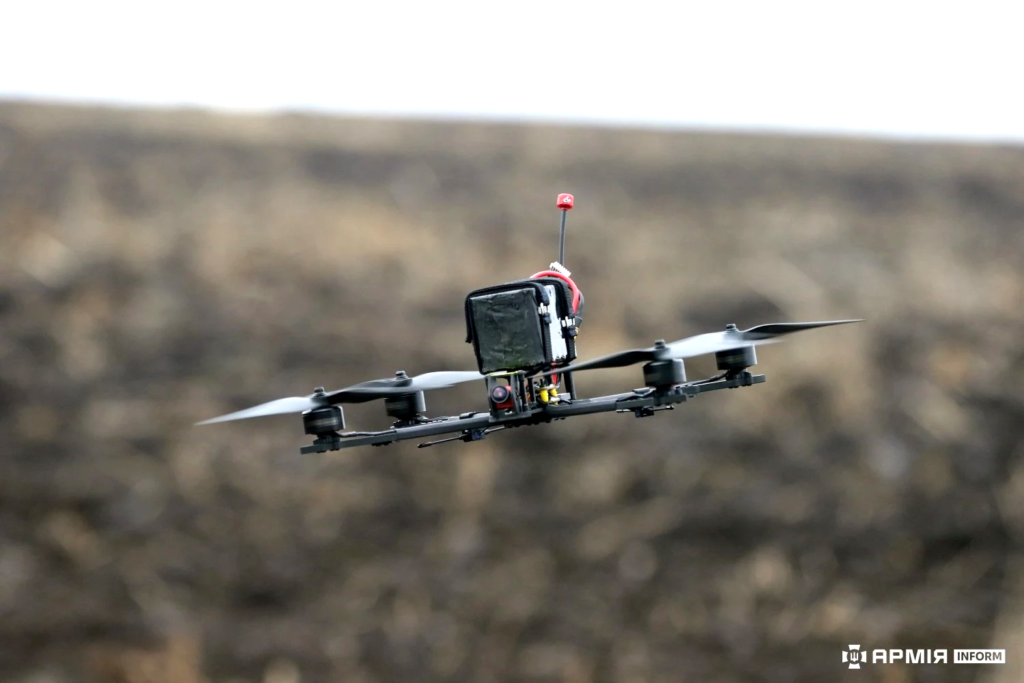
The number of hits beyond 50 km also set a record in September, the ministry said, without giving a figure. Most were along the Mariupol–Crimea logistics route, which runs through occupied Melitopol. Units also hit more Russian air-defense systems and radars than in any month since the launch of ePoints, the ministry’s points-for-results program. One of those targets was 552 km away. The ministry did not say where it was.
September is the latest month with published counts of hits by distance behind the front. The ministry’s October results, published on 13 November, report more than 41,000 Russian troops hit, the most in any month since the ePoints program began, but give no distances.
Mid-range strikes continued in October, with fewer published hits than in September on air-defense targets and command posts. Counting only data Ukraine’s General Staff has published, the ministry listed at least 47 ammunition, fuel, and supply depots, 27 command posts, 20 strike-drone infrastructure sites, 19 air-defense, radar, and electronic-warfare assets, and a railway bridge in Russia’s Bryansk Oblast among the targets hit. The ministry’s September summary, also based on published data, listed more than 30 such assets, over 40 command posts, over 50 depots and other logistics sites, and more than 20 drone facilities. Both are minimum counts.

Ukraine’s drone force wrecked almost 200 Russian air defense assets since year-start—31 in June alone
Refinery strikes resume and reach Russia’s five largest plants, Ukraine says
Strikes deep inside Russia run on a separate track: the ministry reports them in their own monthly summaries. Ukraine intensified strikes on refineries, storage sites, pumping stations, and export terminals in late October and November, the ministry says. Since 30 October, Ukraine’s long-range strikes have reached Russia’s five largest refineries, the General Staff said on 12 November. The farthest, in Omsk, lies almost 2,500 km from Ukraine’s border, according to the General Staff. Ukrainian special forces had already struck it in July.
Trending Now
Refineries hit since late October had a combined nameplate, or rated, capacity of about 300,000 metric tons a day, Reuters reported on 10 November, citing industry sources. Ukrainian attacks had disrupted operations at nine of the 35 major Russian refineries in the week to 10 November, the report said, citing industry sources and officials. By 18 November, Ukrainian strikes had stopped or interrupted operations at 15 of the 35 major plants, and the refineries hit since late October had a combined nameplate capacity of about 500,000 metric tons a day, roughly 54% of Russia’s primary refining capacity, Reuters reported, based on two industry sources. By then, daily crude processing had fallen to about 400,000 metric tons, from more than 700,000 at the end of October, by the sources’ estimates. Because operating capacity fell gradually, average daily processing in November stayed above 500,000 metric tons, 5% to 10% under the September and October levels, they said.

The push followed a pause. Ukraine’s military had unofficially paused refinery strikes after weeks of pressure from US President Donald Trump, the Wall Street Journal reported on 29 October, citing people with knowledge of the operations. Ukraine ended the pause on 30 October with its first refinery strike in two weeks.
Units trade verified hits for drones, though some payments stalled
Verified hits also earn units points under ePoints. Units spend the points on drones, ground robots, electronic-warfare equipment, and other technology from Brave1 Market, the state’s online marketplace. Since the program was linked to the marketplace, more than 400 units have ordered over 750,000 items worth more than UAH 51.9 billion (about $1.15 billion), the ministry said on 12 September. In the first nine months of 2026, units placed orders for more than 590,000 drones there.

By mid-September, some payments to manufacturers had stalled for deliveries funded from the income tax on soldiers’ pay. Since a June budget change, the ministry must agree with parliament’s defense committee on the categories of spending from that tax revenue, though not on each purchase. The ministry’s request reached the committee only on 10 September, the committee said on Facebook. On 12 September, the ministry said funds for the ePoints program are budgeted until the end of the year and that all due payments for delivered equipment will be made. It linked some technical delays, among other things, to plans to refinance the program through European Union loans and to planned changes to the points system.
What the figures cover and what they leave out
All drone-hit figures come from Ukraine’s own recording and verification system. A hit is a strike on a target, not necessarily a destroyed one, and the ministry does not say whether repeat hits on the same target are counted separately. The ministry calls October’s total the highest verified so far. Its count for 1–17 November, about 97,690, works out to roughly 30% fewer hits per day than in October. It is not yet clear whether that reflects fewer strikes or verification still under way.
Read also
-
At least 30 explosions reported at Russian airbase and weapons-testing site 650 km from front line after Ukrainian strike
-
“Operation to strike Russian targets deep in swamps continues”: Ukrainian Commander Madiar says his unit hits 7,306 Russian troops in first half of October, up 59% on August
-
Ukraine contracted $8 billion in drones this year. In-stock ones reach units in nine days


