

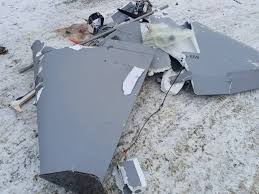
Ukrainian air defense has intercepted a Russian BM-35 drone controlled via a Starlink satellite terminal, reports Serhiy Flash, a serviceman and radio engineering specialist.
Previously, similar communication systems were detected only on Molniya-type kamikaze drones used for striking targets and reconnaissance at tactical depth. Analysis of the BM-35 wreckage confirmed the first documented use of satellite control on this drone type, which operates at the operational level.
"The Starlink terminal provides a stable communication channel with the aircraft and minimal delays in transmitting commands and video signals," Flash explained.
The system also partially negates the impact of electronic warfare tools, increasing the drone's survivability. Flash suggests that similar control systems may soon appear on Russian Shahed (Geran) kamikaze drones.
The BM-35 first appeared in combat in early September 2025, when Ukrainian forces intercepted video signals from a drone attacking Sumy. Initial assessments suggested the BM-35 might belong to the ZALA drone line and be a modification of the Italmaz drone, but further analysis revealed it as a separate development with distinct technical solutions.
The drone features a delta wing aerodynamic design and carries a warhead of undetermined mass and type. Its power plant consists of a DLE two-stroke gasoline engine with a tractor propeller mounted in the nose fuselage.
The aircraft is equipped with an analog video transmission system operating at 3.3 GHz and a course camera for target guidance. The BM-35's component base contains at least 41 foreign components from Switzerland, the United States, and Taiwan, with a significant portion originating from China, according to specialists.
Read also
-
Evacuation is “force majeure that no one is ready for” in most Ukrainian units, and robots are too slow to fix it, commander says
-
From Warsaw to New York, Ukrainians will form human chains on Independence Day
-
Ukrainian intelligence units will not help: Analyst warns that once Russia breaks into Sloviansk and Kramatorsk, reinforcing them only delays inevitable


