

In 2023-2024, war spending pushed Russia’s GDP growth above 4%—the best in a decade. In 2025, that growth collapsed to 0.6%. The engine became a drain.
Russia’s 2025 budget deficit hit 5.7 trillion rubles ($72.3 billion)—nearly five times the planned 1.17 trillion ($14.8 billion). The National Wealth Fund’s liquid reserves now total 4.1 trillion rubles ($52 billion)—less than the deficit itself. The Kremlin is spending faster than it can replenish.
“Russia’s regions are heading into the new year with a growing sense of deadlock,” Ukraine’s Foreign Intelligence Service stated on 11 January. “The financial burden is rapidly concentrating in areas that until recently formed the backbone of the economy.”
Two economies, one country
Russia’s industrial output tells the story of an economy splitting in two.
Aircraft production rose 86% year-on-year in October. Car production fell 61.6%. Railway machinery dropped 33.7%. Building materials declined 11-12%, Meduza reported, citing Russian government statistics.
The “civilian core” of manufacturing has been running nearly 5% below December 2024 levels for three months straight.
Civilian producers cannot borrow because rates stay high.
Interest payments now consume 38% of Russian company profits—a historic maximum. The Central Bank cannot seriously cut rates because war spending continues to fuel inflation. Civilian producers cannot borrow because rates stay high. The military sector grows at their expense.
In 2026, military spending and debt service are expected to consume 46% of the federal budget. Healthcare, education, and housing combined get 13%.
Moscow vs. the provinces
Moscow still functions. Yet, the provinces are breaking down.
As of September 2025, more than 66% of Russia’s 89 regions were running budget deficits, according to the Polish Centre for Eastern Studies. Federal transfers to regions for 2026 total 3.6 trillion rubles ($45.7 billion)—roughly the same nominal amount as 2021. After four years of inflation, that’s a deep cut in real terms.
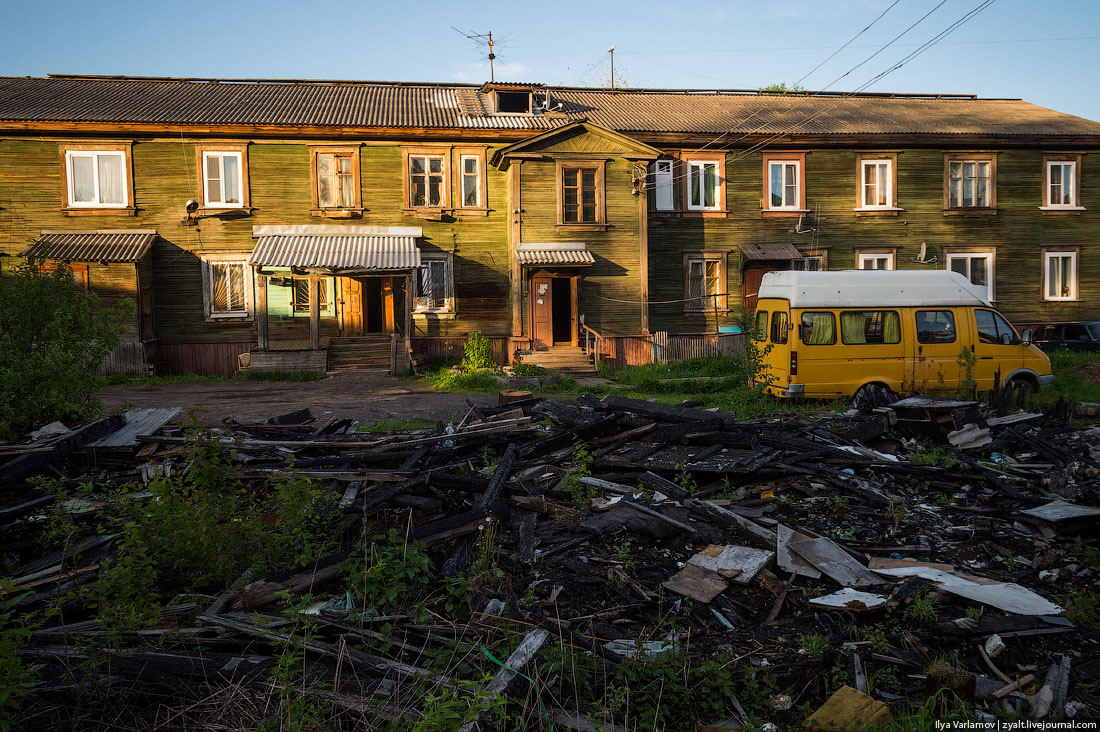
Traditionally depressed and industrial areas are now entirely dependent on federal subsidies after losing cross-border trade with Ukraine.
Ukrainian intelligence named the worst-hit areas: traditionally depressed Kalmykia, Mari El, and Pskov Oblast; industrial Kemerovo and Irkutsk in Siberia; and frontline Kursk and Belgorod, now entirely dependent on federal subsidies after losing cross-border trade with Ukraine.
As Ukrainian intelligence points out, in Vologda Oblast, a conflict between the governor and steel billionaire Alexei Mordashov has become so dysfunctional that economists stopped updating regional GDP forecasts as of 2024.

Coal country collapses
Kemerovo Oblast—home to 60% of Russia’s hard coal production—shows what collapse looks like in practice.
The combined net profit of the region’s ten largest coal companies fell from 200.3 billion rubles ($2.54 billion) in 2022 to just 13.3 billion ($169 million) in 2024—a fifteenfold drop, according to Riddle Russia. Corporate tax revenues evaporated with them.
Trending Now
“People don’t live, they survive paycheck to paycheck.”
The region’s budget deficit reached 34% of its own revenues by the end of Q3 2025. Public debt is approaching 100 billion rubles ($1.27 billion)—42% of annual revenues, The Insider wrote already six months ago. Local authorities have cut children’s recreation programs. Eight coal companies have halted operations.
“People don’t live, they survive paycheck to paycheck,” a Kemerovo resident told The Insider. Miners who staged hunger strikes over unpaid wages in 2024 were fired afterward. Many now see enlistment as the only option.
Every price goes up
On 1 January 2026, Russia raised the VAT rate from 20% to 22% and removed tax exemptions for small businesses earning above 60 million rubles ($761,000) annually, reducing the threshold to 20 million rubles ($254,000), with further cuts expected.
Regional media have cataloged what this means in practice: vodka prices up 17%, dental care potentially up 50%, coffee projected to rise 25%, new cars 10-20% more expensive, Pskov regional news outlet PLN wrote. Electricity transmission tariffs will climb 15.2% by autumn.
The number of registered businesses in Russia fell to 3.17 million by September, the lowest since 2010.

What’s being lost
Twenty percent of Russians earn income connected to military service or war production. Their wages have risen. The other 80% absorb the cost through higher taxes, higher prices, and shrinking public services.
“The more we borrow, the less the Central Bank can lower interest rates.”
“Military spending, like a cancerous tumor, devours resources that could go to productive areas—education, healthcare, science, infrastructure,” Meduza documented. “It maintains employment in certain industrial sectors while destroying human capital and development potential in civilian industries.”
“The more we borrow, the less the Central Bank can lower interest rates,” Finance Minister Anton Siluanov acknowledged in September.
The trap is closing—slowly for Moscow. For Russia’s provinces, it already has.


