
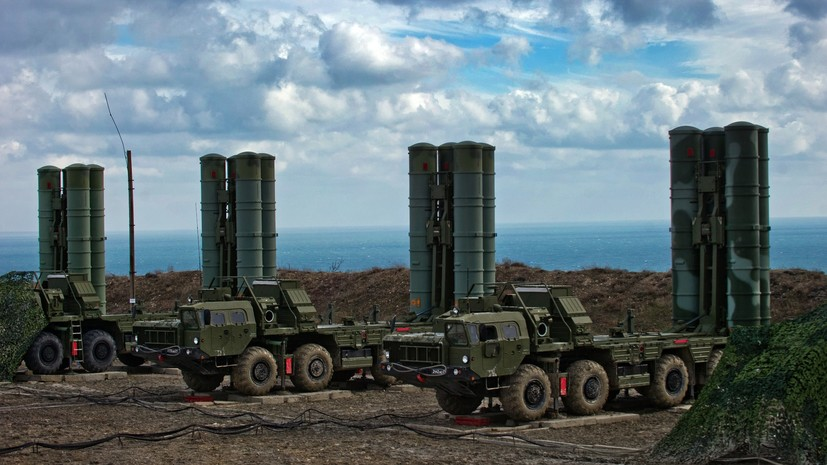
Fewer than 10% of Ukraine’s deep strikes actually hit protected targets inside Russia and fewer still do any significant damage, according to a new report by the Royal United Services Institute (RUSI.)
Russia’s air defense network is stronger and more comprehensive than often credited, RUSI wrote, citing October 2025 data from the Armed Forces of Ukraine. This is a major obstacle to degrading Moscow’s hydrocarbon and military industries, to weaken its ability to sustain the invasion.
But Russian air defense does have exploitable weaknesses. For one, Russia struggles to produce critical tech and materials in its own territory, relying on foreign supply chains, which are vulnerable to disruptions and sanctions.
As an example, sanctions can go after middleman companies like Electrotrade, which sold $1.1 million worth of American-made electronics to Russia since the start of 2024.
Russian companies are exposed to cyber attacks, as well as kinetic ones — when Ukrainians manage to target manufacturing pressure points that can bottleneck production.
Sanctions and cyber-attacks have slowed down Russia's advanced aircraft programs, according to a November investigation by InformNapalm.
“Russian air defences have imposed significant constraints on Ukraine’s military, shielded the Russian military and industry from the bulk of attempts to strike them in depth and improved substantially over the course of the war,” RUSI wrote. “Russia has also avoided using some parts of its air defence systems that are most concerning for NATO.”
“At the same time, Russian air defences can be penetrated and destroyed. They are not insurmountable but are a major obstacle to efficiently striking Russian forces and territory.”
How to degrade Russia’s air defense, in a nutshell
RUSI identified the following weak points. First, countries can use sanctions and export control to target Russia’s imports of:
- Foreign electronics for command and control systems and radar
- Raw materials, like beryllium oxide ceramics that’s used in heat sinks
- Western measuring equipment and calibration tools that make air defenses effective
- Western machine tools used in making advanced weapons
Sanctions can also disrupt the repair of Russian air defense facilities that have already been damaged by Ukraine. Next, Ukraine can exploit vulnerabilities by:
- Hacking software to compromise Russian manufacturing
- Striking at critical nodes within air defence production.

Russian defense evolved in tandem with Ukraine’s offense
The Soviet Union realized in the 1970s that it would struggle to keep up with NATO aircraft. Both the USSR and the Russian Federation invested heavily in integrated air and missile defense, resulting in what RUSI calls “the densest, most sophisticated and most integrated air defence networks in the world.”
This is still not enough to cover the entirety of Russia’s massive territory, not to mention the 1,000-kilometer front line and all the Ukrainian territories that Russia has captured.
Ukrainians have been able to force Russians to make tough choices about which sites to defend, and which to leave vulnerable.
The sites that are well-defended, however, have grown increasingly resilient. Both Ukraine and Russia have been evolving their attack and defense strategies with drones and missiles, learning from one another over the course of the full-scale invasion.
One example is Ukraine’s successful use of AGM-88 (HARM) anti-radiation missiles to target Russian radar and create paths for other weapons. These have been used in combination with drones and missiles such as Storm Shadows, to even take down batteries of S-400s, Russia’s most advanced air defense missile systems.
Yet, the Russians learned to adapt, shutting off radar at critical moments, or shooting down the HARMs in flight.
Ukraine also saw early success with guided multiple-launch rocket systems (GMLRS) and army tactical missile systems (ATACMS), but Russians have adapted to these as well. According to RUSI data, the rate of successful hits with GMLRS went from 70% in 2022, to 30% in 2023-2024, to about 8% in 2025.
The Russians also improved the efficiency of their air defense, requiring fewer interceptors on their S-400 systems to shoot down Ukrainian targets.
“With the right combination of strike systems, good intelligence and EW, hit rates can be brought back up,” RUSI wrote. “But this slowed the pace of Ukrainian strikes, removed many targets from consideration, and therefore had second-order consequences for Ukrainian options that are harder to quantify.”
Russia’s most common workhorse air defense systems
Strategic systems: S-300 and S-400 surface to air missile batteries
- Long-range systems that hold Ukrainian aircraft at risk and coordinate the broader network. The S-400's brain — the Elbrus-90micro computing system — depends on Taiwanese chips Russia can't manufacture domestically. The main Russian producer is reportedly facing bankruptcy.
Tactical systems: Buk-M3 self-propelled surface to air missile
- Mobile systems protecting ground forces. These are less vulnerable to supply chain disruption but still dependent on the same microelectronics ecosystem.
Short-range systems: Tor-M2, Pantsir-S2
- Point defense "goalkeepers" that intercept what breaks through. Russia is reportedly burning through Pantsir interceptors faster than it can produce them. Both Pantsir assembly sites sit in Tula, 350 km from Ukraine.

Some targets are out of reach
Ukraine has been successful at striking Russian oil infrastructure, especially refineries, in 2025. President Volodymyr Zelenskyy claimed that attacks are happening practically every day.
Trending Now
This caused noticeable harm to Russia’s refining capacity. Hydrocarbon sales are Russia’s lifeline that fuels its government and military budgets.
“Russia… struggled to prepare for Ukraine’s long-range strike campaign on its territory,” RUSI wrote. Russia has continued to take hits around oil refineries, military-industrial sites and logistics hubs as Ukraine has scaled the production of a wide range of long-range strike systems.”
However, while drone strikes can send refineries up in flame, these can be repaired with relative ease. Worse, more hardened industrial targets are tougher nuts to crack.
Ukraine must expend 100-150 drones costing up to $80,000 apiece, just for ten to slip through and deal potentially negligible damage. Combined strikes with drones and missiles are more effective, but become harder to repeat against the same target in the future.
According to RUSI, Russia's air defenses have absorbed significant Ukrainian resources and put many high-value targets out of reach. Even successful combined attacks are "rarely repeatable."
However, the report found that Russia's system is vulnerable to sanctions, cyber attacks, and regular ones.
Supply chain vulnerabilities
In the report, Russia's air defense production was described as a "hub and spoke" system, with subordinate manufacturers all producing for a single central industrial company, such as the Almaz-Antey concern.
“Although the first and second tiers of Russian air defence production (at first glance) appear to be sovereign and founded on a robust research and industrial base, the industry also faces significant dependencies on foreign supply of raw materials, components and machine tools,” according to RUSI.
For instance, Russian systems use imported microelectronics that Russia struggles to make at home. The S-400 systems’ radar and command and control elements rely on the Ellbrus-90 microcomputing system, whose manufacturer faces production obstacles.
The manufacturer has long relied on Taiwanese imports of electronics, and there has been no open-source confirmation that production has successfully been established in Russia. The Taiwanese manufacturer, TSMC, reportedly terminated the contracts after the full-scale invasion began in 2022.
“Russia’s microelectronics industry is underperforming, still dependent on foreign suppliers for more complex chips, and that disruption to its operations would have a serious impact on the production of some of the most critical components of its air defence systems,” RUSI wrote.
Even when Russia does make its own microelectronics, it often depends on imports, including from the US. These include printed circuit board laminates made by the Rogers Corporation, which perform better than Russian-built analogues.
Since 1 January 2024, Russian companies have imported $1.1 million of Rogers printed circuit boards, mostly via China but also via Türkiye, India and Lithuania, according to trade records. The biggest importer in 2024, LLC Electrade-M, sold directly to Russia’s biggest military plants.
As of October 2025, LLC Electrade-M is only sanctioned by Ukraine.
Russia also imports raw materials, like beryllium oxide ceramics, used for heat sinks in high-power radio-frequency electronics. Russia has no operating plants that make their own, importing from Kazakhstan.
Cyber and kinetic attacks
Russia also relies on foreign software, which opens the door for targeted cyberattacks, RUSI wrote. Russia is aware of these vulnerabilities, but has so far stalled on making domestic analogues.
“There is a large attack surface within Russian design bureaus that could be exploited to either disrupt the design and modelling of Russian radar, or even to introduce compromises into the design,” according to the report.
Finally, the supply chain for air defense can be hit by physical attacks. There are two assembly sites to make Pantsir complexes in Tula, around 350 kilometers from the Ukrainian border.
These sites are heavily defended and likely too robust for Ukrainian drones to do a lot of harm. However, cruise missiles would do the trick, if Ukraine expands its domestically produced stockpile, or manages to source more from allied countries.
“While the clustering of these sites enables the concentration of air defence, it also means that once the defences are saturated, all sites become vulnerable,” RUSI wrote.
“Ukraine could, therefore, mount an operation to saturate the defences on an approach to Tula before delivering a significant blow to Pantsir production with cruise missiles – ironically resulting in limiting Russia’s ability to defend other targets over the course of 2026.”