


Oh, what a wonderful morning. After 16 years of corrupt, authoritarian, and increasingly Ukrainophobic rule, the Hungarians have shown Viktor Orbán the door. Good riddance.
EU leaders are jubilant that "Hungary has chosen Europe," in the words of Ursula von der Leyen.
"Let's join forces for a strong, secure and, above all, united Europe," German Chancellor Friedrich Merz stated.
Polish Prime Minister Donald Tusk wrote on social media: "Hungary Poland Europe Back together! Glorious victory, dear friends! Ruszkik haza!" Ruszkik haza translates as "Russians, go home."
Pundits are busy producing columns and snappy-happy social media videos celebrating Orbán's demise. Look, I share the joy of watching the considerable backside of Mr Orbán roll out of sight, as much as the next guy. But to me, the last week also—also—illustrated something very negative and frightening: namely, just how far the Trump regime will go to defend the MAGA-European extreme right-Putin axis.
Last week, we wrote that Ukraine had lost its last friend in the Trump administration.
That "last friend" was supposed to be Marco Rubio—the man many in Europe had convinced themselves might remain tethered to reality on Russia, Putin, and Ukraine.
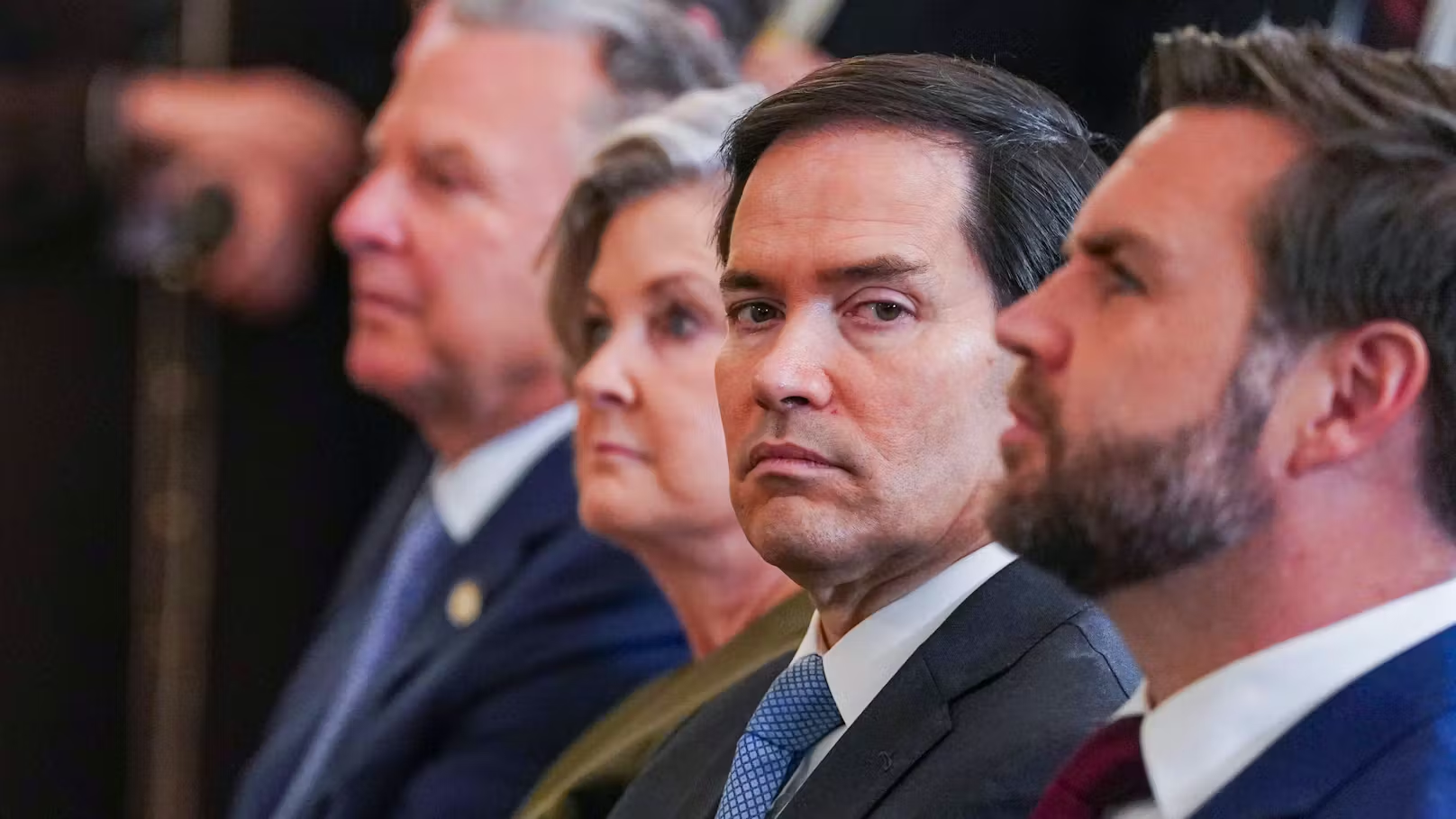
But, at the end of March, when Ukrainian President Volodymyr Zelenskyy criticized the Trump administration for putting undue pressure on Kyiv to cede Donbas to Russia, Rubio responded bluntly by calling this "a lie."
He then proceeded to threaten Ukraine that US weapons already promised to Ukraine may instead be diverted to the war in the Middle East.
This was the hitherto strongest sign that Trump has demoted the issue of Ukraine.
Rubio's public broadside against Ukraine was bad enough. But what we witnessed last week was infinitely worse: just a couple of days before the elections there, Vice President J.D. Vance arrived in Hungary to—in Vance's own words—"help the prime minister [Orbán]."
Over two days—packed with electioneering for Orbán—Vance did his worst to reduce Ukraine to a cheap punchline. Something to be crudely mocked, lied about, and politically abused in order to help Trumpism's only real political ally in Europe: Viktor Orbán—a man in political trouble after 16 years in power.
The conclusion is as obvious as it is ugly: Trump and Vance are happy to throw Ukraine under the bus if it could help the MAGA-Orbán/European extreme right-Putin axis hold ground.
It would be inexcusably naïve to believe that the Vance show in Budapest was a one-off. Knowing his and his boss's longstanding dislike of the way Europeans conduct our lives and societies, my bet is that the two are right now bent over a map of Europe prowling for where to dispatch Vance next, so to speak. And let's not forget that the extreme right-wing has often been frighteningly good at learning from its mistakes when it comes to where and how to strike next.
Ukraine as collateral damage
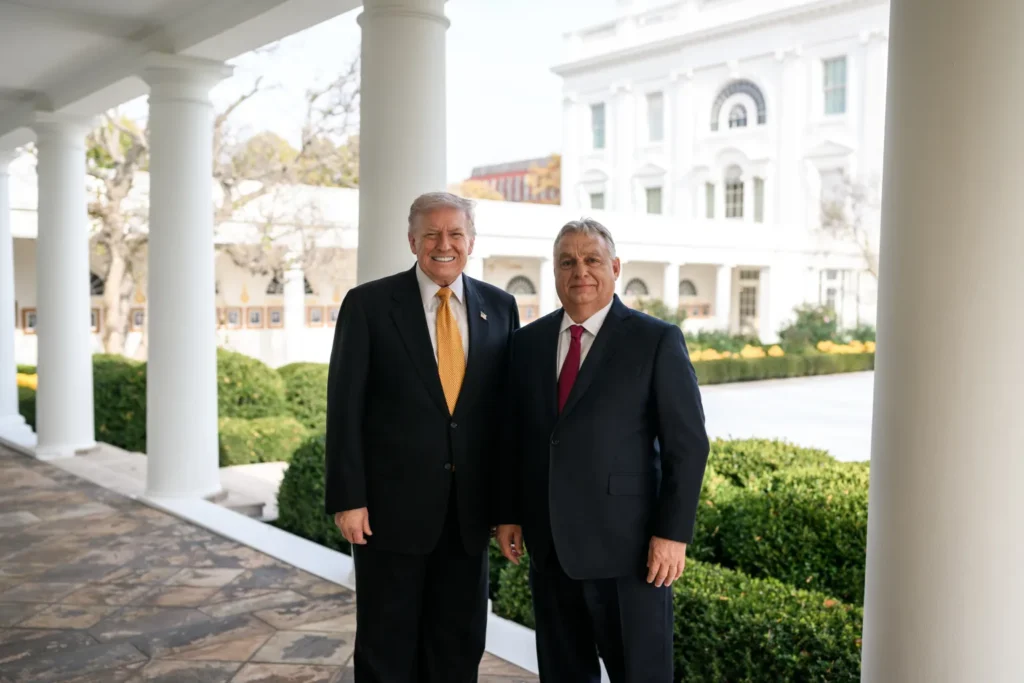
There is a particular ugliness to the way the Trump administration now treats Ukraine: not as a country fighting for survival, but as a stockpile to be raided whenever Trump needs to flatter a dictator, fight another war, or rescue a political buddy.
The Trump administration has already told Congress that key military equipment—including Patriot-related air defense support—will be diverted away from Ukraine. In other words: this is now moving into policy.
And let us be clear about what that means:
It means that while Ukrainian cities continue to face Russian missile and drone attacks, Washington is signaling that air defense for Ukrainian civilians is negotiable.
Negotiable even when European allies have already paid for said equipment, and coordinated and organized around the assumption that Ukraine would get what it needs.
That is not merely strategically reckless. It is morally filthy.
And it also sends exactly the message the Kremlin wants to hear: that Ukraine is no longer treated as a frontline ally, but as an optional inconvenience.
Every delay, every diversion, every such signal helps Russia.
And so does every extra dollar from oil exports that ends up flowing into Putin's war machine. The US waiver of sanctions on Russian oil exports, in combination with an almost doubling of oil prices, leaves—within one month—the Kremlin around $10 billion better off. Other estimates are even higher.
"The war in Iran is pretty good business for President Putin," said Alexander Kolyandr from the Centre for European Policy Analysis.
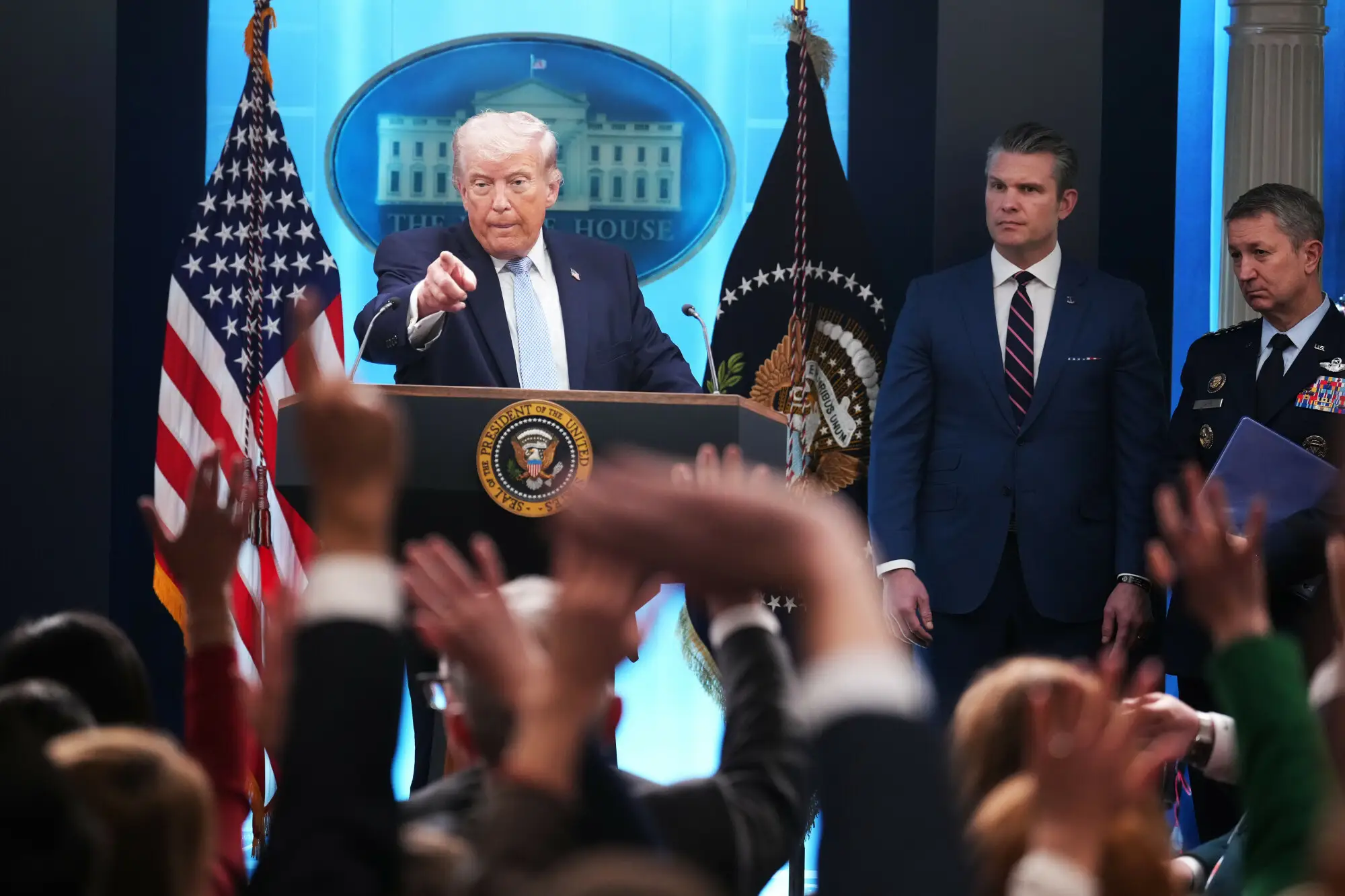
"The main windfall for Russia came from the Defense Ministry of the United States. It comes from the higher price of oil," Kolyandr said.
More money to Russia means more money for Putin's war in Ukraine. This is Ukraine being made to pay for Trump's political priorities elsewhere: Ukraine has become collateral damage.
The Vance show comes to town

Nobody will forget J.D. Vance's performance when he helped his boss ambush Zelenskyy in the Oval Office last year.
But that was not a one-off. That is his job description. Vance's role in Trumpworld is clear: attack dog in a suit, with a degree.
And so last week, with Viktor Orbán fighting for his political survival, Vance flew to Hungary to help him. Not discreetly. Not diplomatically. But openly—in what amounts to one of the most shameless examples of direct US intervention in a European election in recent memory.
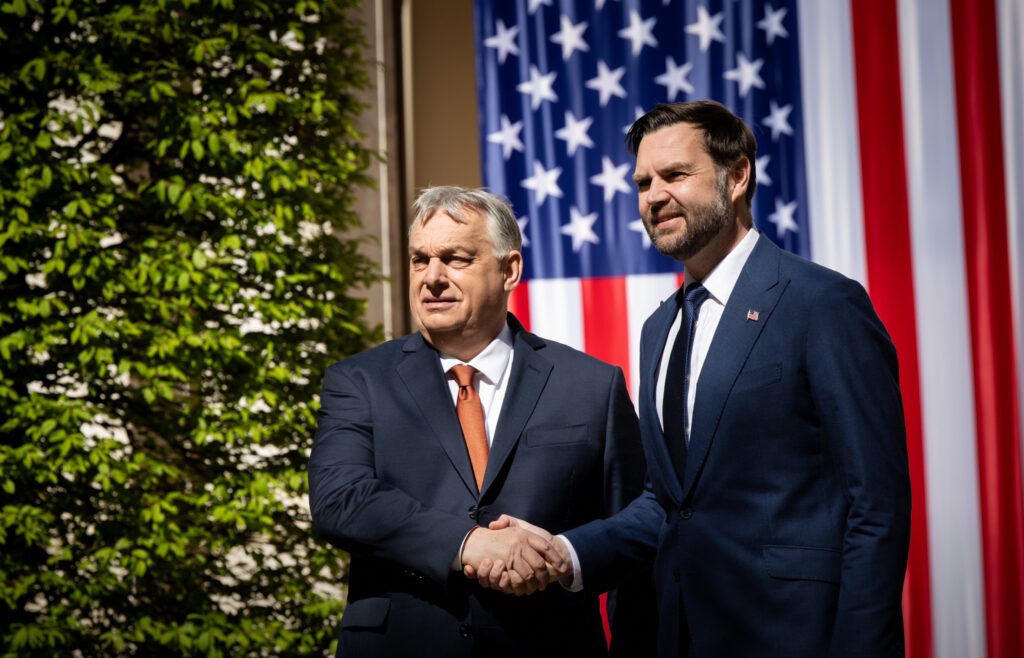
Vance even admitted it. "I want to help, as much as I possibly can, the prime minister." Not even a shade of a diplomatic fig leaf.
And let us be clear about who Viktor Orbán was, and his role in European politics.
Orbán was not merely a difficult conservative or a nuisance in Brussels. He is an illiberal nationalist who has spent years hollowing out democratic institutions, sabotaging EU unity, obstructing support for Ukraine and acting as Vladimir Putin's most useful ally inside Europe.
For months, he has been blocking the EU from using $90 billion of frozen Russian assets as a loan to sustain Ukraine. And shortly before the elections on Sunday, news broke that Hungarian Foreign Minister Péter Szijjártó had systematically been passing confidential EU information to Russia—in order to undermine sanctions against Russian individuals and companies and block any Ukrainian progress towards EU membership.
In a leaked phone conversation, Szijjártó tells Russian Foreign Minister Sergei Lavrov: "I am always at your disposal."
The French government described the Hungarian foreign minister as "a traitor."
After 16 years in power, Orbán was facing the most serious electoral challenge of his rule, far behind in the polls. So in jets Vance—grievance merchant, MAGA emissary, Orbán hype man—to tell Hungarian voters that Washington wants their strongman to stay.
That would already be ugly enough. But it got worse. Because Vance did not just campaign for Orbán. He weaponized Ukraine for him.
Vance's lies about Ukraine
To understand just how cynical this is, you have to look at how Orbán used Ukraine in this election: Ukraine was not a side issue—Orbán spent months turning Ukraine into a political scarecrow, trying to convince Hungarian voters that Ukraine is not a neighbor under attack, but a threat—a source of war, instability and economic pain.
The French paper Le Monde ran a reportage called "Hungarian PM Orban campaigns on fears of war and hatred of Ukraine."
Budapest was plastered with posters of Zelenskyy. One of the most widely circulated campaign slogans read:
"Let's not let Zelensky have the last laugh."

Cue J.D. Vance.
Standing beside Orbán, he did exactly what the long-time Hungarian leader needed him to do: repeat and legitimize this narrative.
Vance—seemingly without getting the irony of his own presence in Budapest—accused the EU of interfering in Hungary's elections and claimed that Ukraine was trying to influence the vote.
He claimed that "Viktor [Orbán] told me himself that Zelensky had threatened to send his military to Orbán's private house."
"It's completely scandalous," Vance said. "You should never have a foreign head of government … threatening the head of government of an allied nation."
Do I need to add that as he was talking, his boss was publishing his infamous social media post about annihilating Iran? No joke.
Vance also condemned that "the Ukrainians shut down pipelines, causing suffering among the Hungarian people in an effort to influence an election."
Vance is creating an external enemy for right-wing politicians. And Ukraine, already vulnerable, is the perfect target.
He even claimed that "We are certainly aware that there are elements within the Ukrainian intelligence services that try to put their thumb on the scale of American elections, of Hungarian elections. This is just what they do…."
There is, utterly unsurprisingly, no evidence for any of this. But that is not the point. The point is to create an external enemy. And Ukraine—already under attack, already vulnerable—is the perfect target.
As is his style, Vance ignored (= implicitly lied about) the war and its beginning, portrayed it as a schoolyard squabble between unruly kids and made sure to apportion blame equally—"it takes two to tango."
The implication somehow being that if the Ukrainians would just stop fighting, everything would be fine.
"We're talking about haggling at this point over a few square kilometers of territory in one direction or another, is that worth losing hundreds of thousands of additional Russian and Ukrainian men?" Vance asked. "Is that worth additional months or even years of higher energy prices and economic devastation?"
Trump's lies about Ukraine
Donald Trump has been lying about Ukraine for years. Already before he was reelected, I have written several long, detailed pieces about this.
His favorite ruse is that the Ukrainians are a bunch of corrupt types, scheming nice, God-fearing American taxpayers out of their hard-earned dollars—$350 billion, to be precise. They are led by this dodgy dude, Volodymyr Zelenskyy, who "every time he comes to the United States, he walks away with $100 billion. I think he's the greatest salesman on Earth."
The one about $350 billion from the US to Ukraine has been Trump's favorite Ukraine sleight for two or three years, and he repeated it just days before his lieutenant set off for Viktor land.
But the figure of $350 billion is false. Flatly false.
Multiple fact-checks and aid trackers have shown that Trump's number wildly inflates actual US support. Most serious estimates put the figure at, at the very most, half that amount. The Kiel Institute for the World Economy and other fact-checking organizations have repeatedly shown that the real number depends on what exactly is counted—military, financial, humanitarian, committed versus delivered—but it is nowhere near the number Trump keeps throwing around.

And then we come to the scene.
The scene that tells you everything. How Trump and Vance see Ukraine as a cheap political football to be kicked about as they need.
At a campaign event in Budapest on 7 April, Vance phoned up Donald Trump on his mobile and put him on loudspeaker in front of 5,000 Orbán supporters.
A campaign stunt. And Trump delivered exactly what Orbán needed:
First, he praised the Hungarian prime minister—the usual stuff about how much he loves his buddy Viktor—and then, lying through his teeth about the Ukrainian leader and the Russian invasion, Trump directly reminded the Hungarians to vote for Orbán, and why:
"Remember this, he didn't allow people to storm your country and invade your country, like other people have, and ruin their countries," Trump told the Hungarian crowd via speakerphone, with his deputy eagerly nodding.
Read that again. Watch that again.
The US president, live on speakerphone into an Orbán rally, suggesting that some countries—unlike Hungary—"allowed" themselves to be invaded.
When Trump talks about Ukraine "allowing" itself to be invaded, he actively rewrites reality to benefit Putin and every other authoritarian
No prizes for guessing who he meant.
This is not just ignorance, not just campaigning. This is active moral inversion. Blaming the victim.
When Trump talks about Ukraine "allowing" itself to be invaded, or frames Kyiv as somehow responsible for Russia's war, he is not merely being stupid or crude.
Trump is actively rewriting reality in a way that benefits Putin, Orbán, and every other authoritarian. The US president is excusing the aggressor.
It is, of course, very difficult not to see the parallel between Donald Trump so easily excusing Putin's rape of Ukraine with the many accusations leveled against the US president for rape, assault and pedophilia. (But that is a job for the US courts, not this article.)
And once you understand that, the whole performance makes sense.
We all know that Donald Trump is a bully. But Trump is not accidentally mocking Ukraine. Trump is mocking Ukraine for political use.
Cheap, ugly, and dangerous
A couple of weeks ago, Rubio's shift should already have ended any illusion that there were still limits inside the Trump administration when it came to Ukraine—still decency. Last week, Trump and Vance removed any doubt.
Trump and Vance reducing Ukraine to a cheap punchline—live, in the middle of Viktor Orbán's election campaign—is something else entirely.
Because it shows their intent: Ukraine is no longer just negotiable, it is disposable. Disposable in the service of a political alliance that, not coincidentally, overlaps neatly with Vladimir Putin's interests. Trump and Vance were happy to throw Ukraine under the bus if it could help the MAGA-Orbán-Putin axis.
Ugly. In every sense of the word. At least it did not work. This time.


