

Russia rains “Krasnopol-M2” techno-lethal shells on Ukraine, as five Russian plants remain outside Western sanctions

The Krasnopol-M2 combines lethality with flexibility for Russian forces.
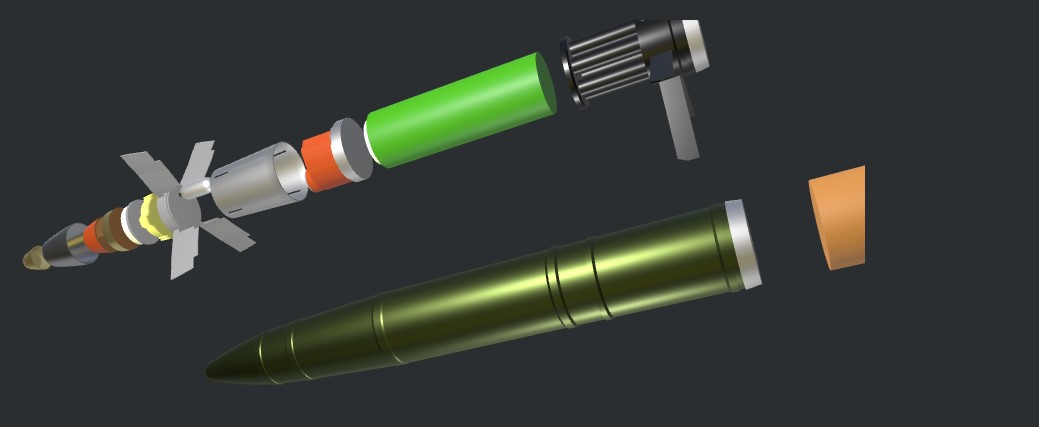
A Russian “Krasnopol-M2” guided ammunition. Source: HUR
A Russian “Krasnopol-M2” guided ammunition model. Source: HUR
Russia rains “Krasnopol-M2” techno-lethal shells on Ukraine, as five Russian plants remain outside Western sanctions

Russia massively uses “Krasnopol-M2” guided ammunition against Ukraine. According to Ukrainian intelligence, five of the 17 enterprises involved in production remain outside sanctions from partner countries.

The munition is deployed from self-propelled artillery systems MSTA-S, Akatsiya, as well as towed MSTA-B and D-20.

According to Militarnyi, the D-20 howitzer has a barrel approximately 26 calibers long, consisting of a monoblock tube. It can fire not only Krasnopol guided shells but also tactical nuclear munitions.


Aggressor’s fire network: “Krasnopol-M2” combines artillery and drones 

The munition is developed by Konstruktorskoe Buro Priborostroeniya named after Academician Shipunov, part of the High-Precision Complexes holding under state corporation Rostec.

“Guidance is carried out via laser target illumination, from ground complexes or using UAVs, including Orlan-30 and Granat-4,” the report states.

Techno-lethal strike: shell composition and range keep Ukrainians on alert

A Krasnopol-M2 round includes a guided high-explosive fragmentation shell 3OF95, a propellant charge, and special packaging. Depending on system modification and charge, its range exceeds 20 kilometers.

“The aggressor state, Russia, continues to use precision munitions in the war against Ukraine, relying on access to technologies and components,” intelligence emphasizes.

Ukrainian Intelligence has called for maximum sanctions pressure

The agency says it systematically exposes these chains and urges allies to strengthen sanctions to deprive the aggressor of its warfighting capabilities.

Earlier, the 20th sanctions package and the €90 billion loan have been stalled largely because of opposition from Hungary and, to a lesser degree, Slovakia. 

Hungary vetoed both the sanctions and the loan in February, breaking an earlier commitment and linking its support to conditions such as the restoration of Russian oil transit through the Druzhba pipeline. This block has delayed approval and disbursement, despite backing from other EU countries.

Ukrainian President Volodymyr Zelenskyy stressed the critical importance of unlocking the €90 billion package, calling it “financial security not only for Ukraine but for all of Europe.”

To suggest a correction or clarification, write to us here

You can also highlight the text and press Ctrl + Enter

Please leave your suggestions or corrections here


    Euromaidan Press

    We are an independent media outlet that relies solely on advertising revenue to sustain itself. We do not endorse or promote any products or services for financial gain. Therefore, we kindly ask for your support by disabling your ad blocker. Your assistance helps us continue providing quality content. Thank you!

    Ads are disabled for Euromaidan patrons.

    Support us on Patreon for an ad-free experience.

    Already with us on Patreon?

    Enter the code you received on Patreon or by email to disable ads for 6 months

    Invalid code. Please try again

    Code successfully activated

    Ads will be hidden for 6 months.