


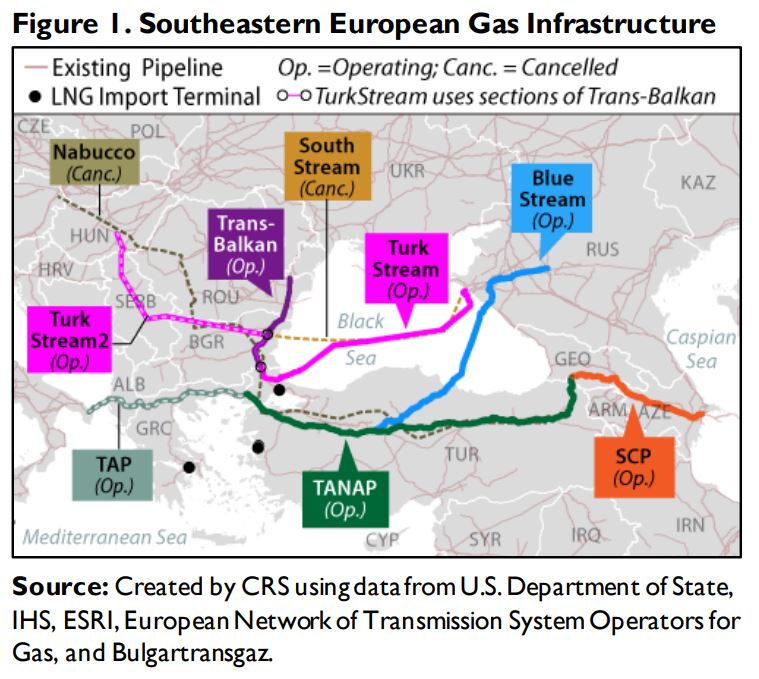
Serbian President Aleksandar Vučić announced that the military and law enforcement found two backpacks containing high-powered explosives and detonators near the Balkan Stream gas pipeline in northern Serbia on 5 April — one week before Hungary's parliamentary elections, according to RFE/RL and BBC. The pipeline is an extension of Russia's Turk Stream, supplying gas to Hungary. Ukraine's Foreign Ministry immediately called it a Russian false-flag operation. Hungarian opposition leader Péter Magyar, who leads Orbán in polls by roughly 20 points, said he had been warned weeks ago that this would happen.
Ukraine: this is a Russian false-flag ahead of Hungary's election
Ukraine's MFA spokesperson Heorhii Tykhyi posted on 5 April:
"We categorically reject attempts to falsely link Ukraine to the incident with explosives found near the Turkstream pipeline in Serbia. Ukraine has nothing to do with this. Most probably, a Russian false-flag operation as part of Moscow's heavy interference in Hungarian elections."
What was found and what officials said
The backpacks were allegedly found a few hundred meters from the pipeline near Tresnjevac in the Kanjiza district of northern Serbia, close to the Hungarian border. Vučić stated the explosives had "devastating power" — enough to cut gas supplies to both Hungary and northern Serbia had they detonated. He said he had spoken to Orbán, adding:
"We think we know which group the individuals who were supposed to take that final step in activating the explosives belong to," without naming anyone.
Orbán convened an emergency National Defense Council meeting the same afternoon. Hungarian Foreign Minister Péter Szijjártó called the incident "an attack on Hungary's sovereignty" and said it would be defended jointly with Serbia.

Fico joins Orbán in demanding the EU lift Russian energy sanctions — a week before Hungary’s election that could end Orbán’s 16-year rule
Hungarian opposition leader Péter Magyar said in a Facebook post that he had been receiving warnings from multiple sources for weeks that Orbán, with Russian and Serbian assistance, was planning a false-flag on the pipeline near the Hungarian border before the election.
Trending Now
"Weeks ago, several people publicly signaled that in Serbia, at the gas pipeline, something would 'accidentally' happen at Easter, one week before the Hungarian elections," Magyar wrote. "So it did."
He pledged his Tisza party's government would hold a full public investigation into who ordered and carried out the operation.
Experts had predicted this in advance
Hungarian security expert András Rácz had warned on 2 April — three days before the discovery — that a fake attack on the Serbian section of TurkStream could be staged. He predicted the explosives would be identified as Ukrainian, allowing Orbán to blame Kyiv.

Szijjártó told Russia’s deputy minister he’d removed 72 entities from EU sanctions — then asked Moscow to write his arguments for removing more
Former senior Hungarian counter-intelligence officer Péter Buda told BBC his team had advance intelligence on the operation, including its location and timing.
"It's clear that Ukraine's interests aren't at stake here," Buda said.
Read also
-
Orbán threatened to cut gas supplies to Ukraine. This decision will cost $1 billion for Hungarian voters
-
Ukraine exposes Hungarian spy network hunting air defense positions in western regions. He operated from diplomatic mission (VIDEO)
-
Poland’s foreign minister opposes president’s trip to Budapest to support Orbán campaign


