
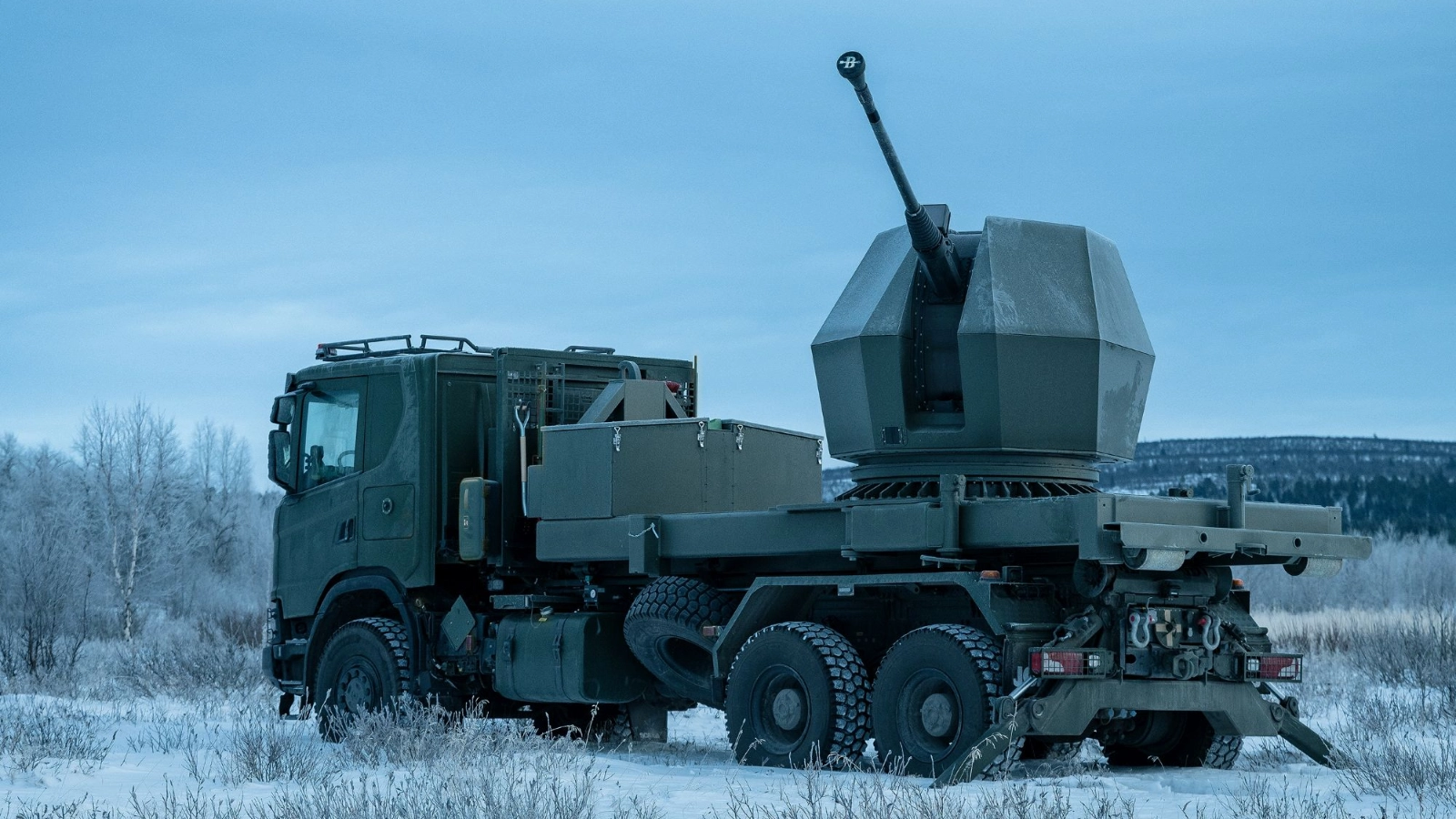
Sweden and Denmark are sending parts for the Tridon air defense system to Ukraine "to get important experience and data from the Ukrainian battlefield for our drone defense," Swedish Defense Minister Pål Jonson posted on Twitter on 2 April.
Sweden has signed 8.7 billion ($916 million) in defense contracts for multiple air defense systems to be delivered in 2027 and 2028 — gun platforms, Trackfire systems, electronic warfare, and command and control systems.
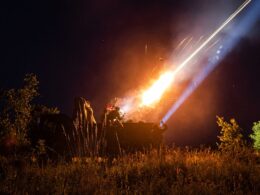
That appears to include $180 million for the Tridon Mk2 anti-aircraft system, a truck-mounted 40-mm autocannon produced by BAE Systems. These machines form part of a modular anti-drone system called Gute II.
BAE Systems says the Tridon has multi-target capability and can engage drones, cruise missiles, and aircraft. In a pinch, the system can also fire at ground threats like armored vehicles.
Jonson said in February that Tridon systems bound for Ukraine will arrive within one year and come with detection, command-and-control components, spare parts, and ammo.
The system is armed with a Bofors 40 Mk4 gun, which can rapidly switch between ammunition and can engage aerial targets up to 13 kilometers away.
The Bofors 3P (pre-fragmented, programmable, proximity-fused) ammunition can be programmed in six different ways to increase effectiveness against specific targets.
Each fuse is automatically programmed going off data from the fire control computer before being fired. The rounds can airburst a cloud of fragments to increase the chance to strike the target.
Sweden’s procurement of these systems is meant to support a mobile defense concept according to Jonson. The idea revolves around nimble anti-drone capabilities that can be quickly moved and redeployed.
“Sweden is large and we cannot defend all locations with air defense at the same time,” Jonson said.
Trending Now
Sweden appears to be trying to learn from Ukraine, whose massive territory is swarmed nightly by hundreds of flying attack drones.
Despite Russia setting new records by volume of attacks, Ukraine’s interception rate didn’t fall below 80% throughout 2025 and has climbed to 90% in March.
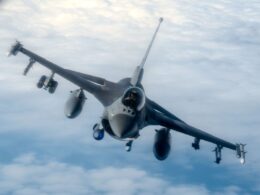
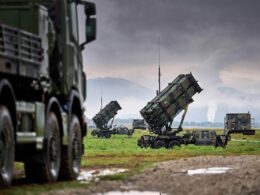
Ukraine has been forced to adapt a dizzying menagerie of systems, including missiles, drone interceptors, point defense guns, mobile squads with machine guns and MANPADS, different types of aviation, electronic warfare, and other systems.
Integrating all these diverse capabilities into a single air defense system has been a significant challenge for the country. However, the results have spoken for themselves — European countries like Sweden and Middle Eastern countries like Saudi Arabia and Qatar have taken notice.