

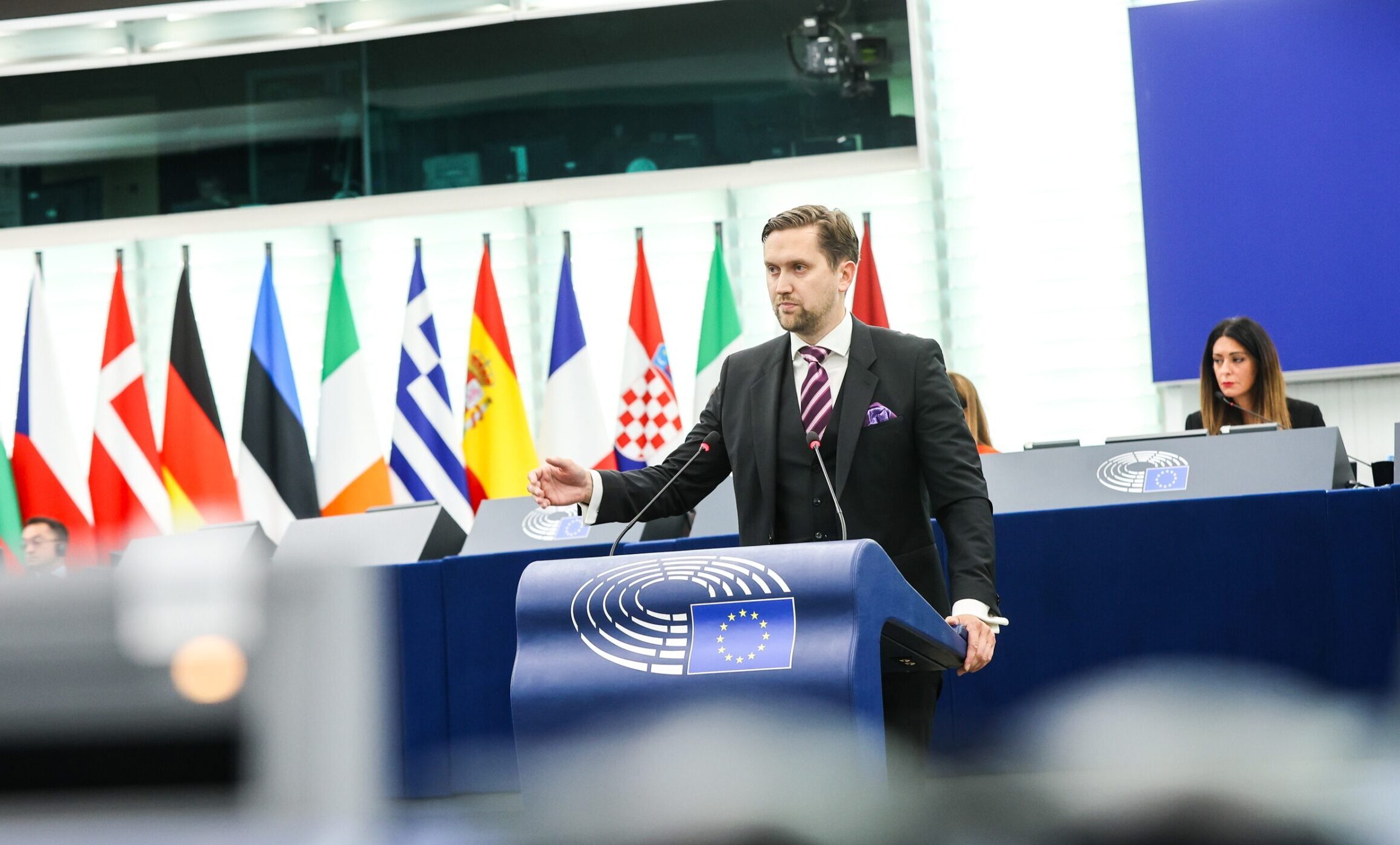
Hungary’s veto on the EU’s €90 billion loan package for Ukraine is framed in Brussels as a technical problem with a technical solution. Bypass the one holdout, proceed with 26, move on. But the veto is not normal—and EU institutional analysts are now saying so explicitly.
“This is, I think, the first time where a member state is vetoing a decision after there had been agreement to, in fact, not veto the decision,” Thu Nguyen, acting co-director of the Jacques Delors Centre, told Euronews this week.
“I’m fairly certain the EU will move toward a multi-speed model.”
The €90 billion package was agreed in December 2025 with opt-outs for Hungary, Slovakia, and the Czech Republic. Hungary then vetoed the enhanced cooperation arrangement it had already agreed not to block—an escalation without precedent in EU history.
An Estonian Member of the European Parliament, speaking to Euromaidan Press before the Nguyen analysis was published, had already named where this leads. “I’m fairly certain the EU will move toward a multi-speed model,” Jaak Madison said, “separate groups of countries with different levels of integration.”
The Euronews piece confirms the mechanics are already in motion: EU Council conclusions are now issued in two versions—one for all 27, one for 26 on Ukraine.
What bypassing Hungary actually costs
The mechanics of going around Hungary are straightforward. The willing 26 can proceed; Hungary stays out, bears no repayment obligation, and faces no formal consequence.
Madison identifies what the technical framing leaves out. Voters in Italy, Cyprus, or Greece will ask why their taxpayers are covering a share of a loan Hungary refused to guarantee. “Technically, it’s possible,” Madison says. “Politically, it’s messy.”
“If we go for easy fixes, if we go for compromises and give a government the feeling that this hostage taking is a way to blackmail us, you create incentives to do it in the future as well.”
Patrick Müller, Professor for European Studies at the University of Vienna, puts the longer-term cost more bluntly. Hungary, he told Euronews, tries to veil the link between its veto and its demands—“so it’s not easy to detect because it’s not explicit.”
“If we go for easy fixes, if we go for compromises and give a government the feeling that this hostage taking is a way to blackmail us, you create incentives to do it in the future as well,” he told Euronews.
Juncker’s five scenarios, seven years later
In 2017, Jean-Claude Juncker published a White Paper outlining five possible futures for the EU, one of which was a multi-speed Europe: countries clustering around shared priorities, some integrating deeper, others stepping back. The scenario was presented as a managed possibility. The €90 billion standoff suggests it is no longer theoretical.
The EU Ukraine is negotiating to join may not look like the EU that exists today.
Trending Now
“In 10 years, we might have a union with a free market and Schengen, but participation in aid to third countries might be based on voluntary agreements between willing states,” Madison told Euromaidan Press. The EU Ukraine is negotiating to join may not look like the EU that exists today.
The geography of solidarity
Security concerns across the EU, Madison argues, differ so dramatically that a unified response means increasingly overriding voters who don’t feel the threat.
“Why should a voter in Luxembourg agree to pay for an aid package when Russia doesn't threaten them in the slightest?”
Estonia gives 3.01% of its GDP to Ukraine aid, second in the EU only to Denmark’s 3.25%. Even from that vantage point, he sees fragmentation as more likely than unity. “Why should a voter in Luxembourg agree to pay for an aid package when Russia doesn't threaten them in the slightest?”


