


For the third time in three months, a European fintech has acquired a Ukrainian bank. This time, the buyer came with a former president on its board.
Three acquisitions in three months—each a bet on a country still fighting a war.
Poland’s ZEN.com won the 1 April auction for insolvent PINbank, Ukraine’s Deposit Guarantee Fund announced. The deal follows Estonia’s Iute Group, which entered Ukraine’s banking market through the failed RwS Bank in January, and France’s Crédit Agricole, which agreed to acquire Bank Lviv in March. Three acquisitions in three months—each a bet on a country still fighting a war.
President on board
Former Polish President Andrzej Duda joined ZEN.com’s supervisory board in October 2025, his first private-sector move after leaving office. He told Puls Biznesu the role was “a natural continuation of the mission I pursued as president,” as reported by Notes from Poland. Before politics, he had specialized in administrative law, with a focus on licensing and regulatory approvals.
Sources in Ukrainian regulatory bodies told Ekonomichna Pravda that Duda took part in ZEN.com’s pre-qualification process with Ukraine’s central bank ahead of the tender. ZEN.com faced only one qualified rival—and won.
“Zen has been implementing the recommendations issued by its regulator. Therefore, please drop this matter.”
ZEN.com, however, already had a regulatory problem. In December 2025, Lithuania’s central bank fined ZEN.com €1.8 million ($2 million) for anti-money laundering violations—a review that had been underway before Duda joined the board. ZEN.com contests the ruling.
Asked about it on Radio Zet, Duda said: “Zen disagrees with this decision. The company believes it is unfair and unfounded, because for the past two years, Zen has been implementing the recommendations issued by its regulator, the Bank of Lithuania. Therefore, please drop this matter.”
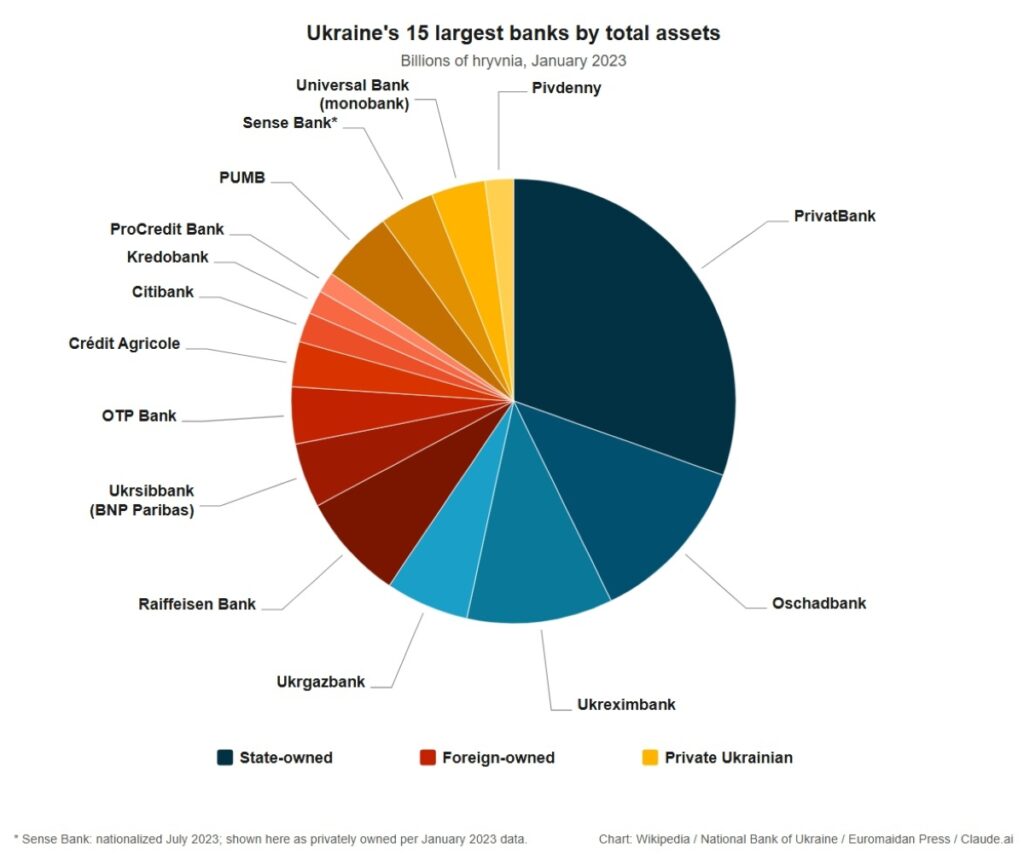
Why investors keep coming
Private banks in Ukraine cannot pay dividends to their owners. The corporate profit tax for banks stands at 50% in 2026—raised retroactively two years running—with some members of Parliament pushing to extend it into 2027.
The company plans to invest more than €20 million ($22 million) in Ukraine.
ZEN.com CEO Dawid Rożek calls it a long-term play: the company plans to invest more than €20 million ($22 million) in Ukraine after the deal closes.
ZEN.com had initially planned to enter Ukraine as a payment platform. Ukraine’s central bank has not issued new payment licenses since the full-scale invasion began. Buying a failed bank proved faster than waiting for a new license.
From gaming marketplace to Ukrainian bank
Trending Now
Founded in Rzeszów in 2018, ZEN.com is a London-headquartered fintech with e-money licenses in Lithuania, the UK, and Singapore, operating across 35 countries. Rożek co-founded gaming marketplace G2A before turning to financial services with ZEN.com.
PINbank will be ZEN.com’s first bank anywhere.
The company had already partnered with PrivatBank to enable transfers from EU countries to Ukraine, the Kyiv Post reported. PINbank will be ZEN.com’s first bank anywhere.
A bank once owned by CSKA Moscow
PINbank had been 88.89% owned by Yevgeny Giner, president of CSKA Moscow football club and a sanctioned Russian businessman, until Ukraine nationalized his stake in 2023.
By the time the Deposit Guarantee Fund put it up for sale, PINbank had posted UAH 63 million ($1.5 million) in losses in 2025 alone.
The bank was briefly earmarked as the foundation for a postal savings network under state postal operator Ukrposhta before Ukraine’s central bank blocked the plan, citing Ukrposhta’s deteriorating finances.
By the time the Deposit Guarantee Fund put it up for sale, PINbank had posted UAH 63 million ($1.5 million) in losses in 2025 alone. Of the 11 entities that initially applied, only two passed the central bank’s pre-qualification screening. ZEN.com bid above the asking price.


