

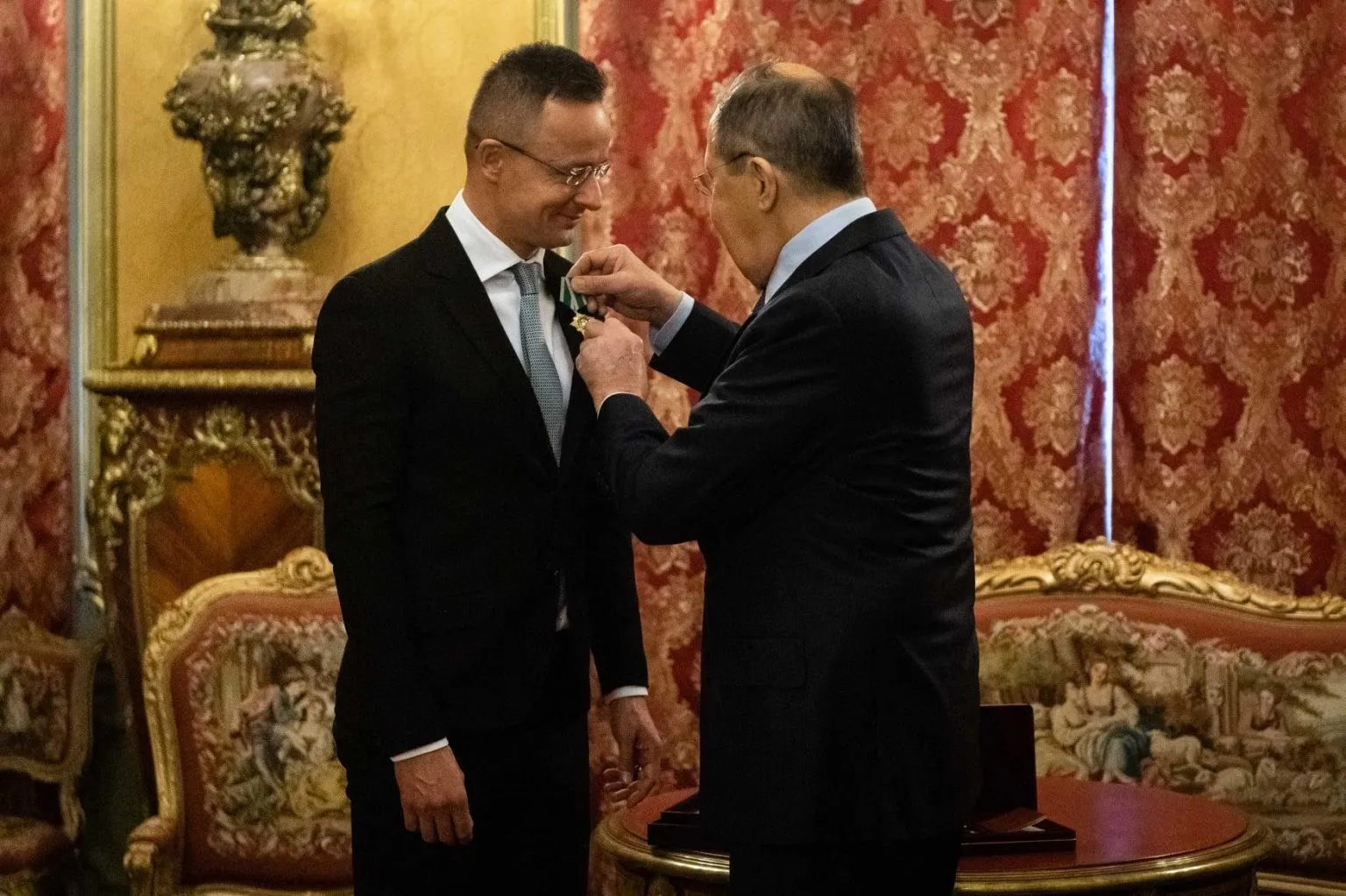
A joint investigation by five European outlets has produced the first verbatim evidence that Hungary's Foreign Minister Péter Szijjártó acted as a direct conduit between the Kremlin and the EU's closed-door deliberations on Russia sanctions, according to VSquare. Leaked phone transcripts and audio recordings show Szijjártó taking personal requests from Lavrov, sharing classified EU council details with Moscow, and seeking Kremlin-authored arguments to fight shadow fleet sanctions — a pattern the investigation documents across four years.
The recordings land 12 days before Hungary's 12 April parliamentary elections, in which Prime Minister Viktor Orbán's Fidesz party faces its strongest electoral challenge in years.
"Yeah, absolutely": delisting oligarchs on Lavrov's request
An hour after Szijjártó landed in Budapest from St. Petersburg on 30 August 2024, Lavrov called him with a request. Russian oligarch Alisher Usmanov wanted his sister, Gulbahor Ismailova, removed from EU sanctions lists — and Szijjártó had already promised to help.
"Look, I am calling on the request of Alisher, and he just asked me to remind you that you were doing something about his sister," Lavrov said.
"Yeah, absolutely," Szijjártó replied, claiming Hungary and Slovakia would submit a delisting proposal the following week. "We will do our best in order to get her off," he added.
Seven months later, Ismailova was removed from the EU list — alongside Russian businessman Viatcheslav Moshe Kantor and Russia's sports minister, Mikhail Degtyaryov.
Before hanging up, Szijjártó told Lavrov he had visited Gazprom's new headquarters in Russia and said: "I am always at your disposal."
A senior European intelligence officer reviewed the printed transcripts and told the investigating consortium:
"If you remove names and show these conversations to any case officer, he will swear that this is a transcript of an intelligence officer working his asset."
Leaking EU deliberations in real time
In the same 30 August 2024 call, immediately after the Ismailova discussion, Szijjártó briefed Lavrov on the EU Foreign Affairs Council meeting he had attended the day before. He relayed the specific arguments made by Lithuania's then-Foreign Minister, Gabrielius Landsbergis, that Russia was financing its war through energy profits from European buyers.
Landsbergis confirmed the exchange to the consortium.
"It seems that all this time Putin had, and still has, a mole in all European and NATO official meetings," he said. "Every generation has a Kim Philby. Apparently Péter Szijjártó is playing the role with enthusiasm."
Trending Now
The comparison runs deeper than rhetoric: both Philby and Szijjártó received the highest Soviet and Russian award given to foreigners — the Order of Friendship. Putin awarded Szijjártó, but Lavrov physically handed it to him on 30 December 2021.
Fighting shadow fleet sanctions — with Kremlin talking points
A 30 June 2025 call with Russian Deputy Energy Minister Pavel Sorokin suggests a second channel of collusion. Szijjártó claimed he was working to block the EU’s 18th sanctions package on Russia’s shadow fleet, had already removed 72 Russian entities from the list, and wanted Moscow’s help proving the sanctions hurt Hungary.
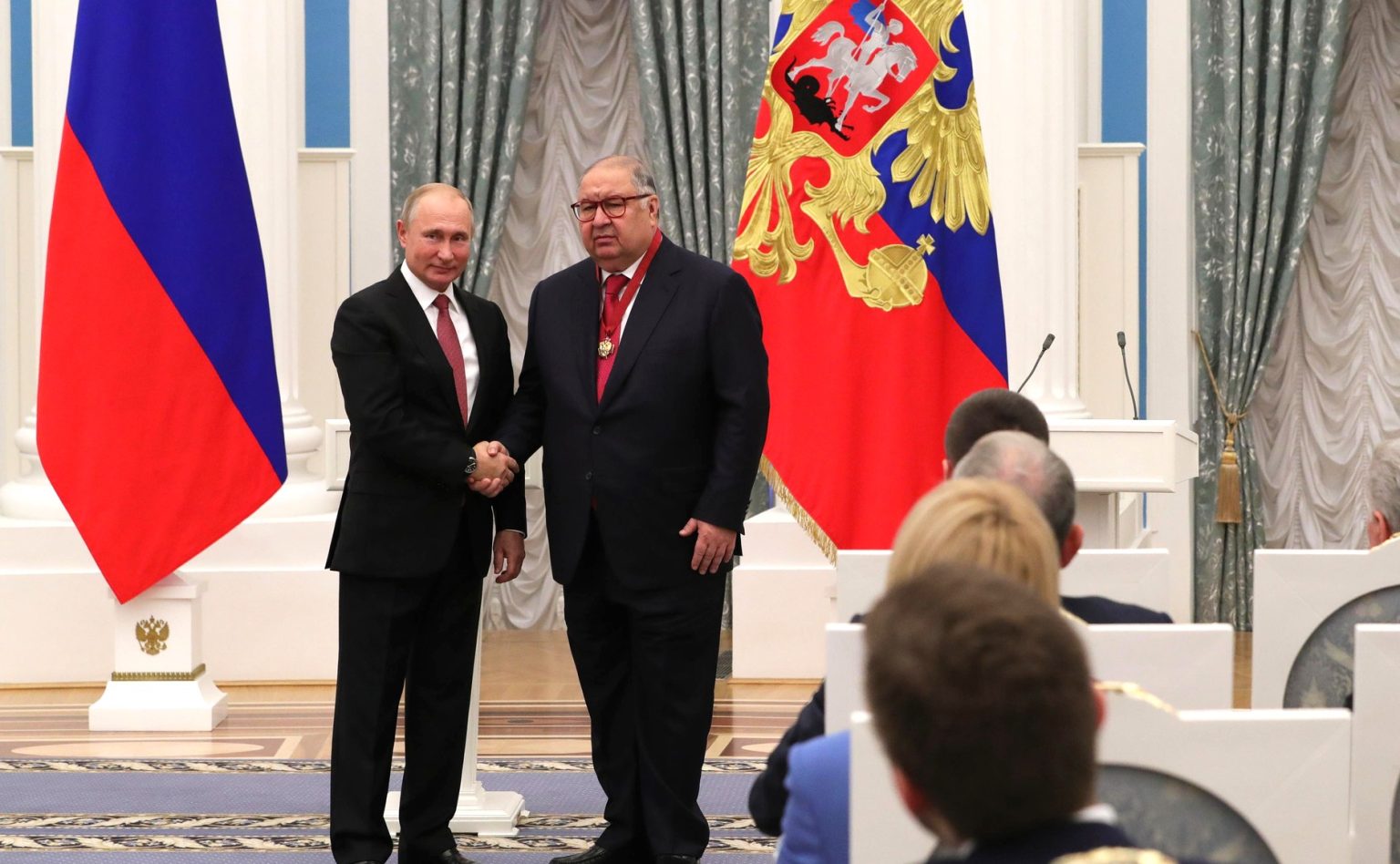
Hungary and Slovakia blocked the 18th package publicly on 23 June 2025. The EU eventually adopted it on 18 July after weeks of delay, dealing a significant blow to Russia's shadow fleet — though the investigation notes it is unclear how much greater the impact would have been without Szijjártó's efforts.
Four years of systematic collusion
The investigation says Hungary’s sanctions vetoes became a systematic lobbying effort on behalf of Kremlin-linked figures, later joined by Slovakia. Both reportedly used delisting demands and the threat of blocking the full 2,700-person regime to extract concessions, taking advantage of the EU’s six-month unanimity rule.
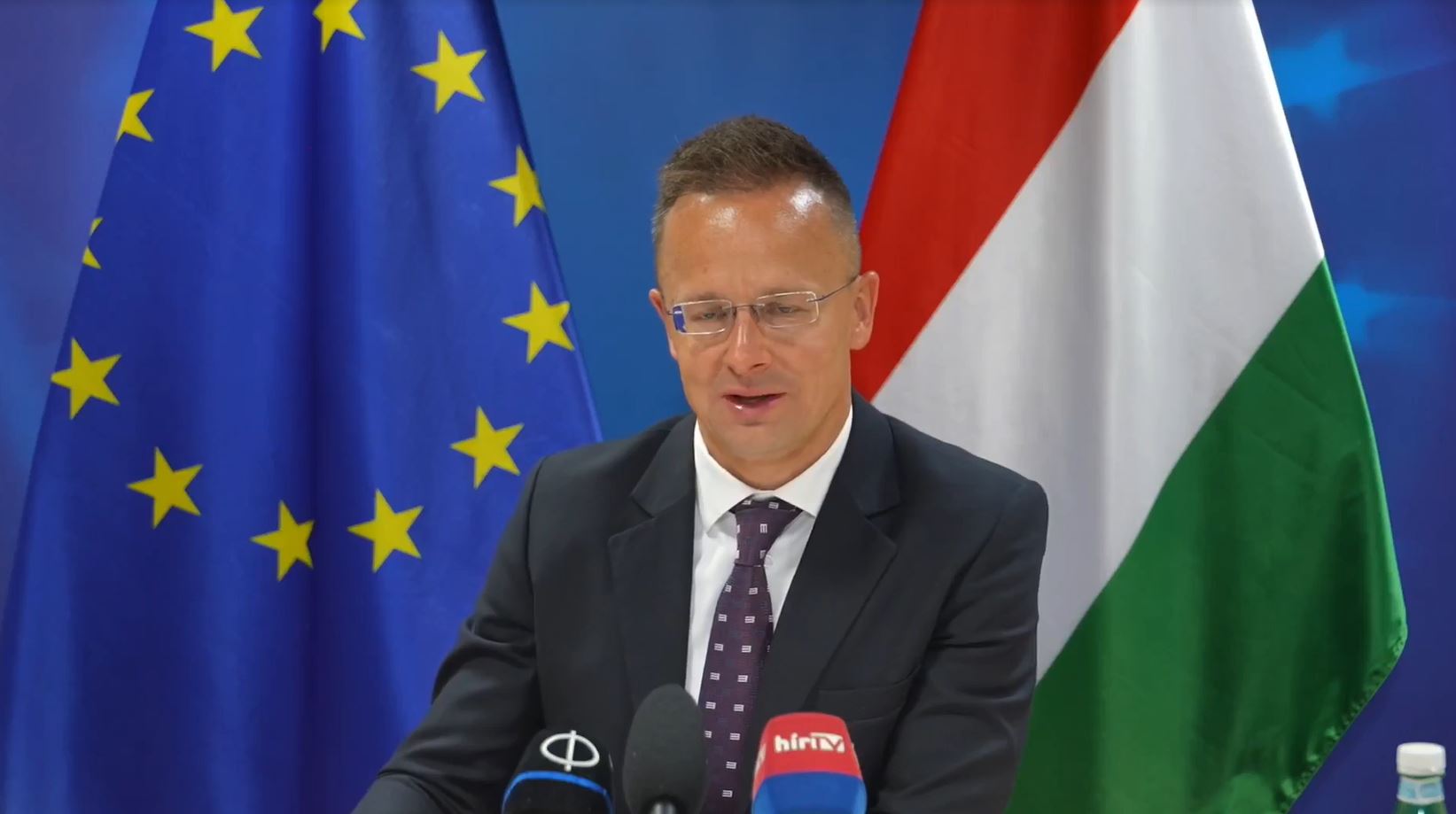
EU sidelines Hungary in closed-door meetings as diplomats cite suspected Kremlin back-channel
Türkiye also joined the effort. Before the March 2026 sanctions renewal, Turkish President Recep Tayyip Erdoğan wrote to Slovak Prime Minister Robert Fico, calling Usmanov “a dear friend,” while the Organization of Turkic States and the leaders of Azerbaijan, Kazakhstan, Kyrgyzstan, and Uzbekistan sent similar letters to EU leaders. Slovakia and Hungary pushed to remove Usmanovand and Mikhail Fridman entirely, but Slovakia later backed down without success, and Hungary then dropped its own list of seven names.
One name Hungary shielded for years without success was Andrei Bokarev, co-owner of a Russian defense manufacturer. The Insider and Der Spiegel revealed in March 2026 that Bokarev was the "ideological architect and principal backer" of Center 795 — a secret GRU assassination directorate embedded inside the Kalashnikov Concern.
In February 2026, Hungary went further than ever before: it vetoed the entire 20th sanctions package outright — the first time Budapest had blocked a package in full rather than extracting concessions.
Read also
-
EU presses ahead to unlock €90 billion for Ukraine and new Russia sanctions – but Kallas says “no good news” yet
-
Orbán threatened to cut gas supplies to Ukraine. This decision will cost $1 billion for Hungarian voters
-
Fico: “Slovakia is ready to take over the baton from Hungary, if necessary” — on blocking EU’s Ukraine loan and Russia sanctions


