

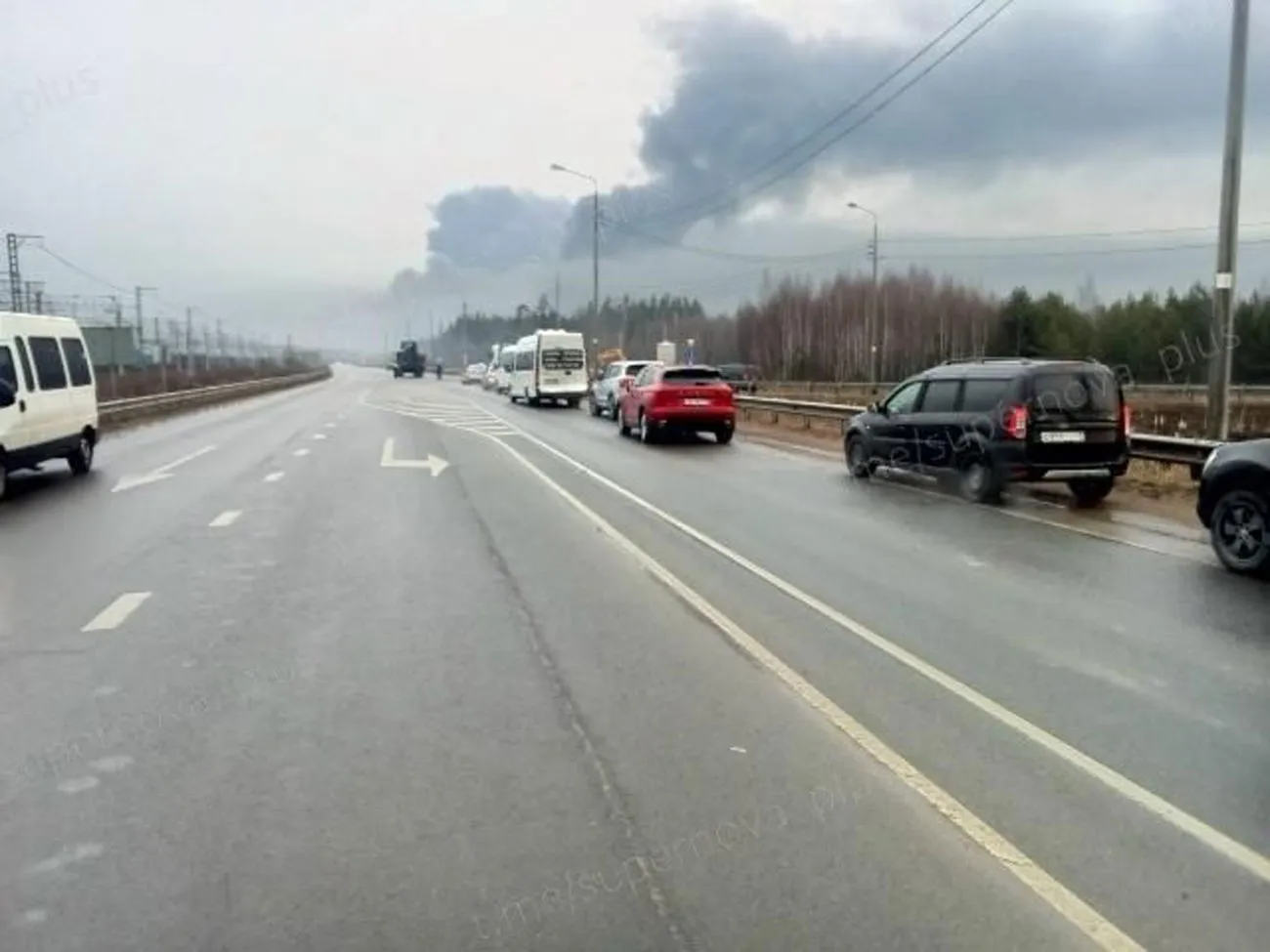
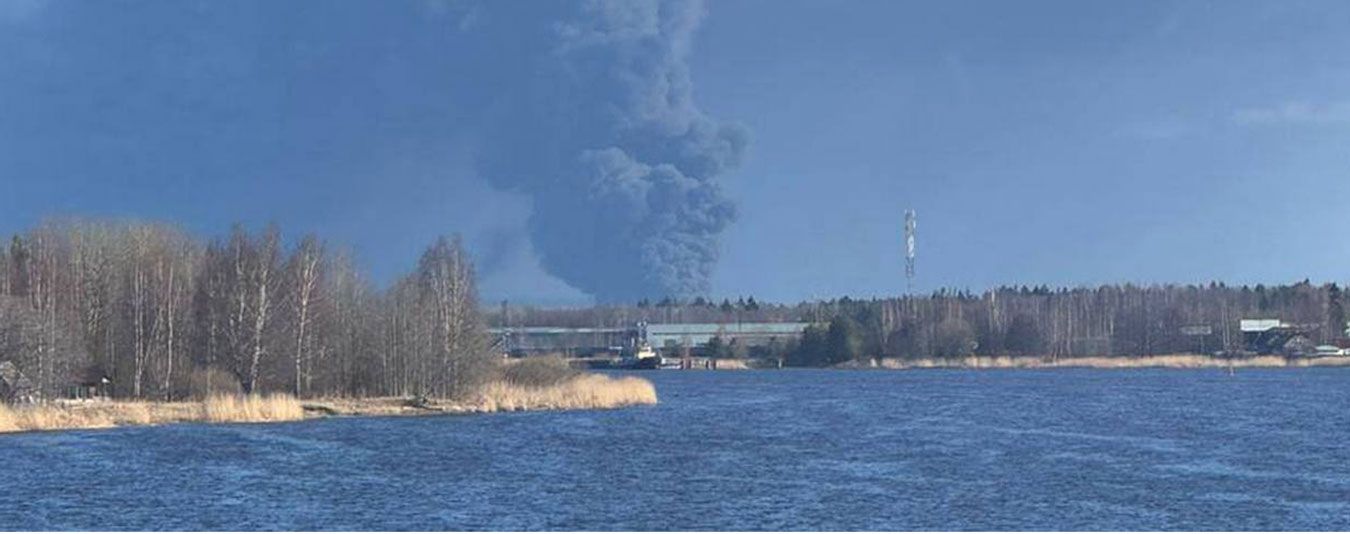
Ukrainian forces struck Russia's Ust-Luga oil export port for the fourth time in a week overnight on 30–31 March, Leningrad Oblast Governor Aleksandr Drozdenko confirmed, extending a nine-day campaign against Russia's Baltic energy infrastructure. The port, located over 900 km from Ukraine's border near the Estonian frontier, has been hit repeatedly. Fires broke out again at the facility while Estonia triggered air raid alerts as drones crossed into NATO airspace for the second time in days.
Ust-Luga is Russia's second-largest port on the Baltic Sea and the endpoint of the Baltic Pipeline System-2, located in the Luga Bay of the Gulf of Finland, approximately 110 km from St. Petersburg and close to the Estonian border. Its primary function is the export of oil and petroleum products.
New strike on battered Ust-Luga
Around 3 a.m. on 31 March, Russian Telegram channel Astra reported drone attacks on the port zone, with the governor initially noting 17 UAVs downed.
Residents reported explosions and heavy anti-aircraft fire over Ust-Luga and in the Kirishi, Luga, and Tosno districts. Russian social media users complained that drones had struck the oblast for seven consecutive days — the Estonian military put the count at nine.
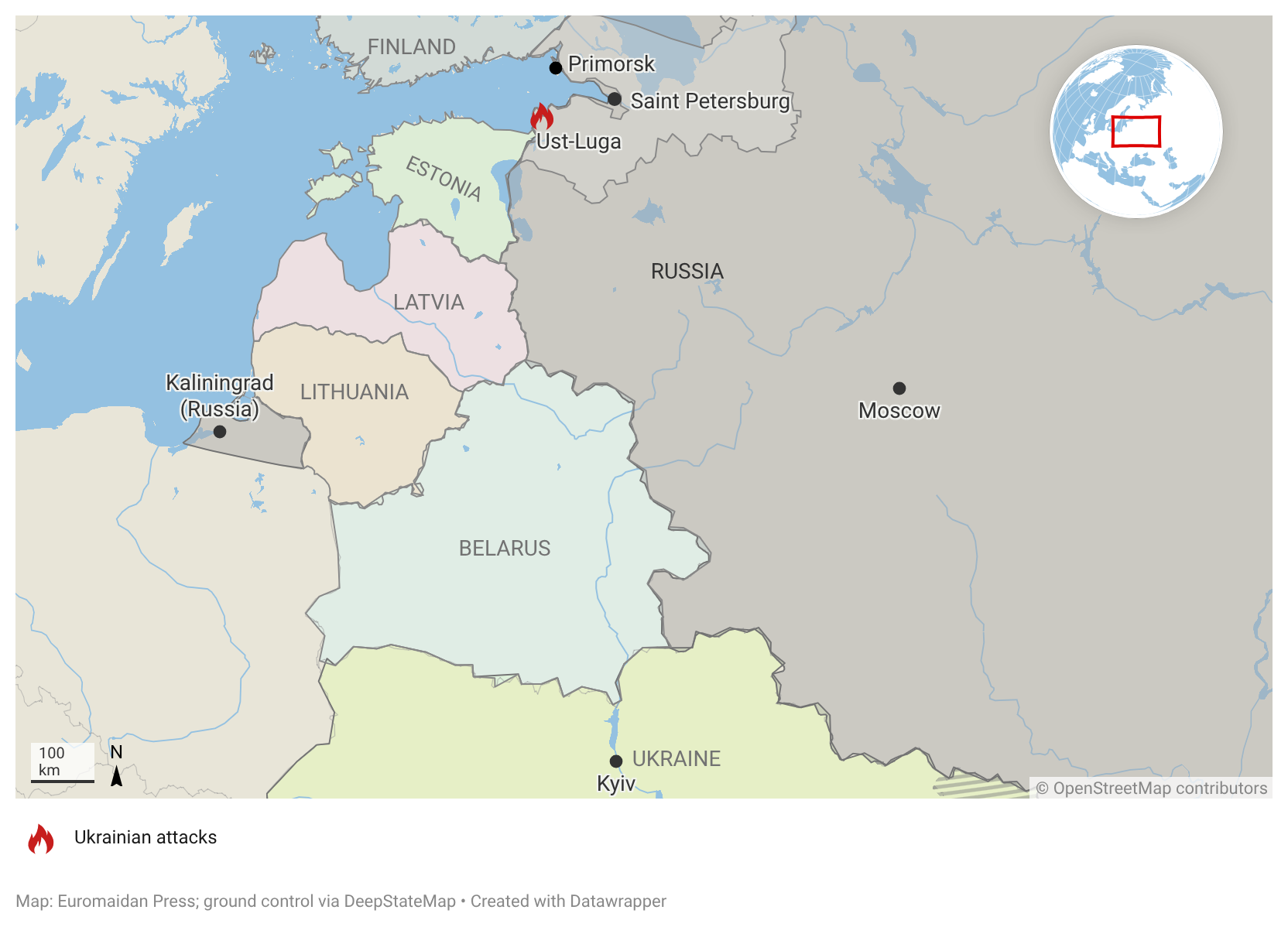
By 6:18 a.m., Drozdenko claimed 38 Ukrainian UAVs had been downed over Leningrad Oblast overnight and that damage had occurred at the port.
"The attack is still ongoing in the Kingisepp and Vyborg districts," he wrote, without detailing what was hit.
Vyborg is home to a smaller port.
NASA FIRMS satellite data showed active thermal signatures at the facility. Russia's Defense Ministry claimed 92 Ukrainian drones were downed overnight across multiple regions.
What the previous strike destroyed
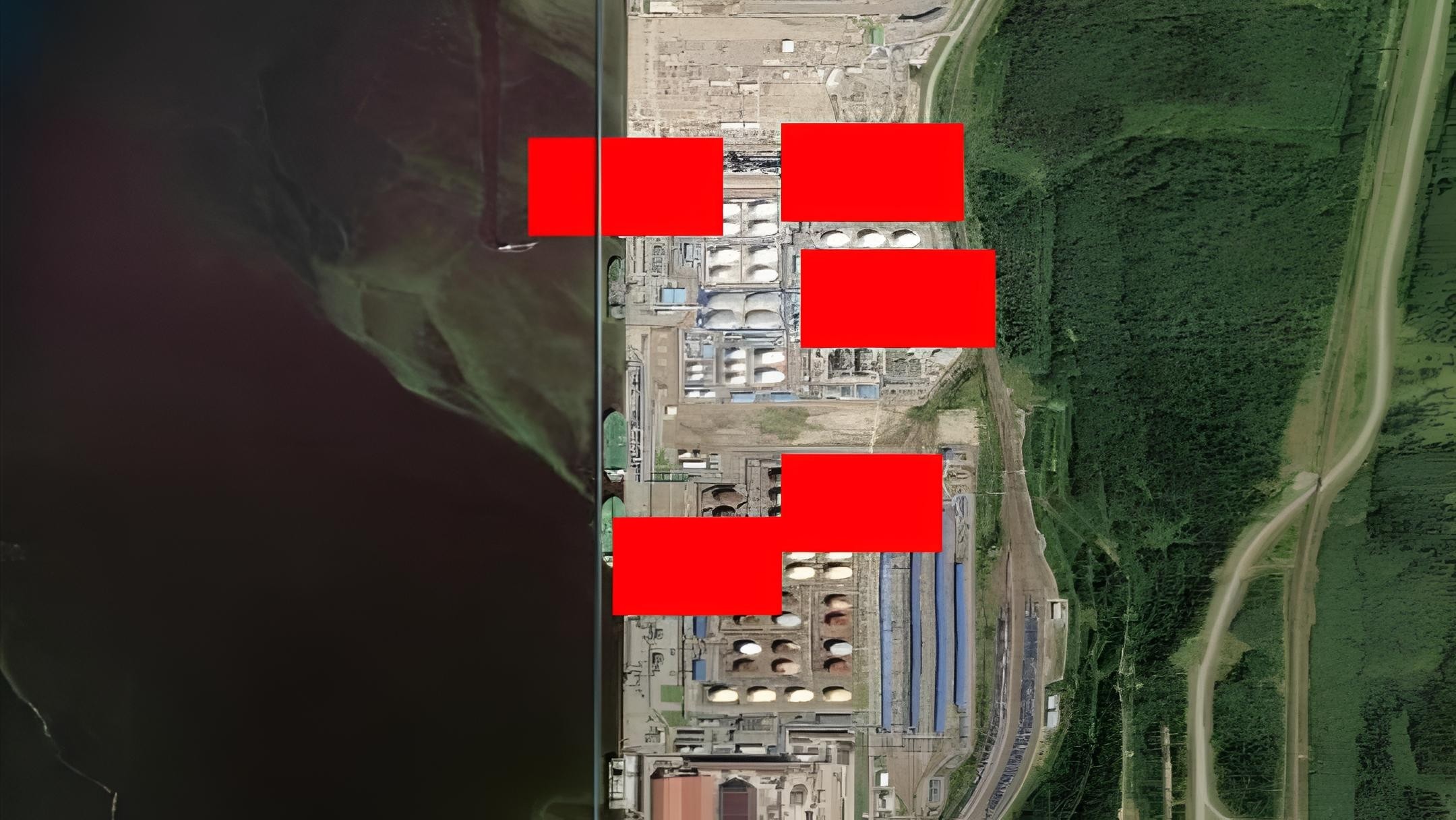
On 30 March, Astra detailed damage from what it called the "fourth attack on Ust-Luga" — possibly counting the first attack that targeted only the Primorsk port, or having data on one more attack than Euromaidan Press.
Astra said a 30,000-ton mazut storage tank at the Ust-Luga Oil terminal caught fire, and two NOVATEK tanks — each holding 30,000 tons of light fuel and aviation kerosene respectively — also burned. A pier at the Portenergo terminal and pumping equipment were damaged. Port operations were suspended entirely after the strike.
Ukraine hits Ust-Luga and Primorsk for the third time in five days — the pace suggests Kyiv is trying to destroy Russia’s Baltic oil export ports beyond repair
Estonia triggered air alerts
Estonia activated air raid alerts across several districts overnight after unknown drones approached its airspace, the Estonian Defense Forces reported. Several drones entered Estonian territory. None were intercepted.
Defense Forces strategic communications chief Uku Arold attributed the incursions to Ukrainian drones going off course due to Russian electronic warfare.
"Ukraine is attacking Russian military infrastructure and infrastructure supporting the war, and Russia is trying to repel these attacks, including by misleading Ukrainian drones by various means," he said. "It is very likely that Ukrainian drones that went off course were involved tonight."
Arold noted it was the ninth consecutive day of military activity in Leningrad Oblast. A Ukrainian drone entered Finnish airspace under similar circumstances on 29 March.

Ukraine isn’t just burning Russia’s oil — it’s going after two refineries that keep Russian tanks moving and bombers flying
Nine days across Russia's Baltic energy corridor
The 31 March strike is at least the fourth confirmed attack on Ust-Luga since 25 March.
The broader campaign began on 23 March with a strike on Primorsk, Russia's largest Baltic oil export terminal, that ignited a fuel depot and forced evacuations.
Alongside other attacks on Primorsk, Ust-Luga was first hit on 25 March, then again on 27 March, and a third time on 29 March. The Kirishi KINEF refinery, located in the same region, was also struck on 26 March.
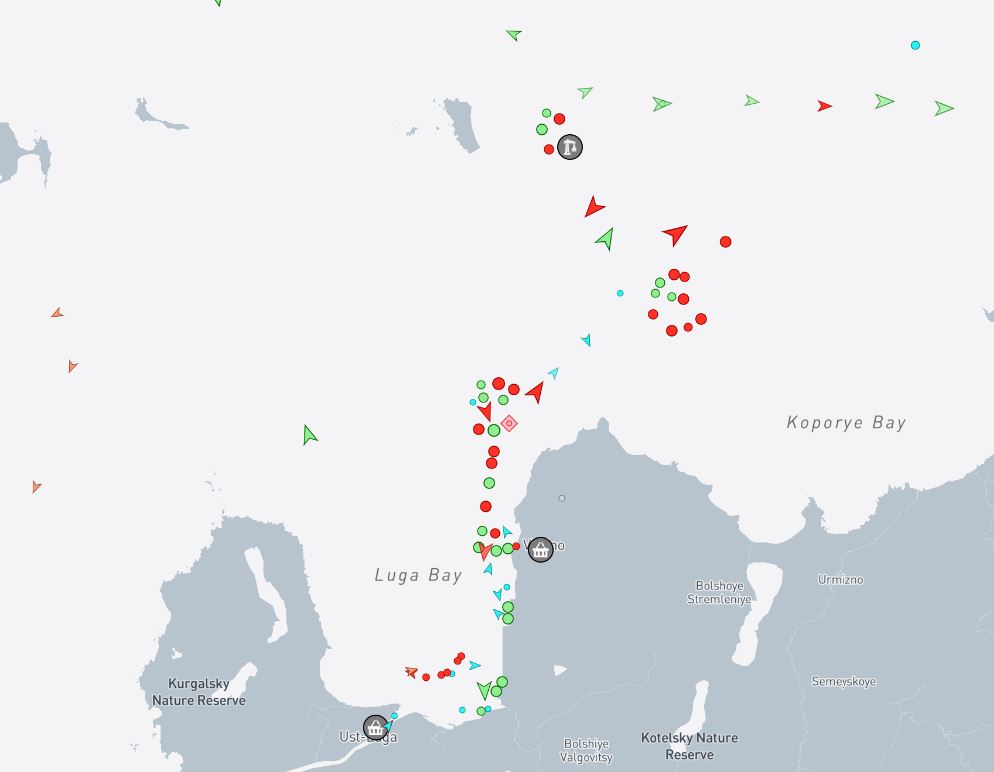
As of 30 March, fires were still burning at both Ust-Luga and Primorsk, with satellite imagery showing continuous heat signatures at both sites.
Together, Ust-Luga and Primorsk handle around 2 million barrels of Russian crude exports per day. Estonian intelligence estimated that 40–50% of Russia's Baltic oil exports had been halted by the campaign.
Read also
-
Ukrainian drones hit a shell casing factory in occupied Alchevsk — Russia’s air defense was nowhere to be seen
-
Finland confirms Ukrainian drone in its airspace as Kyiv’s Baltic strike campaign pushes deeper north – Helsinki on alert
-
Ust-Luga on fire again: Drone strikes keep Russia’s Baltic oil ports burning as Ukraine targets war revenues at source


