

15% of Ukrainian mothers of children with disabilities contemplated self-harm or suicide within the last two weeks. Social isolation keeps 25% of mothers from speaking with other people for weeks on end. 45% of mothers have moderate or severe anxiety. These are the findings from Strong Moms, a landmark report about the welfare of Ukrainian mothers of children with disabilities, released by the NGO Epiprosvita foundation on 25 March.
The first comprehensive study of its kind in Ukraine, Strong Moms surveyed 609 mothers and conducted 10 in-depth interviews. It arrives as Ukraine has informally opened all six clusters of EU accession negotiations—a process that explicitly requires reforms in deinstitutionalization, disability assessment, and an inclusive labor market.
Being part of the EU means not making mothers of children with disabilities choose between survival and despair.
Ukraine has roughly 160,000 children with disabilities, but no working system to help them reach their potential and integrate into society. That means 160,000 mothers are full-time carers for their child with disabilities, often with no respite, money, partner, educational, or social support. "The findings are heartbreaking. The situation is very, very dire," said Niya Nikel, mother to disabled 7-year-old Eva and one of the report's authors.
No wonder 15% of them have said it would be better to die, or contemplated self-harm in only the last two weeks. Caring for disabled family members has never been easy anywhere—a 2024 study in England found that 41% of parent carers have thought about suicide. But that was throughout the entire period of caretaking. Ukraine's 15% is the past two weeks alone.
Institutionalization stopped, the social system didn't start
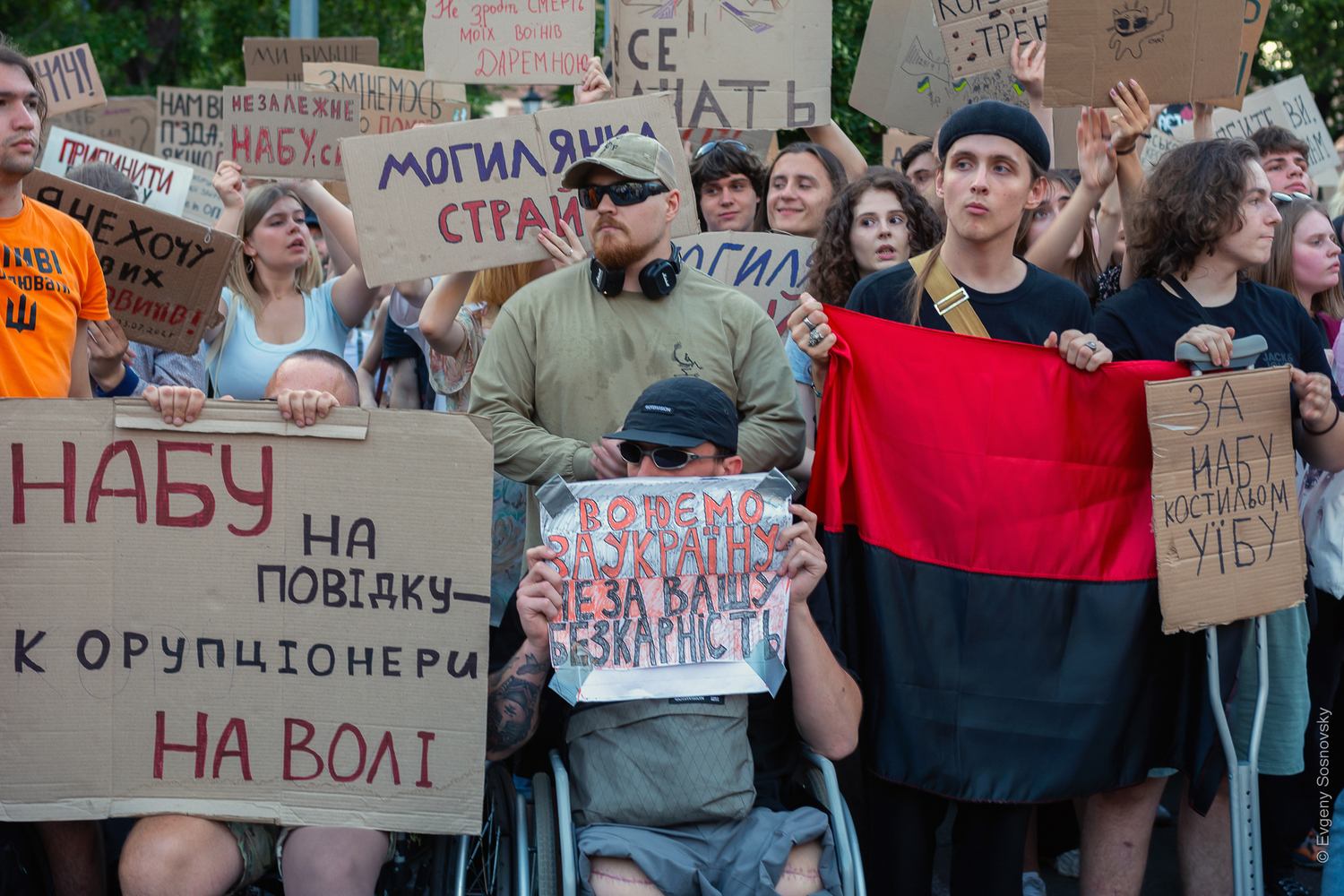
The Soviet system of confining children deemed less than normal in specialized institutions—often a euphemism for slow withering and death, walled off from society—is changing. Ukraine aimed to phase out institutions by 2026 for the more humane option of raising children within their families. But progress had stalled—and $127.5 million meant for accessible housing was spent rebuilding institutions instead.
The social infrastructure is following at a snail's pace. Of the $3.3 billion allocated for disability support in 2023, 53% went to pensions. Just 0.1% supported rehabilitation, employment, and social inclusion. The system pays people to exist with disabilities, not to live with them.
A plan for making education inclusive launched in 2017. Yet roughly 90% of children with special education needs were outside the inclusive system, and the war has pushed more families into isolation, not less. Home-based care, daycare, supported living, transport, and sign language interpretation are available in theory. In practice, they depend on local budgets—which basically means they don't exist.
The gap between what exists on paper and reality is where 160,000 Ukrainian mothers live.
The cost: most families live below the poverty line, on under $450 a month, juggling full-time care with irregular wages. The state covers only 20% of medical costs. Mothers spend over 40 hours a week caring for their child, with the number reaching 24/7 in cases of severe disability.
35% of them are single—both breadwinner and caretaker at once. Fathers leaving after the diagnosis, economic pressure, and domestic abuse account for most divorces. But even when the father stays, he can replace the mother as caretaker in only half the cases.
40% have symptoms of depression. Over half are burned out to the brink of exhaustion. 70% have zero hours of respite—meaning zero hours they could spend away from their children. And 40% of the families, already struggling, have been displaced by Russia's invasion, losing connections, housing, medical services, and work opportunities.
And then there are the doctors. "The doctor said 'Your child will never be normal,' and that was the end of the conversation. I left the office totally shocked, not knowing what I should do next," one mother told the researchers. The study found this is not just poor bedside manner—mothers who rated their doctor interactions at 1-2 out of 5 showed significantly worse stress, anxiety, and depression scores across every scale measured.
A laptop, a nanny, and 6 hours of respite
Having a child with disabilities need not entail the mother sacrificing her life. Expand day care services, create flexible work opportunities, and provide even 10-15 hours of respite per week—and many mothers could start training or working. UNICEF recommends it. The EU demands it as part of Ukraine's path to accession.
But the system actively punishes those who try. Under current rules, mothers risk losing disability-related payments when they take official employment. The study documented cases where a family's total income barely changed—or even dropped—after the mother started working. Official work becomes financially irrational. The study recommends replacing this cliff-edge cutoff with progressive reduction, so benefits decrease gradually as income rises instead of vanishing overnight.
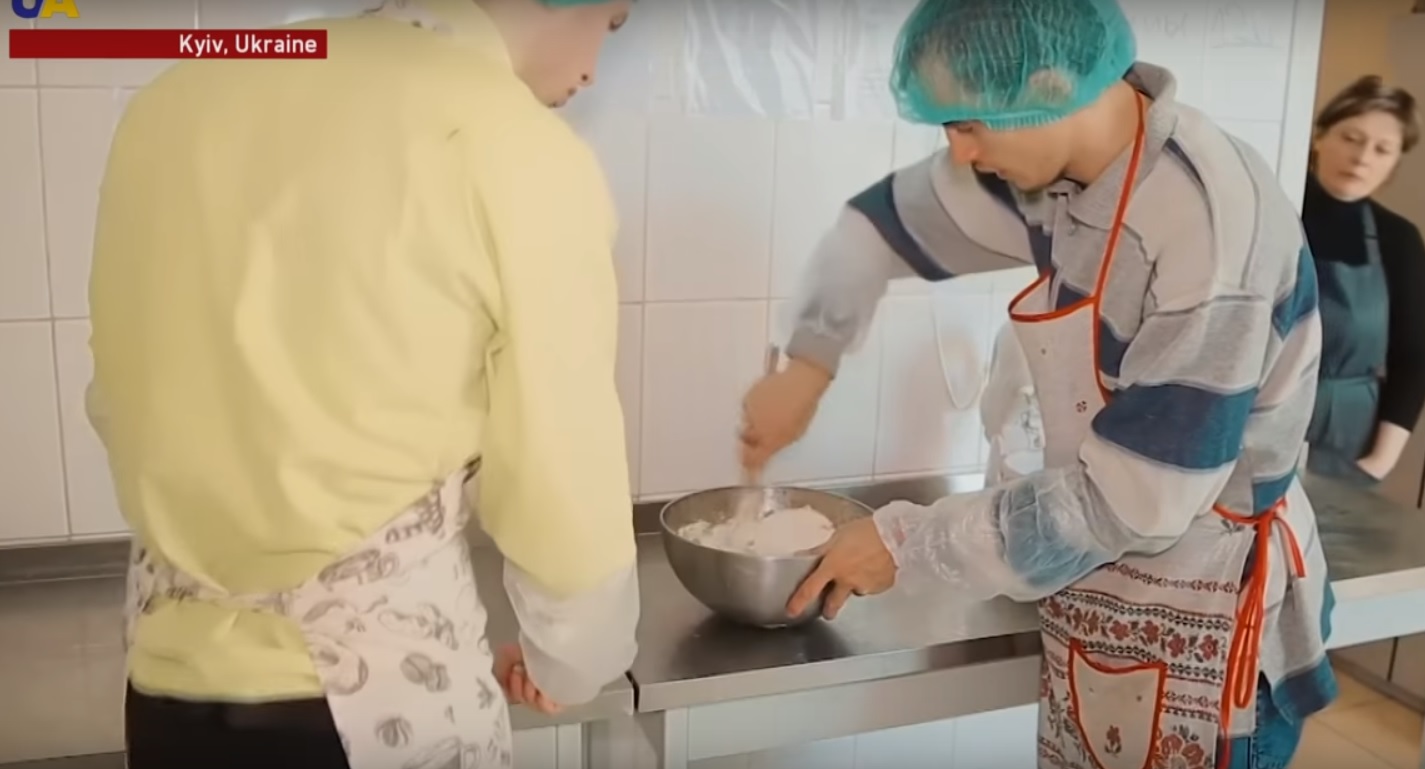
Most women aged 30-45—peak labor activity time—simply disappear from the labor market, despite 55% having a higher education. A laptop, mentor, flexible schedule, and a respite nanny for 3-6 free hours a week would help most start training or working. But the digital infrastructure compounds every other problem: 40% of mothers report power outages four or more times per week, and 30% lack a proper device for remote work.
Most of all, what would help is feeling that they are not alone. One case manager can make all the difference. Alyona Deriabina's child got support from an Early Intervention Center, which offered a neurologist, massage, and physical therapy. "We talk on the phone every week. She helps a lot with development and goals, and best of all—she supports me. If every family had a case manager like this—it would be so helpful."
The contrast between what European countries offer and Ukraine's reality "hurts beyond belief," said Iryna Pypych, who left abroad with the start of Russia's full-scale war for the sake of her younger son with disabilities.
"I see what exists here, and am devastated by what we have [in Ukraine]. At home, we're surviving. I haven't thought about self-harm because I have my older son, but [isolation and extreme anxiety] are about me. I don't know what to do to at least bring us a little closer to the level of other countries. Mothers have neither the strength nor the resources for this. All of this can only be resolved at the state level, which seems completely unrealistic to me in Ukraine."
Loneliness at the core of it all
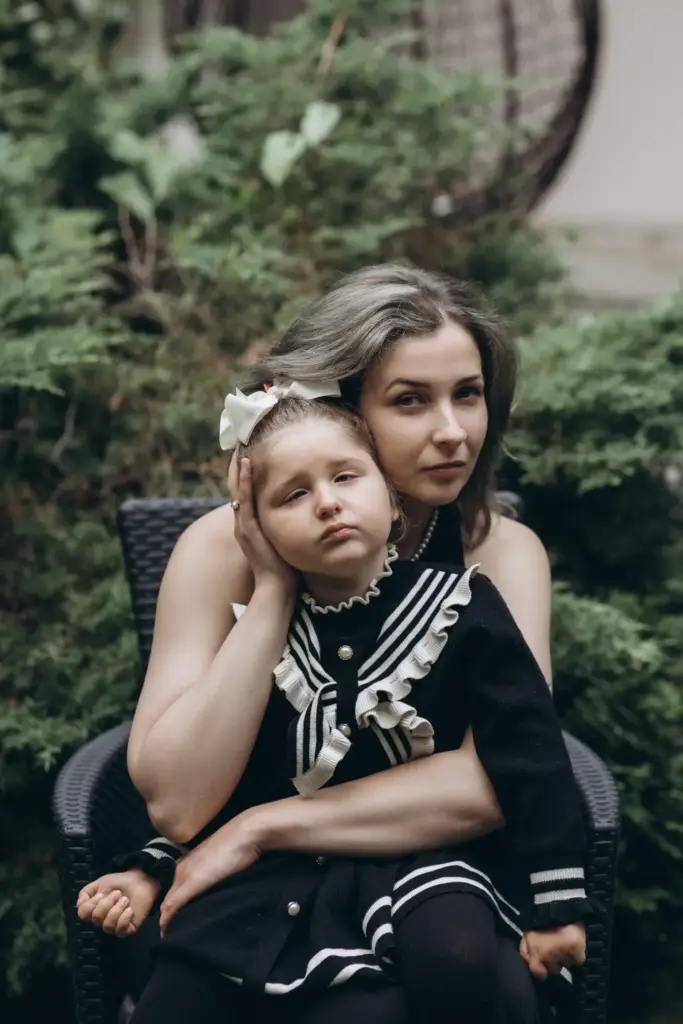
Women of old had a village to help raise their child. The mothers of children with disabilities today have isolation, anxiety, and, often, condemnation. The loneliness is a special type of hell, Tetianka Shcherbyna commented on the report.
"So many moms—and I'm one of them—are forced to raise their children on their own. Or there's a husband around, but instead of support, there's only blame and pressure. This is emotionally draining and saps the last of one's strength."
The woman herself disappears, and this is a special type of pain, Nataliya Dashuk, a mother of a child with disabilities, wrote.
"When many factors converge on a single person—the birth, the diagnosis, the uncertainty about what to do next, and the departure of a husband who didn't expect that day and night would no longer be as he had dreamed—and society's rejection of children who don't fit into the bigger picture—a woman doesn't just get tired; she disappears.
She disappears as a person, remaining only a caregiver within four walls. The loneliness becomes so thick you can almost touch it. These numbers in the study aren't just statistics. They're the cry of those who have been silent for years because they simply don't have the strength to speak up. This data is our shared mirror. And what we see there should compel us to act, not just sympathize."
Nobody is insured against having a child with disabilities. But Ukraine could insure its mothers against facing the odds alone. The legislation is there, and so is the EU pressure. What is absent is the funds, political will, and, often, simple compassion.