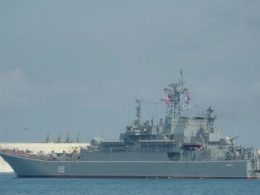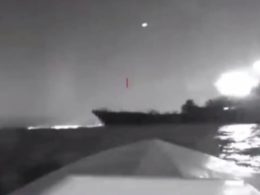

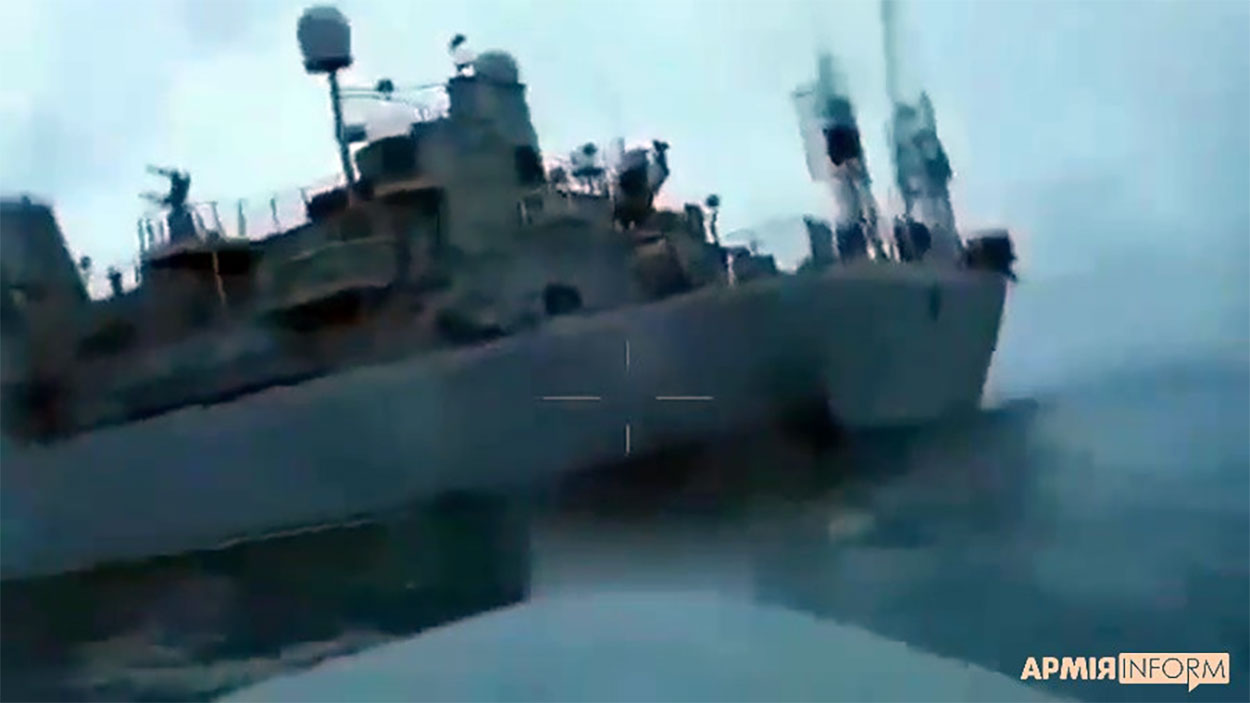
Russia is trying to develop naval drones and copy Ukraine's naval drone tactics to revive its Black Sea Fleet. It has been rendered largely inoperable, Ukrainian Navy spokesperson Dmytro Pletenchuk said on national television. Pletenchuk called Russian naval drone development a real but incomparable threat, while describing a fleet that currently fires Kalibr missiles at Ukraine from a handful of ships once or twice a month and "performs no other tasks."
Black Sea becomes a grey zone for Russia
Pletenchuk said the Black Sea has turned into a "grey zone" primarily because Russian forces cannot operate freely in it. Both Ukrainian naval drones and missile weapons have made that impossible.
Russia also constantly uses aviation over the Black Sea, Pletenchuk noted, which poses a threat to Ukrainian operations there.
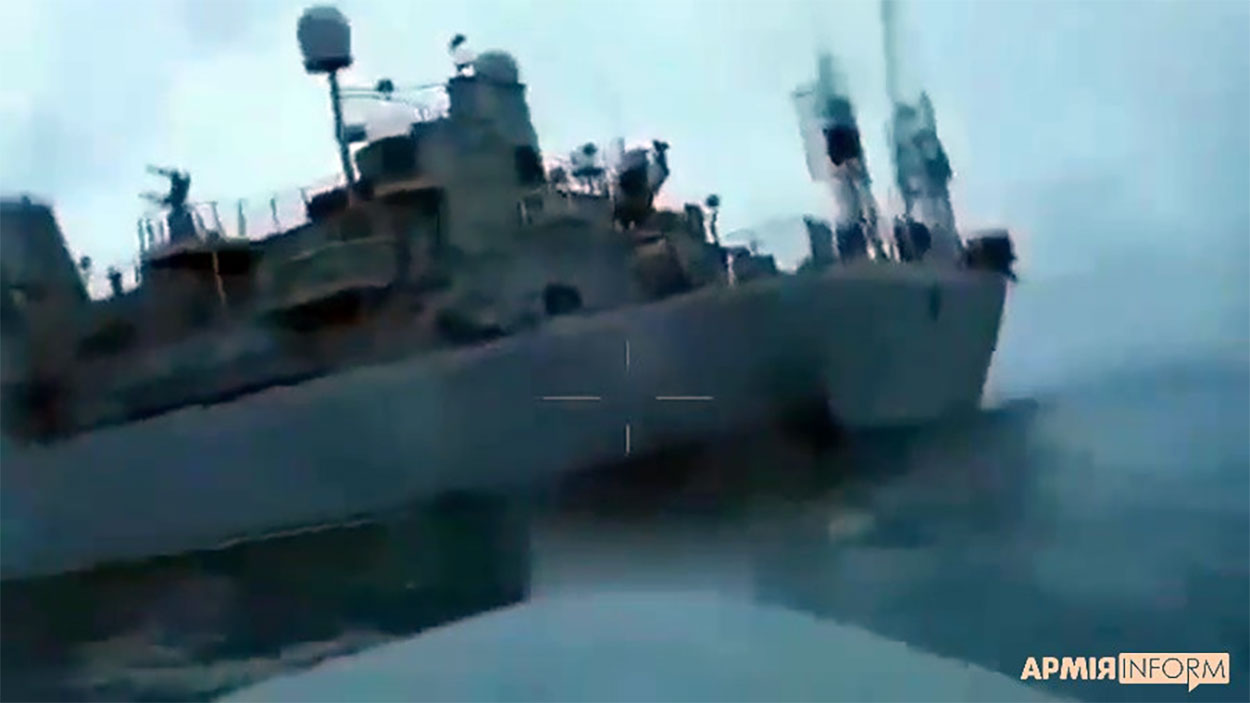
Russia copying Ukraine's drone playbook
Russian forces are now actively developing sea drones and attempting to replicate Ukraine's solutions — both technical and tactical, Pletenchuk said.
"They are forced to catch up. Do we consider this threat real? Yes, we do. There have been confirmed cases of their use. Unfortunately, some of those had consequences — that is also a fact. The enemy does not stand still. They are trying to develop this area, trying to copy our successful cases in terms of technical and technological solutions and in terms of tactics. But there is no comparison with Ukraine's use," he said.
Russia also constantly experiments with radio frequencies in an attempt to bypass Ukrainian electronic warfare systems, Pletenchuk added. The typical Russian drone operation pattern involves sending a reconnaissance drone first — a Zala or Supercam — to map Defense Forces positions, equipment, logistics routes, and critical civilian infrastructure. Strike swarms follow immediately after targets are identified. Ukrainian specialists continuously scan Russian frequencies and find countermeasures, Pletenchuk said, including against expensive systems such as the Supercam, which costs hundreds of thousands of dollars.
A fleet with nowhere left to go
Ukrainian naval drones drove the fleet from its home port in occupied Sevastopol. In December 2025, Ukraine struck a $400 mn Kilo-class submarine at its moorings in Novorossiysk using a Sub Sea Baby underwater drone — the first time in history an underwater drone destroyed a submarine. In early March 2026, Ukrainian aerial drones struck warships in Novorossiysk, hitting the frigate Admiral Essen. On the night of 5 March, Ukrainian Naval Forces and Special Operations Forces also struck Russian positions on the Sivash drilling platform at the Holitsynske gas field in the Black Sea, which had served as an observation post, communications relay, and air defense site.
Read also
-
Sanctioned Russian shadow fleet tanker struck by drone near Istanbul, 140,000 tons of oil on board
-
Ukrainian drones now hammer Russia’s last Black Sea Fleet refuge from the sky—and this time, there’s no escape
-
Russia’s frigate Admiral Essen can no longer fire Kalibr missiles after Ukrainian strike, SBU sources confirm