
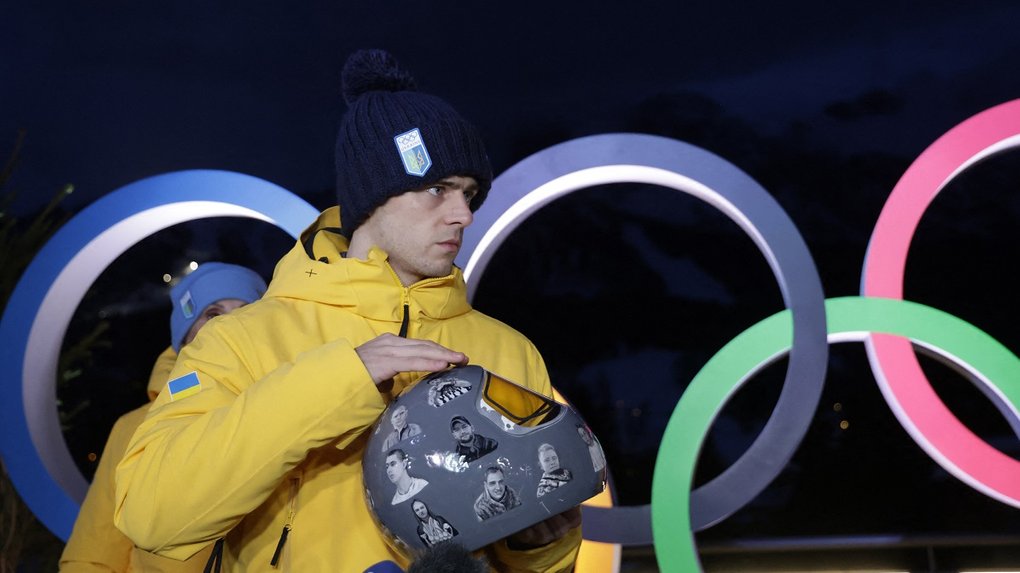
Vladyslav Heraskevych, the Ukrainian skeleton racer barred from competing at the Milan Cortina Winter Games over a tribute helmet honouring Ukrainians killed in the war, spoke on 26 March at the United Nations in New York, according to The Independent.
Heraskevych appeared on a panel at the opening ceremony of Change the World Model United Nations, a simulation exercise attended by thousands of students. "I think it's important that we use this stage and talk about important things," he said from the podium. "Sometimes it feels like, in all these hours of training, we really forgot about the overall mission of sports. It is not only about the medals, but it's also about values that we represent."
The helmet ban
The International Bobsled and Skeleton Federation ruled that Heraskevych's plan to race wearing a helmet bearing the names and images of fallen Ukrainian athletes and coaches was "inconsistent with the Olympic Charter and Guidelines on Athlete Expression," The Independent reports. He was permitted to wear it in training. The International Olympic Committee offered alternatives — a black armband, or displaying the helmet after leaving the ice — but Heraskevych declined to race under those terms.
The names of the approximately two dozen individuals commemorated on the helmet were read aloud during Thursday's session, drawing an ovation from the audience.
"I believe I had the full right to wear this helmet, and to me, not wearing it would be like a betraying of my principles," Heraskevych said. "The people pictured on the helmet were victims of the war. It's not right to betray them, too. ... No, these people sacrificed their lives. They were not afraid. It's not right to betray them. So, I don't feel any regret. I regret that I could not participate, but it was not my fault."
After Milan Cortina
Heraskevych's competitive season ended with the ban, but he has confirmed plans to return to World Cup racing next season — including a race at the Cortina d'Ampezzo track where he was barred from competing — and to remain active through the 2030 Winter Olympics.
He and his father are running a foundation supporting individuals and groups in Ukraine, with a current focus on supplying generators amid the country's widespread power outages. Drawing on his background as a trained physicist, he is also exploring ways to address infrastructure problems created by the war.
On Thursday he appeared on stage wearing a vyshyvanka, a traditional Ukrainian embroidered shirt, and said he has plans to promote Ukrainian cuisine internationally. "My goal is to get support and get awareness for Ukraine," he said, "and not only about the war in Ukraine."
The panel also included Shiva Amini, a former Iranian women's soccer player now living in exile in New York, who was granted asylum in Switzerland in 2017 after the Iranian government threatened sanctions following photographs of her playing soccer with men without a hijab.
The UN invitation, Heraskevych said, was not something he had anticipated. "It wasn't part of my bucket list," he said.


