

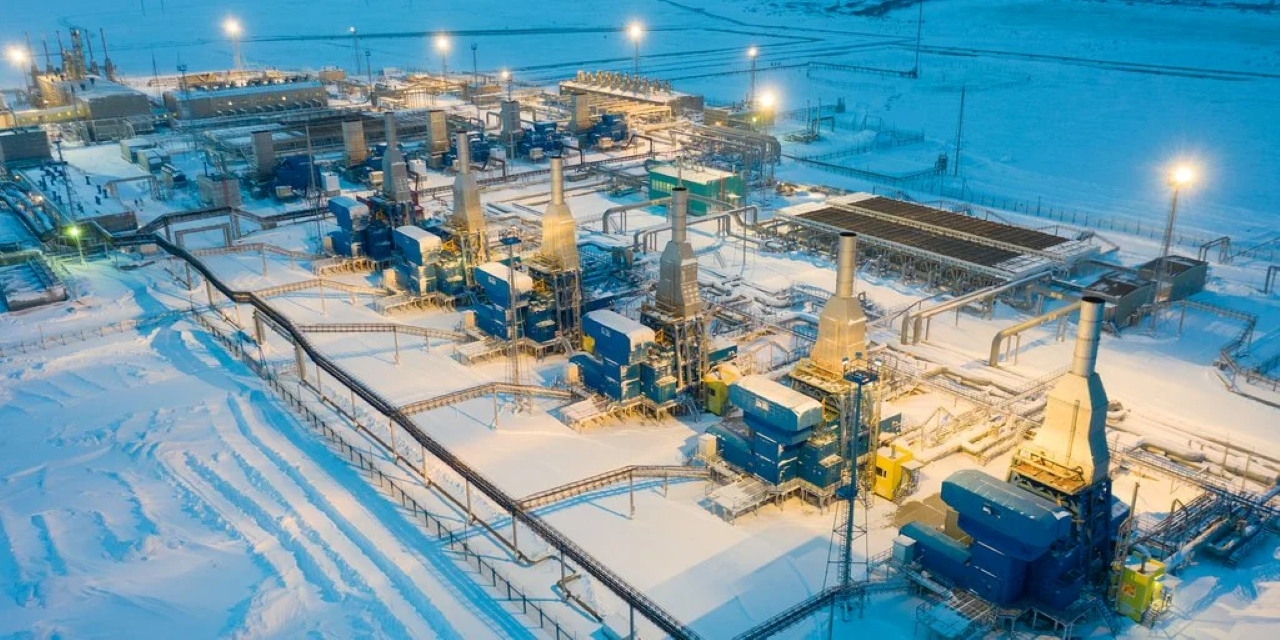
The European Union has paid Russia €317 billion ($365 billion) in goods since February 2022. The sum is €116 billion ($134 billion) more than the €201 billion ($232 billion) the bloc extended to Ukraine in financial aid over the same period, according to the Kiel Institute for the World Economy.
EU fertilizer imports from Russia rose 14% above pre-war levels in 2025.
Sanctions have sharply reduced trade with Moscow but, in some categories, have not even slowed it. EU fertilizer imports from Russia rose 14% above pre-war levels in 2025. The US imported nearly $1 billion in Russian fertilizers in the first six months of the year. NATO estimates Russia can fund the war until 2027.
How the gap opened
The imbalance traces largely to the war’s first year, according to Ekonomichna Pravda. In 2022, EU member states rushed to stockpile Russian energy before sanctions took effect. Annual imports hit €202 billion ($232 billion)—the highest since 2012. Ukraine’s aid receipts that year: €38 billion ($44 billion). Russia’s oil and gas revenues hit a record 11.6 trillion rubles ($140 billion), 7.6% of GDP.
The EU’s trade balance with Russia turned positive for the first time since 2002, while annual aid to Ukraine now outpaces annual Russian imports.
Since then, the trajectory has reversed. By the end of 2025, EU imports from Russia had fallen 90% from their 2022 peak. The bloc has banned Russian oil, coal, steel, gold, and timber. A phased ban on gas takes effect through 2027. The EU’s trade balance with Russia turned positive for the first time since 2002, while annual aid to Ukraine now outpaces annual Russian imports.
But 90% is not 100%.
What’s still flowing—and growing
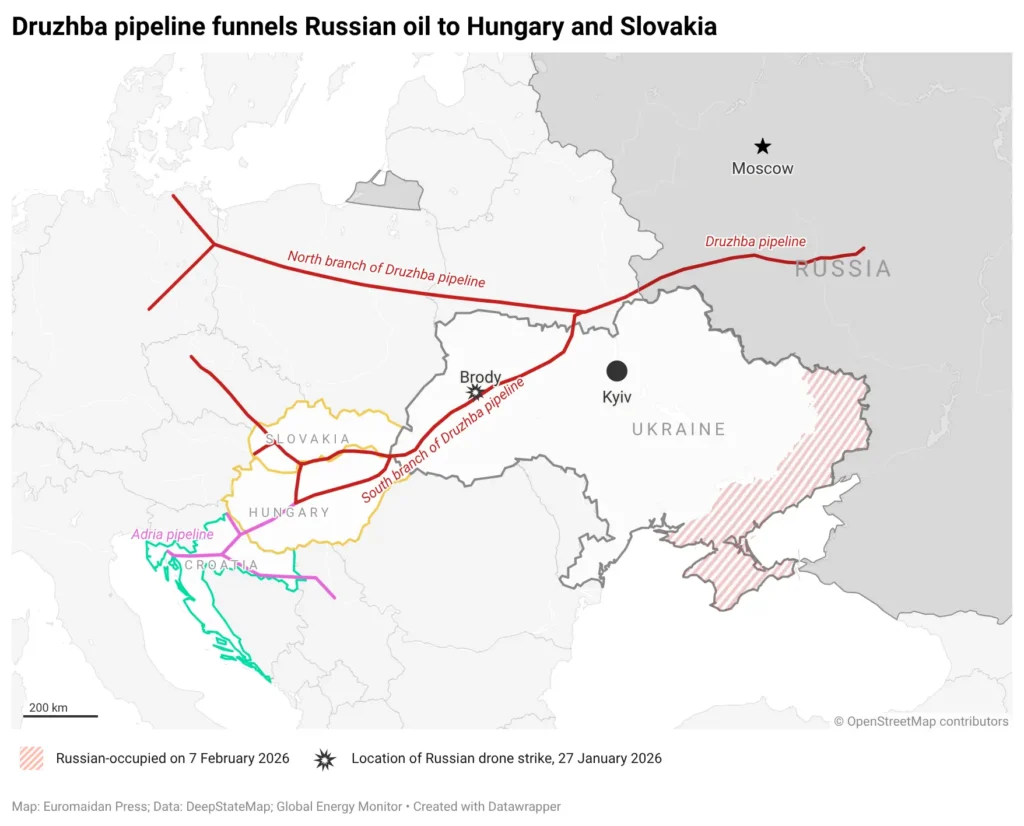
Energy accounts for 63% of the EU’s remaining Russian imports, at €17 billion ($20 billion) in 2025. Hungary and Slovakia continued drawing Russian oil through the Druzhba pipeline under Budapest-negotiated exemptions until a Russian drone strike severed the flow on 27 January.
Five weapons, 57 days: how Budapest escalated against Ukraine after one Russian drone strike
The EU remains the largest buyer of Russian liquefied natural gas—49% of all exports. In 2025, 87 tankers delivered Russian gas to French ports alone; Belgium’s Zeebrugge terminal received more Russian LNG than all of China.
France’s TotalEnergies owns 20% of Russia’s Yamal terminal and is contractually locked in until 2041. A full import ban on long-term contracts is not due until January 2027.
Hungary and Slovakia vetoed the 20th sanctions package on 23 February—breaking a December pledge not to obstruct it—and the block held through the EU summit on 19 March. Viktor Orbán has said he will not lift it until Russian oil flow through Druzhba resumes.
Rosatom, Russia’s state nuclear corporation, remains unsanctioned in the EU and supplies 30% of Europe’s uranium needs.
Outside energy, some trade has grown, Ekonomichna Pravda found. Fertilizer imports from Russia reached €1.7 billion ($2 billion) in 2025—up 14% from before the invasion. Fish and seafood imports rose 25.5% to €739 million ($851 million). Rosatom, Russia’s state nuclear corporation, remains unsanctioned in the EU and supplies 30% of Europe’s uranium needs.
S&P Global Commodity Insights fertilizer analyst Allan Pickett said trade volumes will hold as long as sanctions are not applied. Pickett told CNN that Russia has not lost its global fertilizer market share since 2022.
America’s quiet purchases
Trending Now
The US, despite some of the most aggressive sanctions on Russian energy, has maintained significant purchases in other categories. American buyers imported nearly $1 billion in Russian fertilizers in the first half of 2025.
They also took $755 million in uranium and plutonium, and $600 million in palladium—a metal critical to automotive catalytic converters, where Russia dominates global supply.
Trump’s suspension of oil sanctions added up to $150 million a day in additional revenues for Moscow.
The evasion layer
Ekonomichna Pravda identified roughly 6,000 companies trading with sanctioned Russian defense-industrial suppliers. Of those, approximately 4,000 are Chinese, with most of the rest based in Türkiye and the UAE.
Portugal offers a case study: direct trade between Lisbon and Moscow collapsed after 2022, but Portuguese exports to Kyrgyzstan rose from €200,000 ($230,000) in 2021 to nearly €6 million ($7 million) by 2025.
Portuguese prosecutors have opened more than 20 investigations and frozen around €25 million in suspect funds.
Kyrgyzstan has simultaneously increased its imports of dual-use goods—semiconductors, industrial components, drone parts—and its exports to Russia. Portuguese prosecutors have opened more than 20 investigations and frozen around €25 million ($29 million) in suspect funds.
EU sanctions briefly disrupted some Russian defense plants in early 2025 after supply chains were disrupted. Within months, circumvention routes had reopened.

What Brussels is preparing
Brussels is finalizing a 20th sanctions package worth €570 million ($657 million) targeting metals, chemicals, and minerals, Ekonomichna Pravda reports. Ammonia—the key precursor for nitrogen fertilizers, shielded until now over food security concerns—may be included for the first time.
Moritz Kraemer, chief economist at Germany’s Landesbank Baden-Württemberg, said Russia’s economy is stagnating and business pessimism is rising, and that the Kremlin is aware of its position.
Kraemer wrote that Washington should pass the Graham-Blumenthal Act, which imposes high tariffs on any country buying Russian oil or gas. Acting together, the US and EU could decisively cut Russia’s capacity to fund the war, he argued.
EU companies operating inside Russia earned $93.5 billion in 2024 and paid the Russian government $2.64 billion in taxes, Ekonomichna Pravda reported. PepsiCo alone generated $4.5 billion in Russian revenue that year and paid $122 million in profit taxes to the Kremlin—enough, according to open-source cost data cited by Euromaidan Press, to purchase roughly 40 Iskander missiles.
The company opened a new Russian megafactory in 2024, producing 60,000 tons of snacks annually.


