

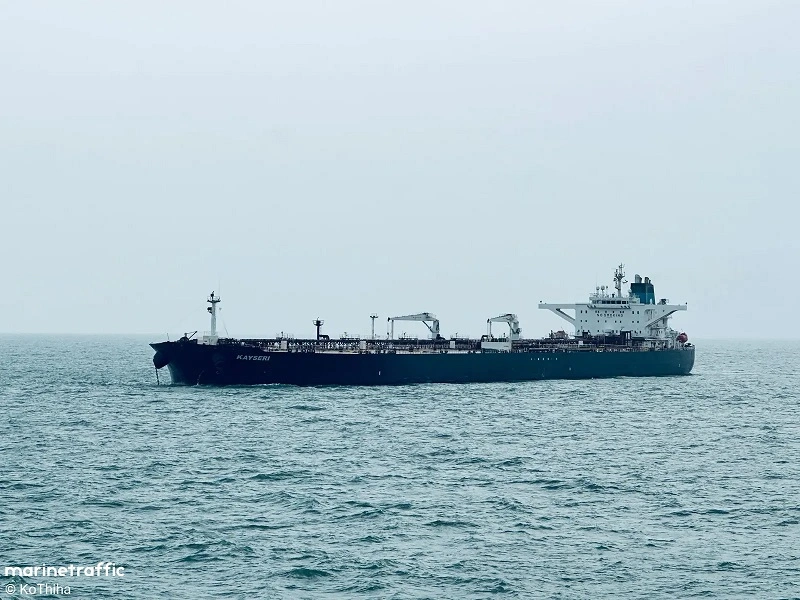
An explosion struck a sanctioned oil tanker linked to Russia’s “shadow fleet” in the Black Sea on March 26, Turkish media outlet NTV reported.
The vessel is part of a network of tankers used by Moscow to sustain oil exports despite Western sanctions, allowing it to continue generating revenue for its war in Ukraine. By operating through opaque ownership structures and indirect shipping routes, this system has softened the intended economic impact of sanctions and kept energy income flowing into the Russian state budget.
ALTURA struck 15 miles off Istanbul, crew safe
The crude oil tanker ALTURA, carrying around 140,000 tons of oil from Russia, was hit roughly 15 miles off the coast of Istanbul near the Bosphorus, according to NTV.
Turkish officials said the blast likely resulted from an unmanned maritime drone, damaging the ship’s deck and engine room and causing it to take on water.
Türkiye’s Transport and Infrastructure Minister Abdulkadir Uraloğlu said initial assessments point to an uncrewed surface or underwater vehicle.
Russian channels said the attack was carried out by a Ukrainian drone.
All 27 crew members were reported safe. Emergency teams, including coast guard units and a rescue vessel, were deployed to assist.
ALTURA sanctioned by EU, UK, Ukraine, and Switzerland
The vessel has been sanctioned by the EU, UK, Ukraine, and Switzerland and is identified in multiple databases as part of Russia’s shadow fleet. The ALTURA alone transported millions of barrels of Russian oil between 2024 and 2025, including shipments to India and China.
Trending Now
Ukraine has increasingly targeted this maritime network, viewing it as a critical source of funding for Russia’s war effort. Previous strikes on oil infrastructure and shadow fleet-linked assets have aimed to disrupt export logistics and reduce the flow of energy revenues into the Russian state budget.
Drone attacks on shadow fleet expand Ukraine's maritime campaign
The use of a maritime drone is consistent with the expanding role of uncrewed naval systems in the Black Sea, where such attacks have targeted ships, port infrastructure, and logistics routes tied to energy exports.
Despite multiple rounds of sanctions, international enforcement has remained uneven, allowing much of the shadow fleet to continue operating with limited interference.
Incidents like this underline both the vulnerabilities of the network and the increasing role of Ukrainian direct action in attempts to curb Russia’s oil trade.
Read also
-
“A warning to companies that remain”: Russia takes control of Nestlé and Auchan’s assets – companies that stayed in Russia following the full-scale invasion of Ukraine
-
“I can travel back to Finland and be safe. That is a luxury”: Sanna Marin on the Russian strike that stopped her train from Kyiv
-
Ukraine put its own peace proposals on the table as two US envoys reached Kyiv for the first time


