
I know it's old-fashioned, but let's start with some actual facts.
A simple comparison: Every time a Danish taxpayer spends one dollar to support Ukraine—military, financial, humanitarian aid—a French(wo)man sends 6-7 cents, an English(wo)man or a Ger(wo)man sends 30 cents, a Spaniard or a Greek 5 cents, an Italian 6-7 cents. (An American, of course, these days sends 0 cents to Ukraine. Nada, zero, Nichts, нічого—because last summer, President Trump practically eliminated US aid to Ukraine.)
These numbers stem from the Kiel Institute for the World Economy—the unrivaled tracker of the international community's aid to Ukraine.
These comparisons make it all the more astonishing that practically nobody here in Denmark questions whether the massive support for Ukraine should be continued into a fifth, sixth, seventh year.
70% of the Danes support continuing the current policy. Precious few want the aid to actually be cut, the critics mainly want it toned down or given as loans instead of grants. Overall, almost 80% of Danes say that it is important to them that Ukraine wins. Compare that with around half of Germans, 40% of the French, and 30% of Italians.

In terms of percentage of GDP, the Danes give 5-10 times as much to Ukraine as most other European countries, apart from the Baltics (and lately their Scandinavian cousins are catching up).
The Danes all agree on helping Ukraine
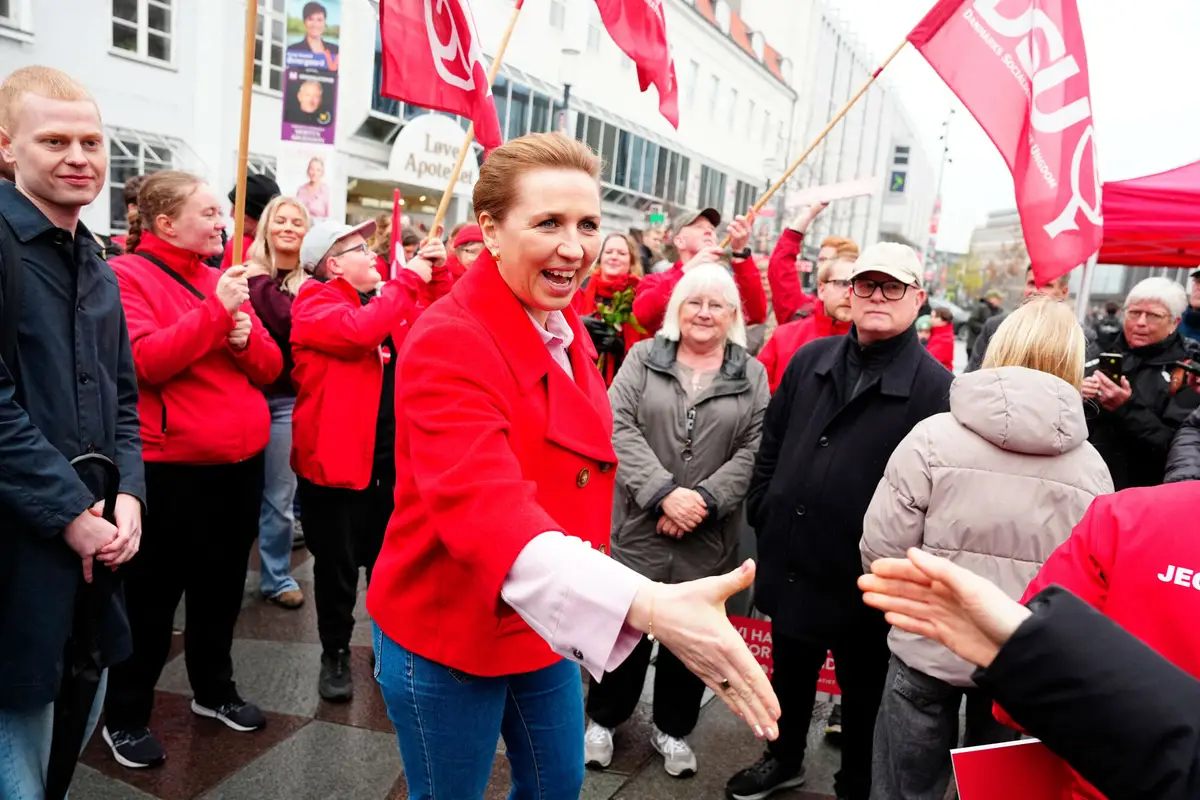
When Danes go to the polls on Tuesday, 24 March, Ukraine is not really a hot topic—as almost everybody agrees that Denmark should continue its present level of engagement, both when it comes to money, military, and political support.
In fact, 66% of the Danes even want their government to give more support to Ukraine. And half the Danish voters support continuing and committing the Danish aid to Ukraine until Russia totally withdraws from all Ukrainian territory, even if the war lasts for years to come.
Countries' total support to Ukraine as share of GDP
(2022–2025, aid delivered or earmarked for delivery, highest → lowest)
| Denmark | 3.25% |
| Estonia | 3.01% |
| Lithuania | 2.45% |
| Norway | 2.19% |
| Latvia | 1.91% |
| Sweden | 1.66% |
| Finland | 1.37% |
| Netherlands | 1.21% |
| Poland | 0.97% |
| Canada | 0.81% |
| United Kingdom | 0.73% |
| Germany | 0.70% |
| France | 0.30% |
| Spain | 0.18% |
| Italy | 0.16% |
| Greece | 0.09% |
Data: Kiel Institute, Ukraine Support Tracker Release 27 (Feb 2026, through Dec 2025). Bilateral allocations as % of 2021 GDP. / Euromaidan Press
But even in the land of H.C. Andersen, money doesn't grow on trees—meaning that every krone spent on Ukraine is a krone less spent on Danish schools, hospitals, roads or pensioners.
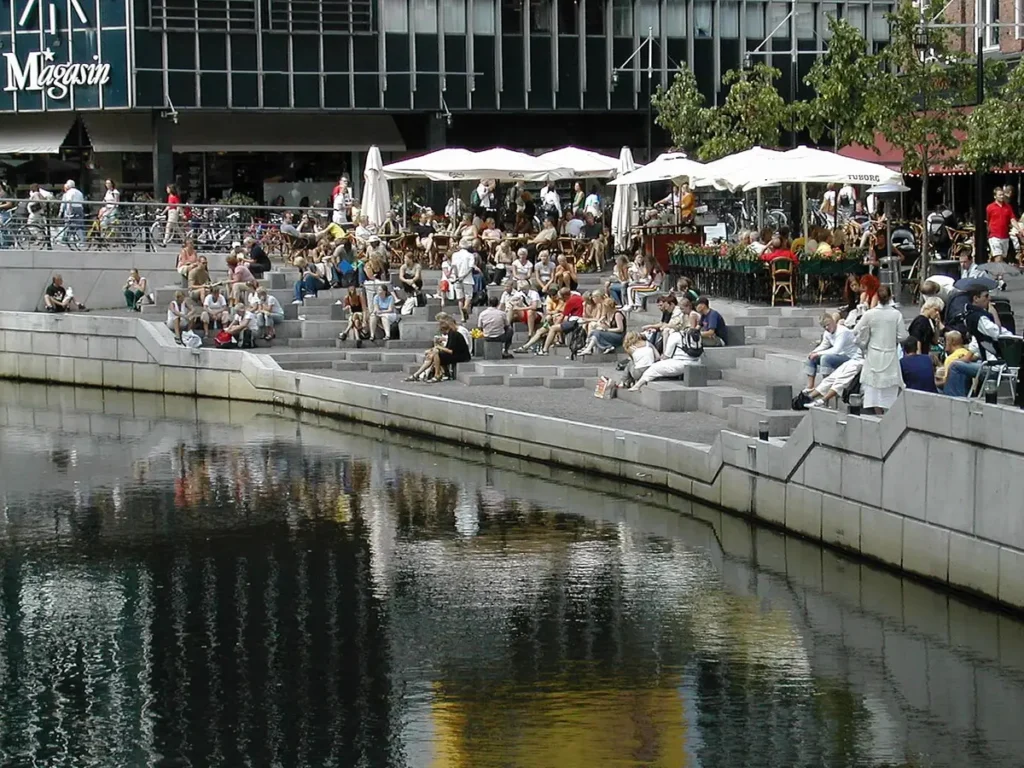
So, I decided to take a walk around my native city of Aarhus—with 300,000 inhabitants, Denmark's second city—to check whether the Danes are indeed that keen on Ukraine and that unkeen on Mr. Putin as polls suggest. And with very few nuances—they are.
A married couple in their 40s, "we have a few clothes shops," both agree that "the Danish policy is correct."
"It's important to keep supporting Ukraine," the husband says, "they are also fighting our fight."
"Putin is very close to us," his wife explains, "I can't see him stopping at Ukraine, I am absolutely of the conviction that we shall continue our support of Ukraine, no doubt at all."

"I would never vote for anybody who would want to cut the aid for Ukraine!"
A 60-year-old woman who identifies herself as "an old socialist" and a family lawyer tells me that Ukraine has dropped a bit of the political agenda in the last year or so.
"But it is also because we all agree: Everybody I know, family and at work, are all on the side of Ukraine, and we support the policies of the Danish government," she says, "we cannot allow Putin to get away with this and now look at Donald Dump (her nickname for the US President, not mine) playing tough guy around the world, those idiots are rapidly ruining the world order we have benefitted from for so long."
An economics professor in his late 50s is in no doubt:
"We have to support the other small countries like Ukraine against these dictators waiting to swallow them. I support the government's policies fully, I think pretty much all Danes do. Of course, here in Denmark we have our own mainly economic-social problems, but I am happy that we nevertheless prioritize Ukraine."
A boy and a girlfriend, both in their late twenties and both school teachers:
"I think for sure we should continue to help them," he says.
"I think that maybe we are giving Ukraine a bit too much money by now," says his girlfriend, "we have many problems ourselves here in Denmark, socially and in the health sector, and maybe we should sort those out first? Also, it sounds like they still have a lot of problems with government corruption in Ukraine—maybe we should help them sort that out first before we just pile money on them?"
"You could also say, that if we do not help them and Ukraine doesn't survive, then there is no predicting what Russia will do," her boyfriend interrupts.
"People don't talk so much about Ukraine anymore, it is not a big question in the election campaign," they agree, "but on the other hand, I don't think that any of the parties actually suggest cutting the aid."
Committed countries—and less committed countries
According to the Kiel Institute for the World Economy, in the four years since Russia invaded Ukraine, Denmark has spent around $10 billion on supporting Ukraine. In relative terms, as a percentage of GDP, the Danish commitment to Ukraine's survival is the highest in the world and dwarfs what most other countries have been willing to muster.
Put in a different way: if all NATO countries had supported Ukraine at the same level as Denmark and the Baltic countries during the four years of war, the total help for Ukraine, which now amounts to around $350 billion, would instead have been five-six times higher—$2.0 trillion.
Quite thought-provoking, no?
Meaning that if all the countries in the coalition behind Ukraine had been as committed as Denmark, Ukraine could have achieved air force and military parity much earlier, could have acquired several times more military equipment and ammunition, could have had fully covered government budgets instead of the annual fiscal stress and panic, and, of course, massive reconstruction of the country would already have been well under way.
Most importantly, this would obviously have had an impact on Russia and its insistence on continuing its war.
Leading Danish politician: "We should continue supporting Ukraine at the present high level"
I had "vox popped" 40-50 people in Aarhus city center when a car rolled up to the pavement where I was standing and out jumped one of the candidates for the post of prime minister, Mr. Alex Vanopslagh.
A tall, gangly 35-year-old, Vanopslagh is the leader of the party Liberal Alliance—a newish, quite right-leaning party, attracting in particular the young. He is telegenic, good-looking in a slightly goofy way, hyper-intelligent, and a great debater.
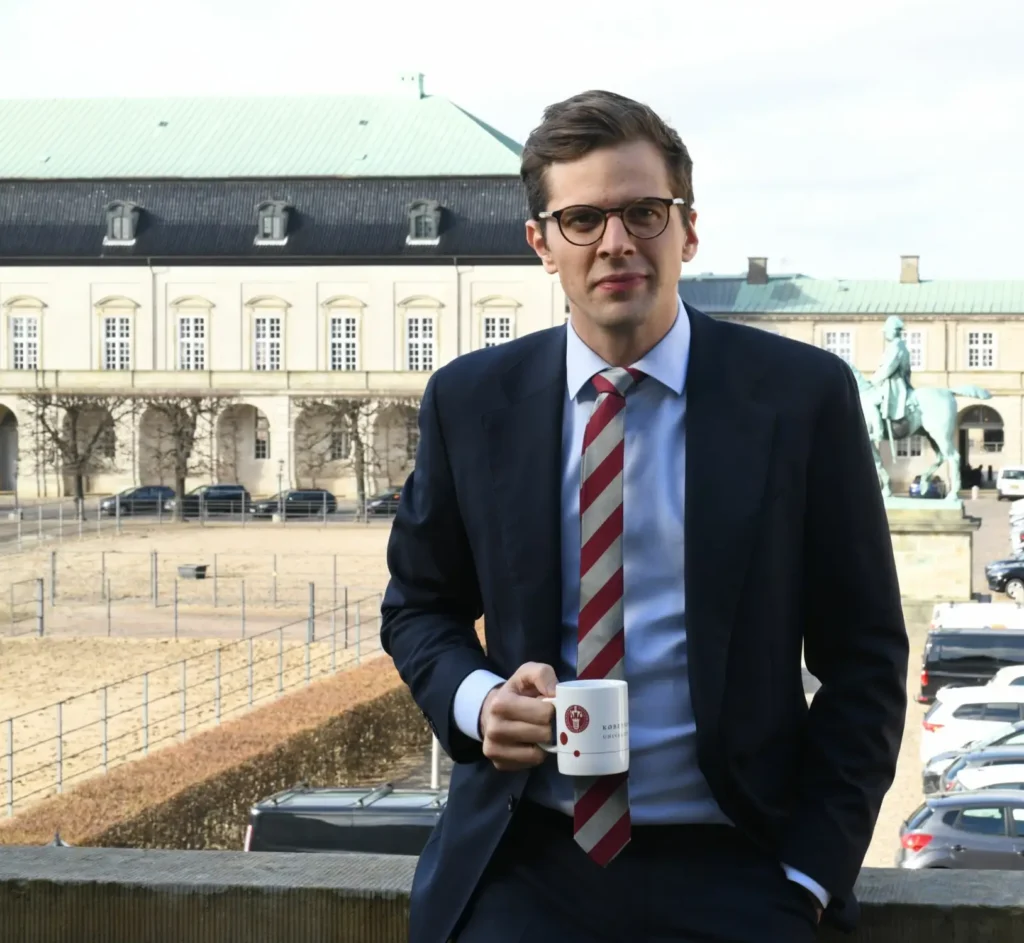
This is in many ways still the Denmark you find in a H.C. Andersen fairytale—relatively safe and pleasant—so Mr. Vanopslagh opened the car door himself, no bodyguards, no police around him, and stopped very politely when I asked him to explain to me the future of the Danish policy for Ukraine:
"I am very proud that Denmark has taken the lead in supporting Ukraine's fight for its freedom," he started.
"And when you are with your colleagues in the parliament, is Ukraine still an important topic for Danish politicians?"
"In some ways, of course, 'Ukraine' has slipped a little down the agenda, because sadly the conflict has become 'everyday,' but I must say that among Danish politicians, there is a very serious understanding of how important it is that Ukraine is not overwhelmed by Russia, because in that case we will not have peace in Europe."
Trending Now
"I cannot imagine any change in the Danish policy towards Ukraine."
Only the Ukrainians themselves can ruin the Danish support for Ukraine
Walking around with my microphone in the streets of Aarhus, I literally only managed to find one single person who disagreed with Alex Vanopslagh and the rest of the Danes.
An engineer in his thirties, out shopping with his wife, was in no doubt that Denmark spends too much on Ukraine.
"I don't follow Ukraine any longer, I am tired of it, and I don't think that we can keep throwing money at Ukraine. We throw money at that nice little president and, at the same time, we have cuts in our own health and education system, it makes no sense. I don't think that Ukraine is our problem.
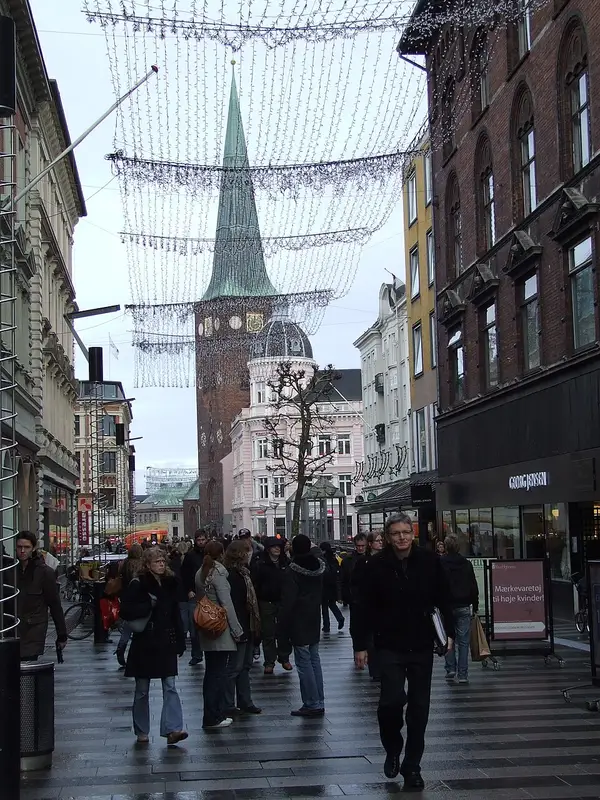
His wife interrupts, "but what about the moral side? We cannot just let the Ukrainians alone with the Russians, can we? What if it were us? We would want somebody to come to our help, no?"
But this guy is in a small minority. OK, let's not pretend that all is rosy when it comes to Denmark's support for Ukraine. But, actually, it ain't far from. None of the major, mainstream parties are against continuing the Danish support at the present level; such voices are pretty much only heard on the marginal extreme right and left wings.
In fact, it seems that only Ukrainian "stupidity" or political own goals—in the form of their leaders' corruption—can make a dent in Denmark's support.
The corruption scandal last summer and autumn was covered quite intensely in the Danish media. The scandal only had a very minor impact in the opinion polls—but on social media it is evident that the corruption scandal did make a dent in the support. Not least because it involved a number of people close to President Zelenskyy—"friends" even, he himself described them—and people he has worked with for decades.
But the effect has been more in the form of giving loudmouths on social media something new to be loudmouthed about. Among them, there is no doubt also a number of Russian trolls. But it would be flippant to ignore that this scandal has given Ukraine bad press around Europe, and potentially 'ammo' for Ukraine-sceptics.
It was also about that time, last summer—coincidence or not—that the extreme-right-wing party The Danish People's Party—the only political party in Denmark that one could describe as being seriously critical of the aid for Ukraine—suggested not that Denmark cut its support, but that the support in the future should be given as a loan not a gift as we do now.
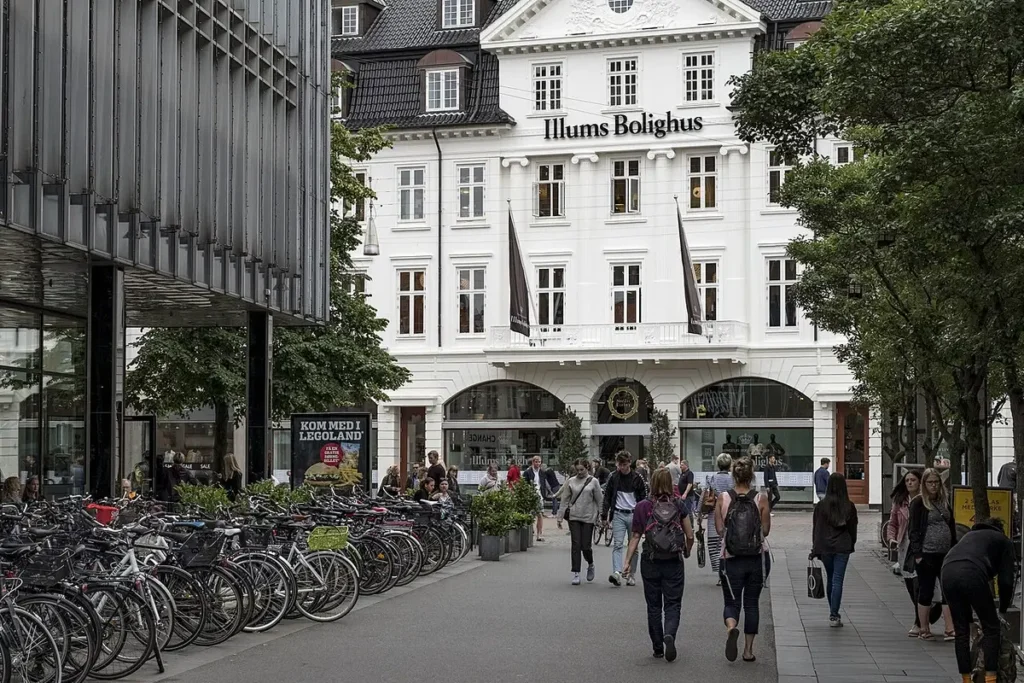
A group of 6-7 young trade and economics students in the high street like that idea:
"We need to keep supporting Ukraine, but this war has already lasted four years, and God knows when it will end," says one, while the others agree, "plus the corruption in Ukraine is a worry—so giving them support but as a loan, I think, is the only logical way forward."
"More transparency is definitely needed," one adds.
"And the other EU countries need to cough up as well," a third student says.
Interestingly, the right-wing politician Alex Vanopslagh outright rejects giving Ukraine support as a loan:
"No, I think that Denmark can easily spend some of our savings on supporting Ukraine," Vanopslagh insists, "it is in our own direct security interest, so I think that we should consider the same model as the last four years."
Putin is making a great case for continued Danish support for Ukraine
There is one subtle—and in the future maybe not so subtle—change in the Danish debate. A change that in many ways plays to Ukraine's political advantage: Vladimir Putin's constant threats against Denmark because of its support for Ukraine has made the Danes see the war in Ukraine in a wider, European security perspective.
Alex Vanopslagh: "Ukraine's fight and that freedom is also our freedom, because if Ukraine loses the war, there is a big risk that Russia continues its aggression into other European countries, so I think that we should continue supporting Ukraine at the present high level."

81% of Danish voters now support Ukraine's membership of the European Union.
"People need to learn from history," the socialist family lawyer I interviewed above says, with intent, leaning into my microphone, "if we accept the misbehavior of rogue states like Russia and now the US, we know where it will end. I will admit that I have never been a fan of the European Union and of NATO, certainly not, but in this situation, we need them."
"But I do think that the other European countries need to get their hands out of their pockets and pay their part, their behavior is ridiculous, very short-sighted."
"Is Ukraine a topic that Danes discuss around the dinner table and with friends and family?" I ask the couple mentioned above, the ones owning "a few clothes shops."
"International security is very much a hot topic, for sure," the wife says, "but now with Iran and Gaza and Venezuela and Greenland—oh my God!—Ukraine and Putin are, to be honest, drowning a bit. That is probably wrong, Ukraine is only a thousand kilometers from Denmark."
Two female pensioners, retired doctors, tell me that they follow Ukraine intensely, every day.
"There is the moral aspect, Ukrainians are European like we are, and personally, I fear that Putin could have designs on more countries."
"The Ukrainians are standing up for the rest of Europe, for democracy," her friend says.
"The Danish policy, the level of support, is spot on," they agree.
"We wouldn't dream of voting for a political party that wanted to cut the aid to Ukraine."
This article has been published in a slightly different version on Michael's blog Two Grumpy Old Men on Ukraine—where he especially looks at the longer lines of Russia's war in Ukraine.
Countries' total support to Ukraine as share of GDP
(2022–2025, aid delivered or earmarked for delivery, highest → lowest)
| Denmark | 3.25% |
| Estonia | 3.01% |
| Lithuania | 2.45% |
| Norway | 2.19% |
| Latvia | 1.91% |
| Sweden | 1.66% |
| Finland | 1.37% |
| Netherlands | 1.21% |
| Poland | 0.97% |
| Canada | 0.81% |
| United Kingdom | 0.73% |
| Germany | 0.70% |
| France | 0.30% |
| Spain | 0.18% |
| Italy | 0.16% |
| Greece | 0.09% |
Data: Kiel Institute, Ukraine Support Tracker Release 27 (Feb 2026, through Dec 2025). Bilateral allocations as % of 2021 GDP. / Euromaidan Press