

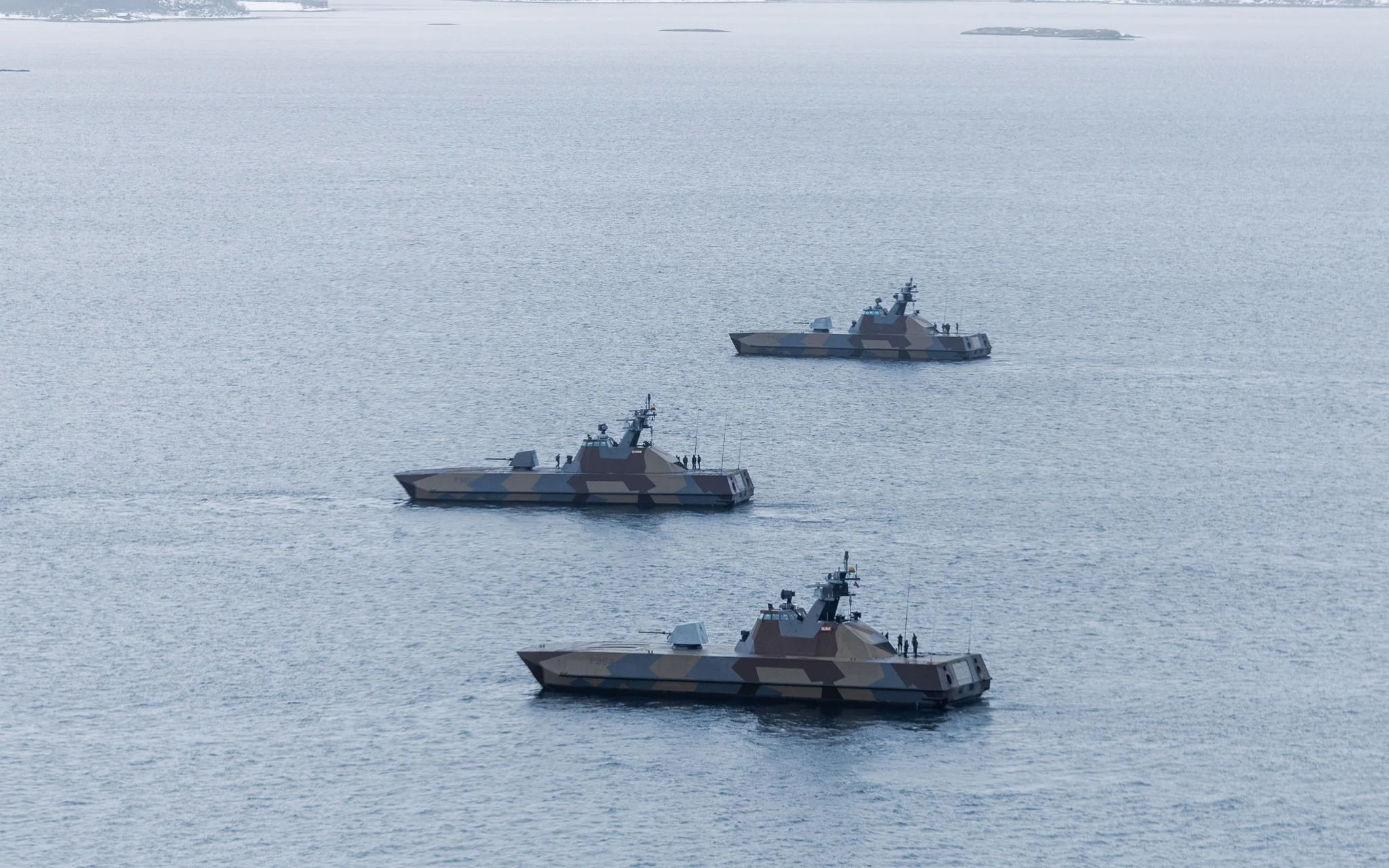
A group of six foreign nationals posing as tourists flew multiple drones inside the restricted airspace above Ramsund naval station — the Norwegian Navy's main base and logistics hub in northern Norway — on 21 March, Norwegian public broadcaster NRK reports. Police fined all six, confiscated two drones, and are continuing to investigate three of the group.
Ramsund orlogsstasjon, located in Nordland county, sits at the heart of Norway's northern naval operations. Drone flights in the area are explicitly prohibited. According to operations leader Robin Åsheim Lindberg, police received the alert on Saturday, and all six members of the foreign group were subsequently fined. Three were questioned and remain under investigation, Lindberg told NRK.
It is not yet known whether the group had any connection to Russian intelligence services, NRK notes.
The incident fits a pattern documented across northern Europe. In late 2025, unidentified drones were observed flying over military installations in Germany and the Netherlands. Investigators using open-source data — primarily vessel navigation records — identified a recurring sequence: cargo ships behaving atypically, either anchoring without apparent reason or executing unusual maneuvers close to shore, at the same times and locations where drones appeared over military sites, Ukrainian outlet Euromaidan Press reported at the time.
Norway has been tracking a parallel escalation on its land border. As early as January, reports emerged that Russia had increased the number of intelligence operatives operating near the Norwegian frontier and was attempting to infiltrate the country via fishing vessels entering Norwegian ports, according to NRK.
The country shares a 198-kilometer border with Russia. Since November 2025, Norway has been actively reinforcing that boundary with new fencing, updated surveillance systems, and aerial monitoring drones, Euromaidan Press reports. As part of a broader northern defense buildup, Oslo plans to double the number of military personnel stationed in the region by 2032.


