
Washington said its 30-day waiver allowing buyers to purchase Russian oil already at sea would not significantly benefit the Kremlin. Bloomberg’s vessel-tracking and pricing data, published on 16 March, show otherwise.
Russia’s seaborne oil export income rose by $890 million in the week to 15 March to reach around $2.07 billion—the largest weekly gain since Moscow launched its full-scale invasion of Ukraine—as soaring global prices combined with a surge in Indian purchases driven by the US waiver.
Treasury Secretary Scott Bessent wrote on 12 March that the waiver would “not provide significant financial benefit” to the Russian government.
Russia’s oil revenues fund its war directly: the 2025 deficit hit 5.65 trillion rubles ($72 billion)—the highest since 2009—as Western sanctions squeezed Moscow’s income to its lowest in five years.
Robin Brooks of the Brookings Institution warned that the shift “could rival the windfall of 2022”—when Russia earned a record $225 billion current account surplus, twice offsetting the frozen FX reserves the West had seized.
Treasury Secretary Scott Bessent wrote on 12 March that the waiver would “not provide significant financial benefit” to the Russian government. Ukrainian President Volodymyr Zelenskyy replied three days later, telling CNN’s Fareed Zakaria that lifting pressure would “only help Russia.” EU Commissioner Valdis Dombrovskis warned that removing restrictions could deliver unexpected revenues to Moscow.
The waiver runs until 11 April.
The sanctions discount has nearly disappeared
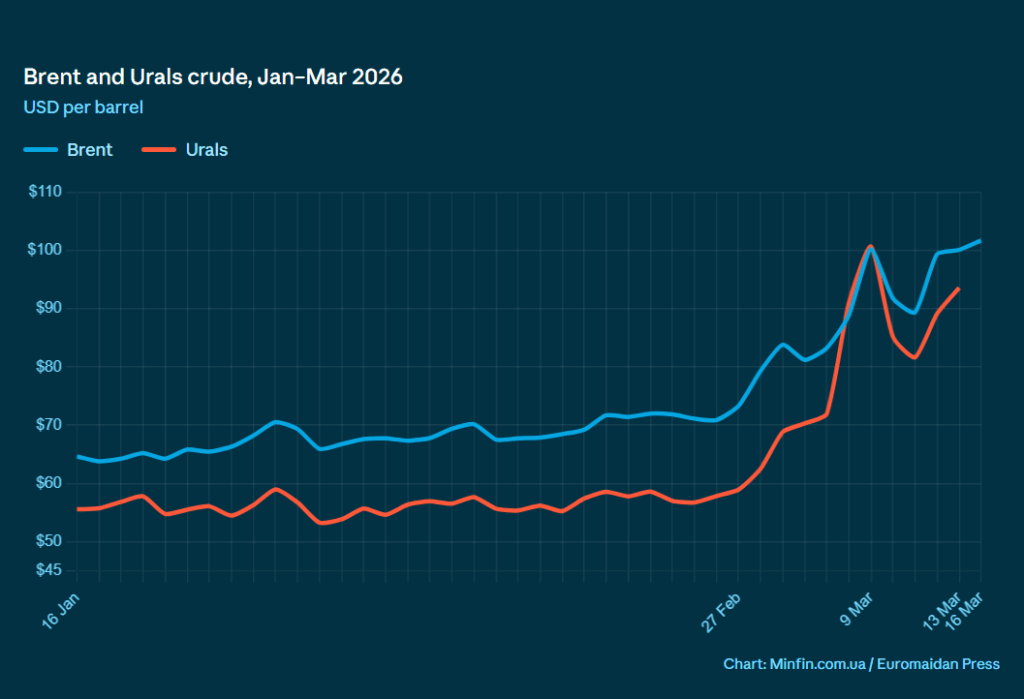
According to Argus Media data cited by Bloomberg, Urals crude delivered to India’s west coast hit a record $98.93 per barrel on 13 March—the highest since Russia redirected its exports eastward after its full-scale invasion in February 2022.
Vladimir Putin last week urged producers to capitalize on the surge.
In February, Indian refiners had been paying $28 per barrel less than the global price to compensate for the legal and reputational risk of buying sanctioned Russian crude. By 13 March, that discount had collapsed to $4.80—a four-month low—meaning the financial penalty that sanctions imposed on every Russian barrel has nearly disappeared.
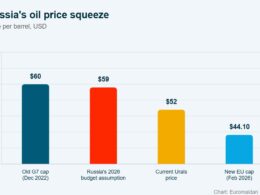
The price now exceeds the $59 per barrel assumed in Russia’s 2026 budget—a figure that looked out of reach as recently as January, when Urals had slid below $40. Vladimir Putin last week urged producers to capitalize on the surge but warned the spike was “certainly temporary.”
Trending Now
Backlog clears as tankers turn for India
The income jump is price and volume together. Russia’s seaborne exports rose to 3.97 million barrels per day in the week to 15 March—the highest in about three months—as shipments from the Black Sea terminal at Novorossiysk resumed after a Ukrainian drone strike in early March, with additional increases from Arctic and Pacific ports.
A total of 37 tankers loaded 27.79 million barrels that week, up from 20.18 million barrels on 27 ships the week before, Bloomberg’s vessel-tracking data show.
Since mid-December, around 140 million barrels of Russian crude had been sitting on tankers unable to find buyers.
The surge is also clearing a months-long backlog. Since mid-December, around 140 million barrels of Russian crude had been sitting on tankers unable to find buyers—up about 65% from the end of August.
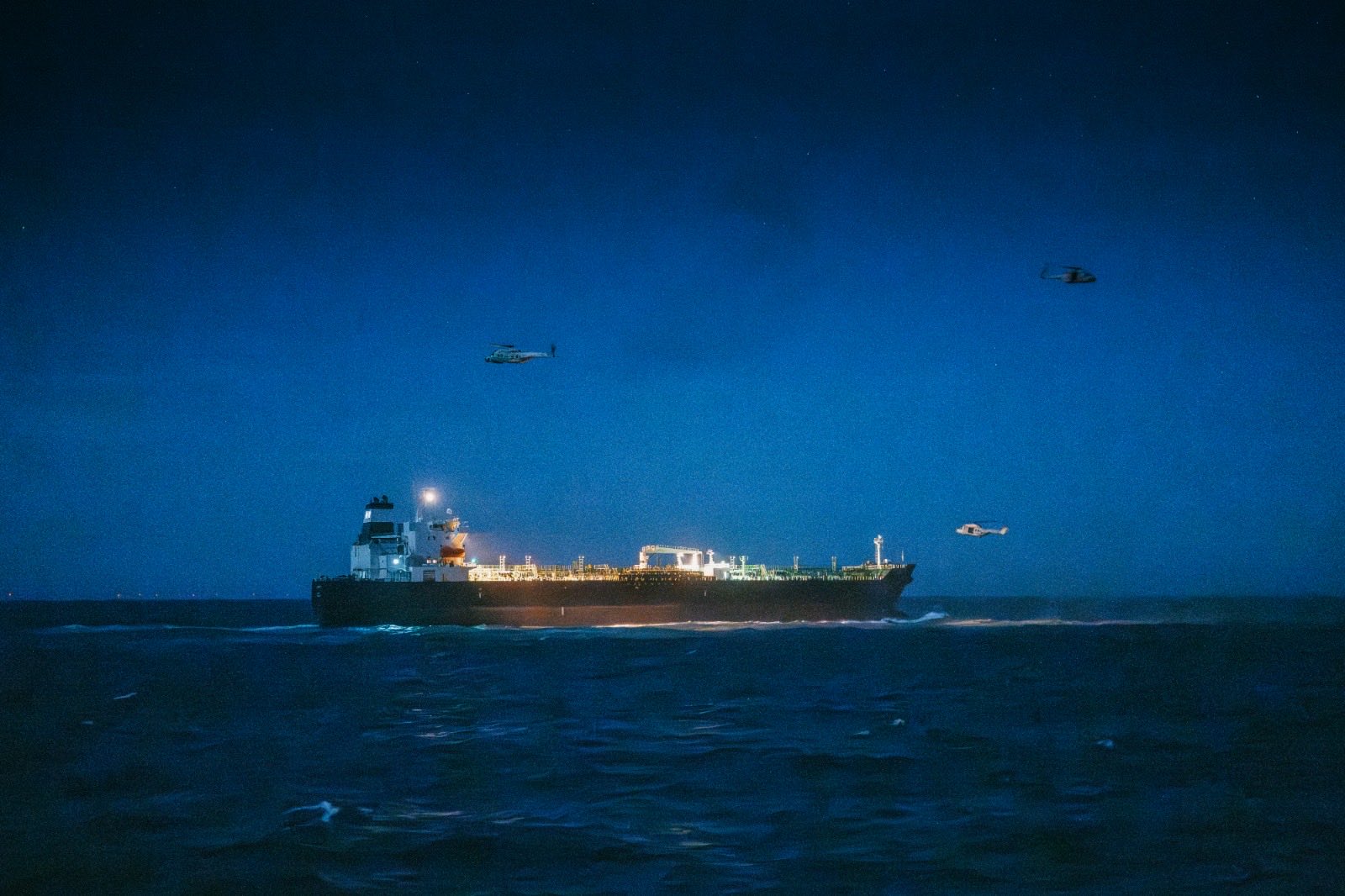
After Indian refiners received the US green light earlier in March, they snapped up around 30 million barrels of unsold Russian crude already at sea, with tankers that had been heading toward the Strait of Malacca turning around and sailing back toward India’s west coast refineries.