

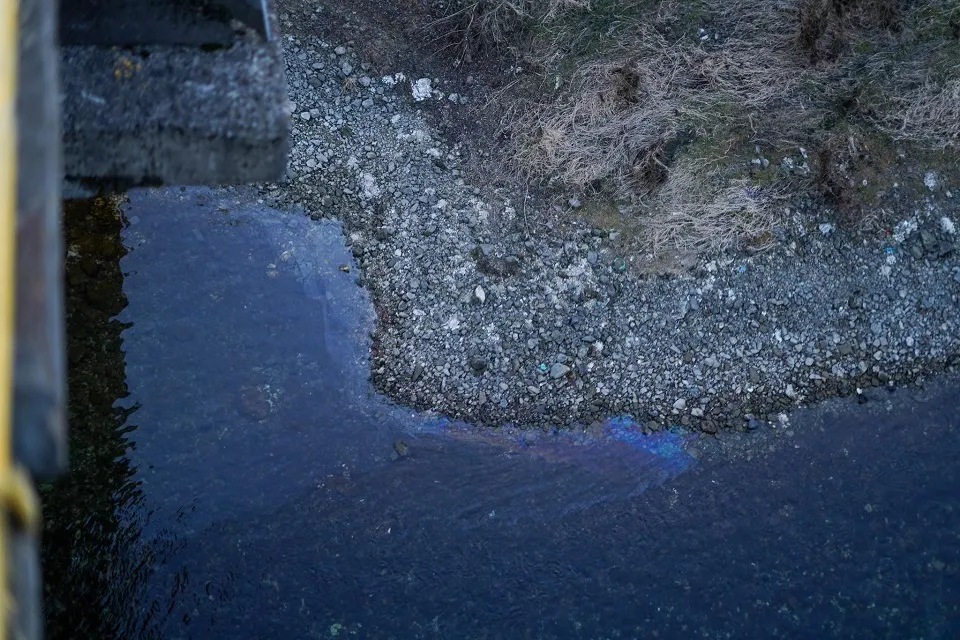
Russia's strike on the Novodnistrovsk hydropower plant in Chernivtsi Oblast has caused a fuel spill into the Dniester River, threatening Moldova's water supply, Moldova's President Maia Sandu said on 15 March. Moldova's government declared a 15-day environmental alert and activated the EU Civil Protection Mechanism as petroleum products continue spreading downstream in waves — with Moldova's Environment Minister warning the actual oil volume in the river already "significantly exceeds" the initially reported figures.
Strike on 7 March, contamination discovered on 10 March
The contamination is preliminarily linked to a rocket fuel leak following Russia's 7 March attack on the Novodnistrovsk hydropower plant, Ukraine's Ministry of Economy, Environment and Agriculture reported on 12 March. The ministry described the incident as "another manifestation of Russia's environmental aggression."
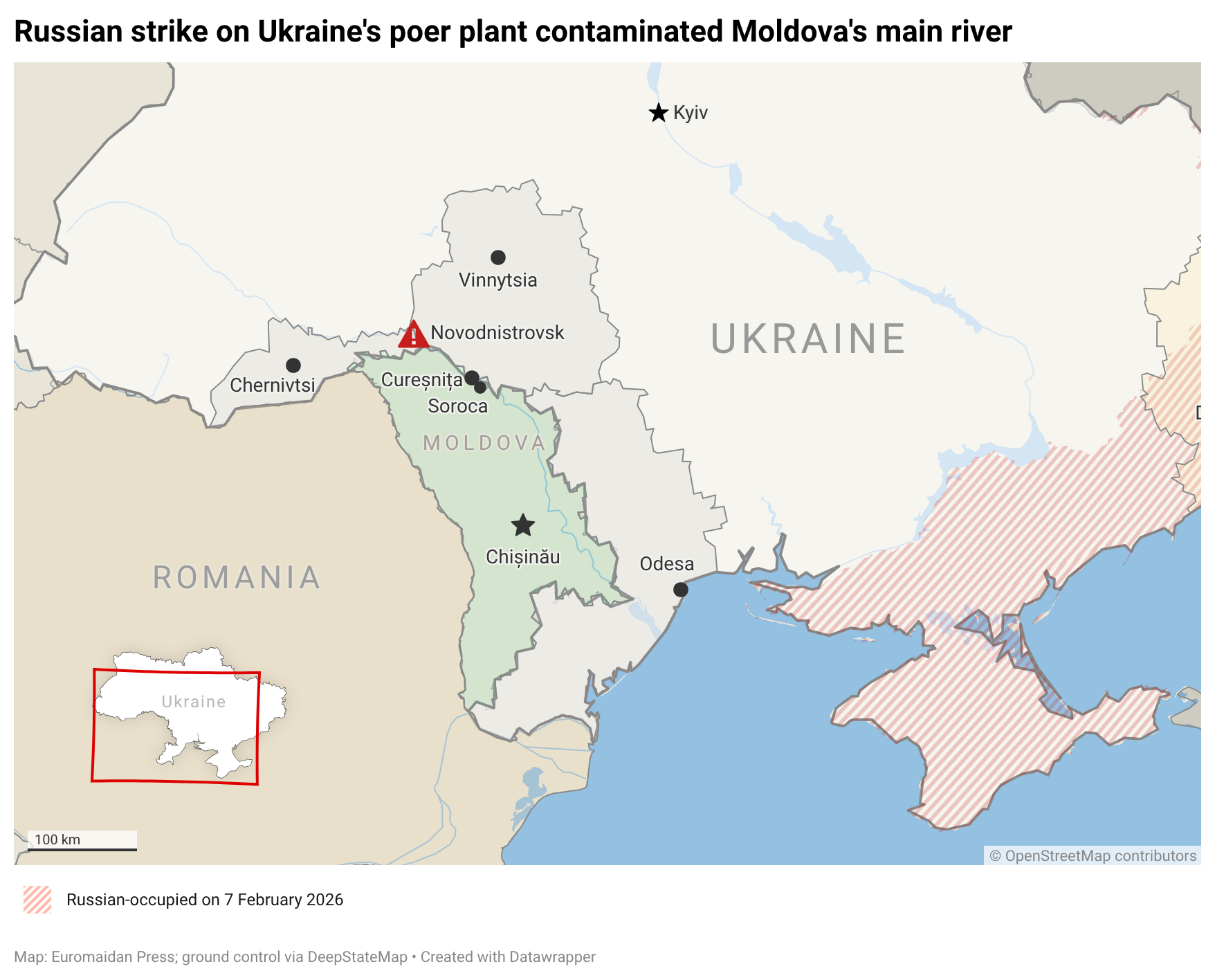
Oil patches were first detected on 10 March near the village of Liadova in Vinnytsia Oblast. Ukraine's state water resources laboratory recorded pollution levels near Nahorany at 0.127 mg/dm³ — 2.5 times above the permitted norm of 0.05 mg/dm³ — with a persistent smell of technical oils and a visible oily film with a rainbow effect along the riverbank, the Ministry of Economy reported.
Eight days of escalating response
Moldova's response unfolded across eight days, Prime Minister Alexandru Munteanu detailed on Facebook. Filters were installed at Curesnița and Soroca on 11-13 March. Romania sent absorbent booms and equipment on 13 March. Water supply to Moldova's Naslavcea and four districts was cut on 14 March. On 15 March, Moldova's cabinet declared a 15-day environmental alert and installed additional containment barriers downstream.

Munteanu said the pollution wave "continues to move downstream" and that in some northern areas concentrations of petroleum products and aromatic hydrocarbons exceed permitted norms.
"Even if in some locations values temporarily return within acceptable limits, the substance continues to arrive in waves, making it difficult to accurately forecast developments," he said.

"Significantly exceeds 1.5 tonnes"
Moldova's Environment Minister Gheorghe Hajder said at a press conference after the cabinet meeting that the actual volume of oil in the Dniester significantly exceeds the initially reported 1.5 tonnes, that the pollutant was still entering the river, and that the Russian Federation is the sole culprit of the contamination.
Hajder confirmed that Chișinău's water supply currently faces no risk, but said protective barriers have been installed near the Vadul-lui-Vodă water intake station that supplies the capital.
Trending Now
President Sandu wrote on X:
"Russia bears full responsibility."
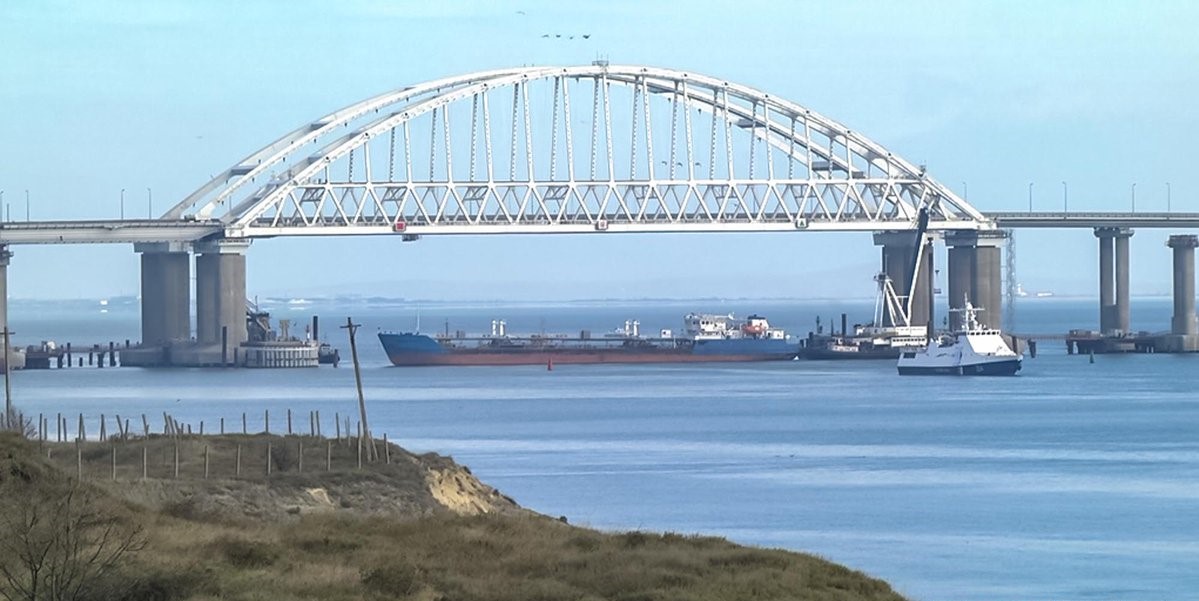
Black Sea needs 20-year recovery from Russian tanker oil spill as contamination spreads
Russian aggression leaves a trail of environmental destruction across Ukraine
The Dniester contamination is the latest in a pattern of environmental destruction Russia's war has caused across Ukraine and beyond. As of January 2025, Ukraine has documented over 7,000 ecological crimes and €72.9 billion in environmental damage since 2022.
Two internationally important wetlands have been nearly destroyed. Russia's occupation threatens the Askania-Nova Biosphere Reserve — a UNESCO-recognized site home to zebras, bison, and Przewalski's horses. Russian strikes on Port Pivdennyi in December 2025 spilled sunflower oil into the Black Sea, killing seabirds on Odesa beaches.
Russia has also made Ukraine one of the most heavily mined countries in the world — with approximately 137,000 km² still contaminated by landmines and unexploded ordnance as of mid-2025, an area larger than Greece, with full clearance estimated to take 30 years or more.


