
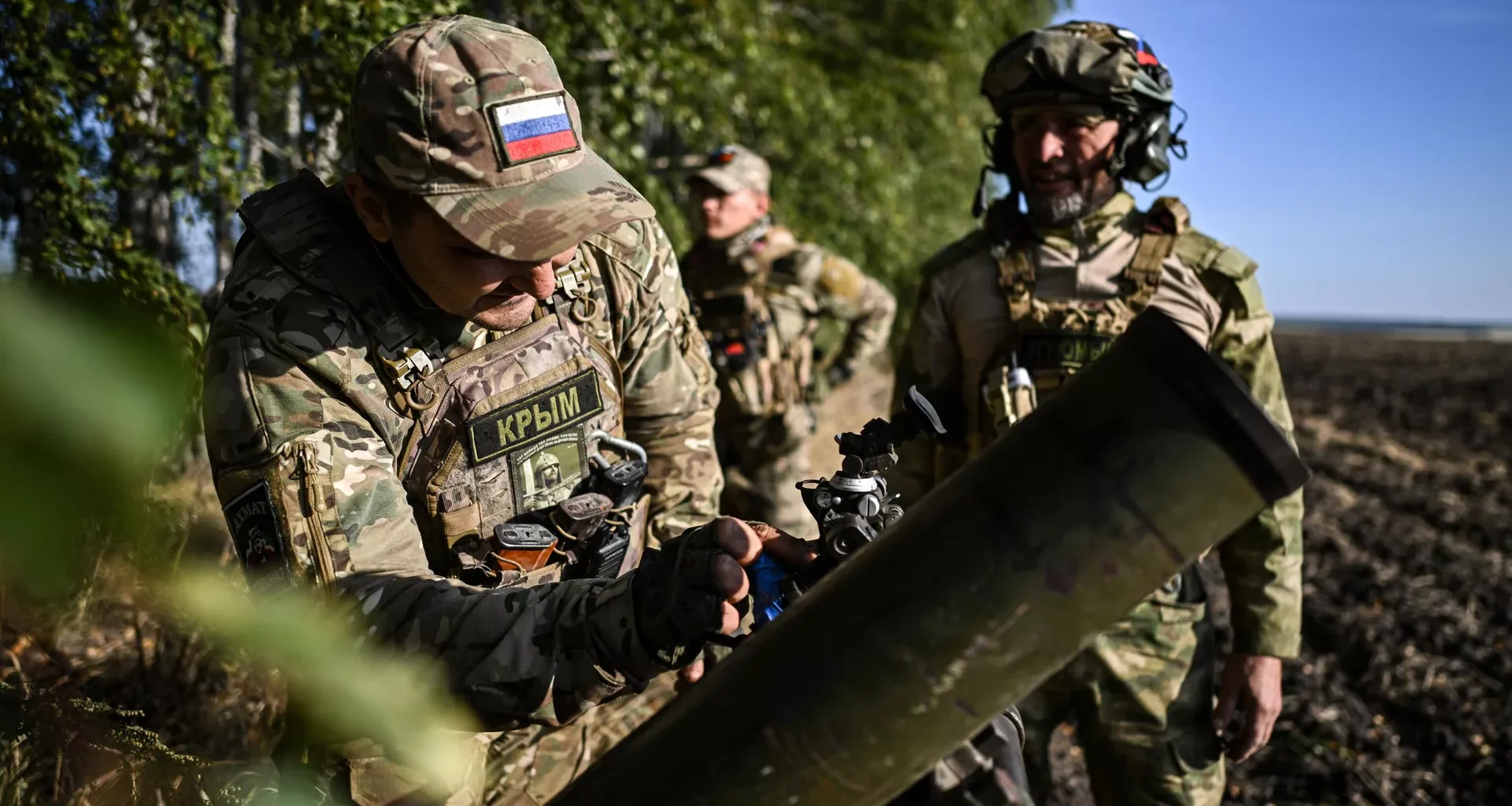

Russian propaganda was strongly linked to combat motivation, cut voluntary surrender rates, and normalized dehumanization of Ukrainians among captured servicemembers, according to a landmark study by Ukrainian NGO LingvaLexa.
Who the researchers surveyed
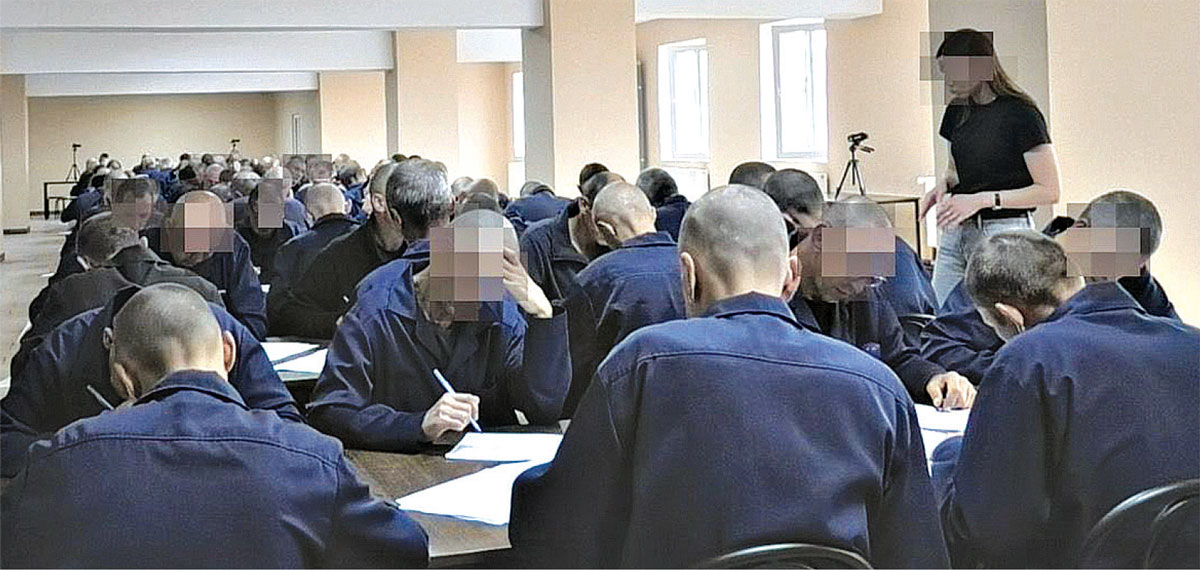
The research team surveyed 1,060 male members of Russia's Armed Forces held as prisoners of war, using standardized paper questionnaires administered under OPG procedural standards. The average age of respondents was 39 — close to the documented average age of Russian servicemembers overall. About 75% identified as ethnic Russians. 80.61% said they were Christian, nearly 8% Muslim, and 4.02% atheists. Over 90% had no higher education: 37.73% had not completed high school, while 52.50% held only secondary or vocational qualifications.
The entire process was video-recorded from multiple angles to prevent any allegations of coercion or impersonation. Those recordings cannot be made public at this stage as they form part of ongoing criminal proceedings, but will be reviewed as court evidence in due course. Participation was fully voluntary — some Russian servicemembers declined to participate. Researchers explicitly told all participants that their answers would remain confidential and would not determine personal guilt or individual responsibility.
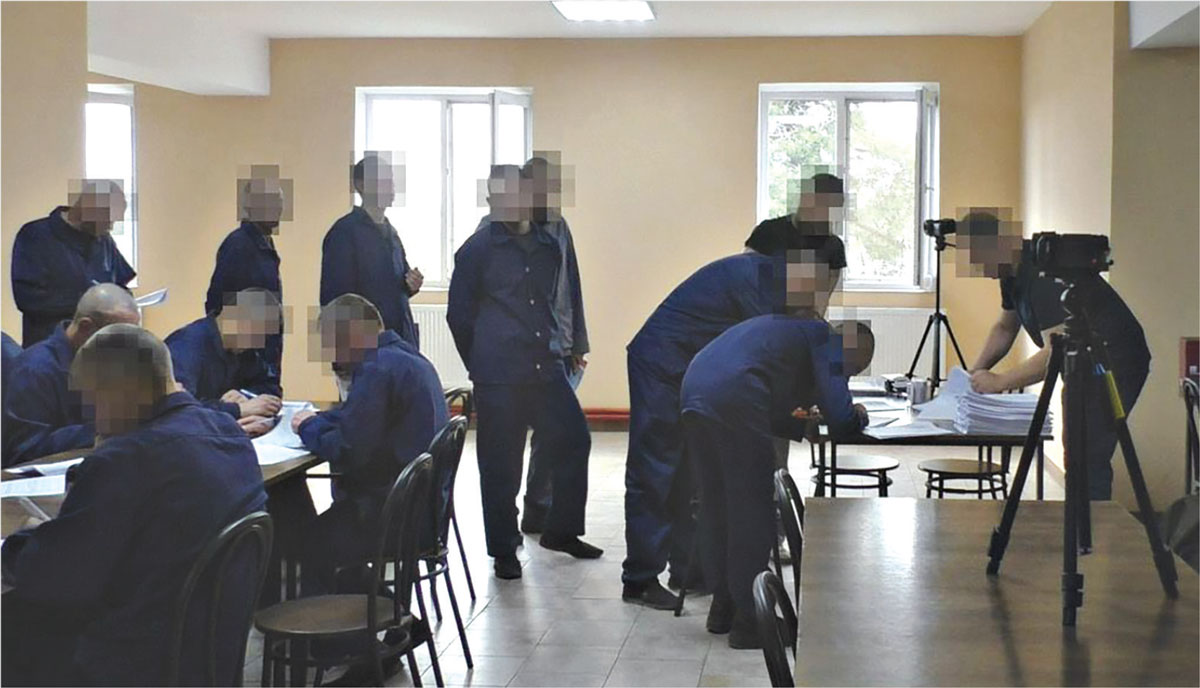
The methodology drew on psychometric instruments previously applied to detained ISIS fighters in Iraq, including pictorial scales to measure dehumanization and identity fusion. Because POWs may have understated beliefs they expected interviewers to view negatively, LingvaLexa notes that its findings represent conservative estimates of the true scale of propaganda's influence.
Three-quarters of captured soldiers accepted at least one Kremlin narrative
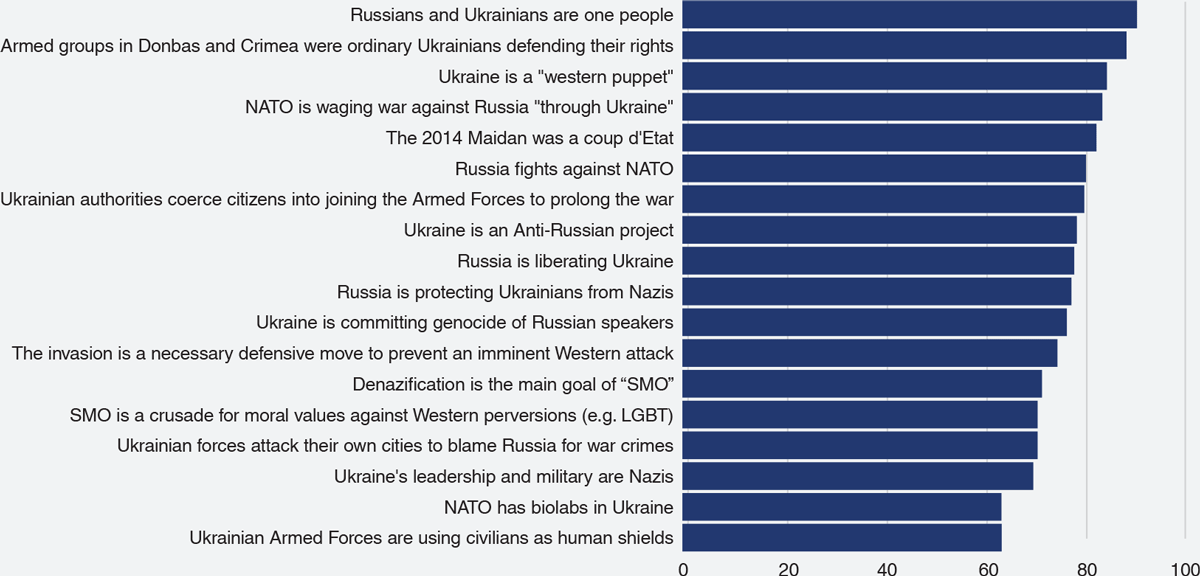
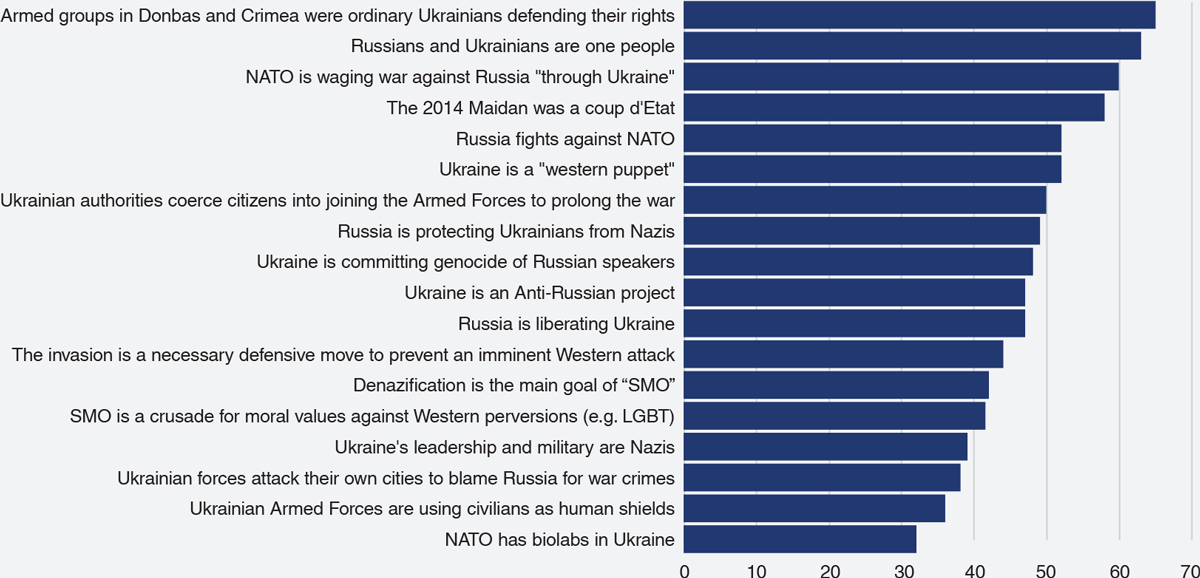
The average level of belief in Kremlin propaganda across all tested 18 narratives stood at 47.61%. Overall, 76% of respondents accepted at least one propaganda narrative to some extent.
The study tested beliefs across five thematic clusters:
- legitimization of Russia's invasion of Ukraine;
- moral framing of the war as a crusade against Western decadence;
- historical revisionism denying Ukrainian statehood;
- dehumanization and victim-blaming narratives — accusing Ukraine of crimes Russia itself commits;
- denial of Russian involvement in the Donbas and Crimea aggression since 2014.

Among the specific narratives, the claim that "Russians and Ukrainians are one people" had the highest proportion of believers among those who did not actively reject it.
The claim that "armed groups in Donbas and Crimea were ordinary Ukrainians defending their rights" recorded the highest average belief score.
Narratives claiming Ukrainian forces used civilians as human shields, or that Ukrainian forces attacked their own cities to fabricate evidence against Russia, attracted the lowest rates of acceptance among the 18 narratives tested.
Propaganda made soldiers six times more likely to view the war as fully legitimate
Researchers asked POWs to rate the invasion as "necessary," "justified," and "legitimate" on an 11-point scale, then combined the ratings into a single measure. The average perceived legitimacy across the sample reached 35.81% — moderate overall but sharply divided by levels of propaganda belief. Overall, 68.29% of soldiers rated the war as legitimate, necessary, or justified to some degree.
For every 1% rise in propaganda belief, a soldier's sense that the war was legitimate rose by 0.95%. Among strong propaganda believers, 88% assigned the war a non-zero legitimacy score, compared to 51% among skeptics.
At the extreme end, 13% of strong believers rated the invasion as completely legitimate, versus just 2% among skeptics. Soldiers who fully believed Kremlin propaganda were six times more likely to consider the war entirely justified.
The results were examined in sensitivity analyses that controlled for participants' age, education, ethnicity, and religion — confirming that the observed links are not coincidental background effects.
43% of Russian POWs rated Ukrainians as less than fully human
Researchers used the validated "ascent of man" pictorial scale to measure dehumanization — a tool the study's authors note predicts not only prejudice but also support for aggressive actions such as torture and retaliatory violence. The broader psychometric toolkit used in the study, including pictorial scales for dehumanization and identity fusion, draws on instruments previously applied to detained ISIS fighters in Iraq.
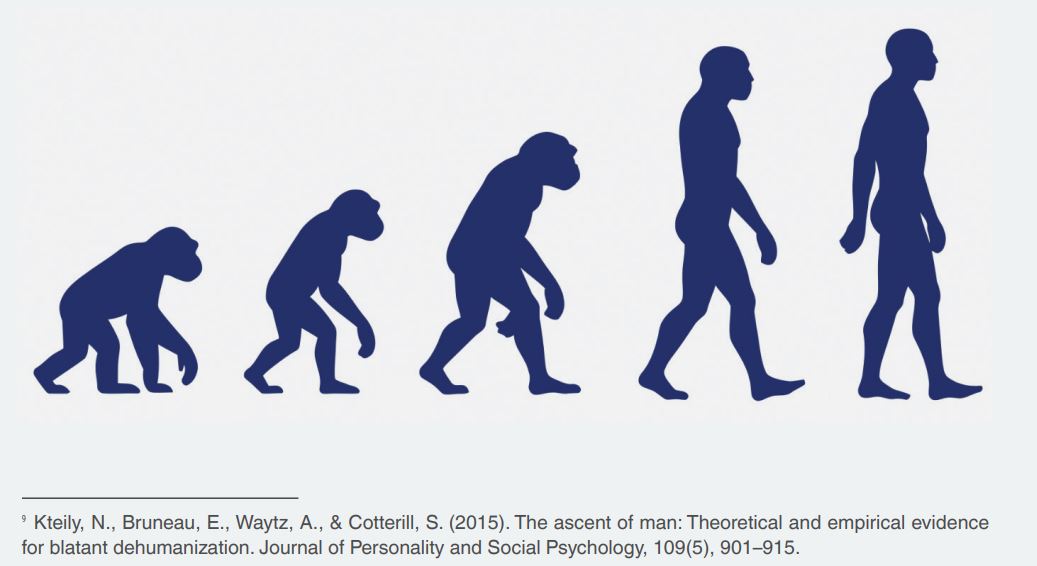
The researchers asked participants to estimate the percentage of Ukrainians who were "as developed" as human beings, using a graphic depicting an evolutionary progression from ape-like figures to modern human.
On average, Russian POWs rated Ukrainians as only 88% as evolved as other human beings, placing them roughly "halfway between Cro-Magnon and Modern Man" on the scale. In total, 42.94% of respondents rated Ukrainians as something less than fully human.
The link between propaganda and dehumanization was statistically robust, according to the study. Among soldiers with low propaganda belief, 36% dehumanized Ukrainians. Among strong believers, that figure climbed to 54%. Dehumanization research consistently identifies this tendency as a key psychological precursor to hate crimes.
Nearly half of the POWs felt completely fused with the "Russian World" ideology
Trending Now
Identity fusion — the sense of feeling wholly merged with a group or ideology, to the point of no longer perceiving a boundary between self and cause — predicts willingness to make extreme sacrifices, including fighting and dying, according to established psychological research.
Among the 1,060 POWs, 47.2% reported complete fusion with the "Russian World" ideology. For every 1% increase in propaganda belief, the probability of achieving this total identification rose by about 1.16%. Among strong propaganda believers, 49% reported full ideological fusion; among skeptics, the figure was around 40%.

Severed ears, tortured animals, and orders to kill POWs: Leaked chats expose Russian general’s brutality
The "Russian World" doctrine holds that all people who speak Russian, identify with Russian culture, or have historical ties to Russia — regardless of nationality or borders — form a single civilizational space centered on the Russian language, Orthodox Christianity, and shared historical experience.
Historians and political scientists have characterized it as an imperialist ideology that the Kremlin deployed to prepare, justify, and rationalize its wars of aggression, including against Ukraine.
The research argues that Kremlin narratives don't just shape how soldiers fight — they help get them to the front in the first place, concluding that war propaganda is "not merely an instrument of persuasion" but "a mechanism of mobilization" that substantially contributes to recruitment into Russia's war against Ukraine.
Even after captivity, propaganda believers wanted to fight again
Researchers asked POWs directly about intentions to rejoin Russia's Armed Forces after release — in non-deployed roles, non-combat roles within the invasion, or combat roles. The average level of willingness to return to military service in any capacity was 12.82%.
Within that overall figure, however, propaganda belief sharply differentiated outcomes. Overall, 32.71% of all respondents expressed at least some intention to rejoin Russia's Armed Forces. Separately, 28.92% expressed some willingness to return to the invasion in a non-combat role, and 22.29% considered re-enlisting in a combat role to some extent.

337 Ukrainian POWs “consciously and brutally” executed by Russia – nearly all others tortured
The most striking contrast: among strong propaganda believers, 33% reported non-zero intentions to return to combat roles. Among low believers, that figure was 17%. Soldiers most saturated with Kremlin narratives were twice as likely to consider going back to fight — even after already experiencing battlefield reality and imprisonment.
Propaganda cut voluntary surrender rates nearly in half
Researchers asked POWs directly whether they had surrendered voluntarily — including through Ukraine's "I Want to Live" government hotline, which guarantees Geneva Convention-compliant treatment — or had been captured after running out of ammunition or losing a battle.
Overall, 11.90% of respondents reported having voluntarily surrendered. For every 1% rise in propaganda belief, the probability of voluntary surrender fell by about 1.6%. Only 9% of strong believers surrendered voluntarily. Among low believers, the rate was 15% — almost double. Propaganda, the data show, did not merely shape soldiers' opinions. It kept them on the battlefield longer.
The study concludes that its findings "provide measurable evidence that propaganda serves not only as a psychological tool of state control but as a behavioral enabler of aggression and potential war crimes. In other words, propaganda is not background noise — it is a weapon."
The legal stakes: evidence to prosecute propagandists
LingvaLexa and its partners designed the study with accountability in mind. For international and domestic legal institutions, the research offers a concrete empirical basis for demonstrating how state-sponsored propaganda contributes to the crime of aggression — moving the argument from theory to quantified behavioral evidence.
"The data move beyond theory by quantifying the behavioral effects of propaganda and may serve as evidentiary support," the study reads.
Peter Pomerantsev, a senior fellow at the Agora Institute at Johns Hopkins University who contributed to prior work on propaganda accountability, called the LingvaLexa research "revolutionary" and said it directly reinforces findings from the Manufacturing Impunity report — a 2025 joint study by the Reckoning Project and Global Rights Compliance documenting how Russia deploys "information alibis," propaganda placed ahead of planned atrocities to preemptively assign blame to victims.
Pomerantsev noted that the LingvaLexa findings connect directly to that prior work, calling the research "revolutionary" and describing propagandists as "an integral part of the war machine."
What comes next: Kyiv expert conference on 19 March
LingvaLexa head Anna Vyshniakova announced that on 19 March, LingvaLexa will host an international expert discussion in Kyiv titled "When Words Become Weapons: Countering War Propaganda Through Justice and Accountability."
Read also
-
Vivaldi’s secret weapon was the targeting, not the robots: Third Corps reconnaissance mapped Russian command nodes, then hit them to cause panic
-
Russian spies ran a campaign against Kyiv on Anthropic’s Claude, and the AI chatbot’s maker caught them at it
-
One Russian drone held up seven flights in Moldova, Zelenskyy’s trip to Norway for King Harald V’s funeral among them
Read also
-
Vivaldi’s secret weapon was the targeting, not the robots: Third Corps reconnaissance mapped Russian command nodes, then hit them to cause panic
-
Russian spies ran a campaign against Kyiv on Anthropic’s Claude, and the AI chatbot’s maker caught them at it
-
One Russian drone held up seven flights in Moldova, Zelenskyy’s trip to Norway for King Harald V’s funeral among them


