
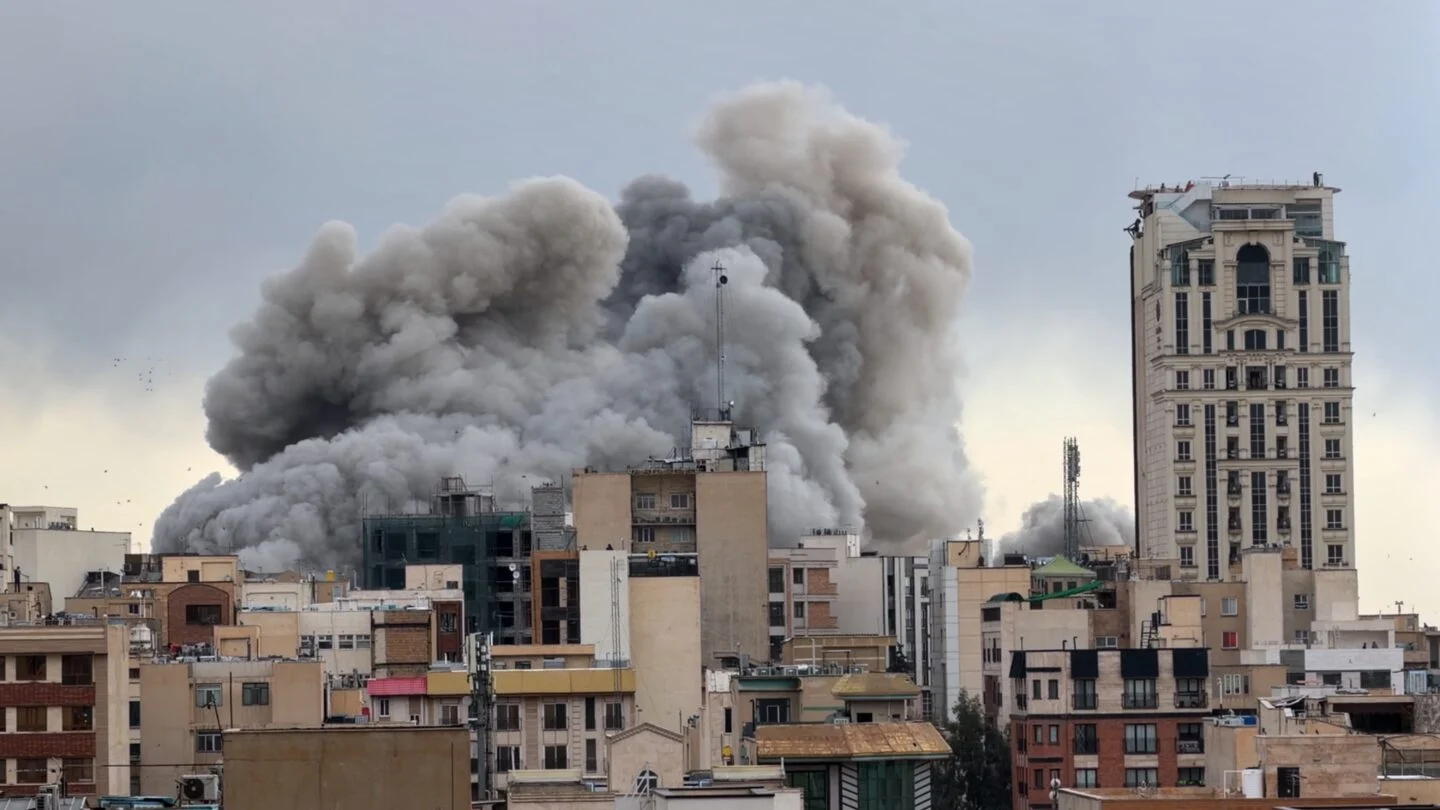
Iran's foreign ministry warned European nations on 3 February that any military action against Iran would be treated as a declaration of war, threatening retaliatory strikes on European cities. The warning came as Greece, France and Germany moved naval and air assets to Cyprus following an Iran-linked drone attack on a British air base there a day earlier.
"It would be an act of war. Any such act against Iran would be regarded as complicity with the aggressors. It would be regarded as an act of war against Iran," said Esmail Baghaei, Iran's foreign ministry spokesperson, at a press briefing with state-run news agencies in Tehran.
Baghaei dismissed the distinction between offensive and defensive operations that European officials had used to justify potential involvement. "Defensive is synonymous to offensive, doesn't make sense, do they want to deprive Iran of its capability and capacity to fight back against aggressors," he said. He added that European countries had "already done enough against Iran" and it would be "a shame" if they chose to side further with what he called the aggressors.
The warning followed a drone attack on RAF Akrotiri, the British air force base in Cyprus, on 2 February. Officials said they believed the drones were fired from Lebanon, possibly by Hezbollah. In response, the UK moved to bolster the base's defences, with British media reporting that Prime Minister Keir Starmer was considering deploying a warship to the eastern Mediterranean.
Greece, Germany and France all pledged to aid Cyprus. Athens sent its newest frigate, the Kimon — described as the most advanced vessel in the Greek navy, capable of long-range air defence — along with a Hydra-class (MEKO 200HN) frigate and two F-16 fighters. France and Germany also dispatched navy frigates.
NATO chief: Iran 'an existential threat'
NATO Secretary General Mark Rutte said on 6 Februry that the alliance was "not itself involved" in the Middle East conflict but would "defend every inch of NATO territory" if needed. Speaking in North Macedonia, Rutte described Iran as a threat to regional and European security, calling it "an existential threat" to Israel and "a huge threat to us here in Europe."
"Let's be absolutely clear-eyed to what's happening here. Iran is close to getting its hands on a nuclear capability and on a ballistic missile capability," Rutte said.
Rutte also addressed the killing of Iranian Supreme Leader Ali Khamenei, reportedly carried out by a US-Israeli strike on Saturday. "I think we are all better off with him gone and with the nuclear and ballistic capability being beaten and degraded as it is as we speak," he said, adding that while some NATO allies were providing support in the operation, they were doing so on a bilateral basis, not as part of the alliance.
Macron orders nuclear arsenal expansion
French President Emmanuel Macron announced an increase to France's nuclear arsenal in response to threats from both Russia's war in Ukraine and the widening Middle East conflict. Macron also said France would launch a programme to distribute French nuclear assets across the continent. Eight countries, including the UK, Germany and the Netherlands, have expressed interest in hosting French nuclear deterrence capabilities.
Ukrainian President Volodymyr Zelenskyy said Kyiv was prepared to help Middle Eastern states defend against Iranian attacks, but conditioned that offer on Arab countries persuading Russia to agree to a ceasefire, saying Ukrainian forces were needed at home as long as missiles continued to strike Ukrainian cities.
Read also
-
ISW: Russia’s command missed every deadline since Kyiv in 2022, now wants Odesa — Ukraine meanwhile gained 90 km² in two weeks
-
With Kharkiv under growing artillery fire, Zelenskyy demands buffer zone on Russian soil
-
Russia is building fake trees to hide communications antennas that Ukrainian drones keep finding