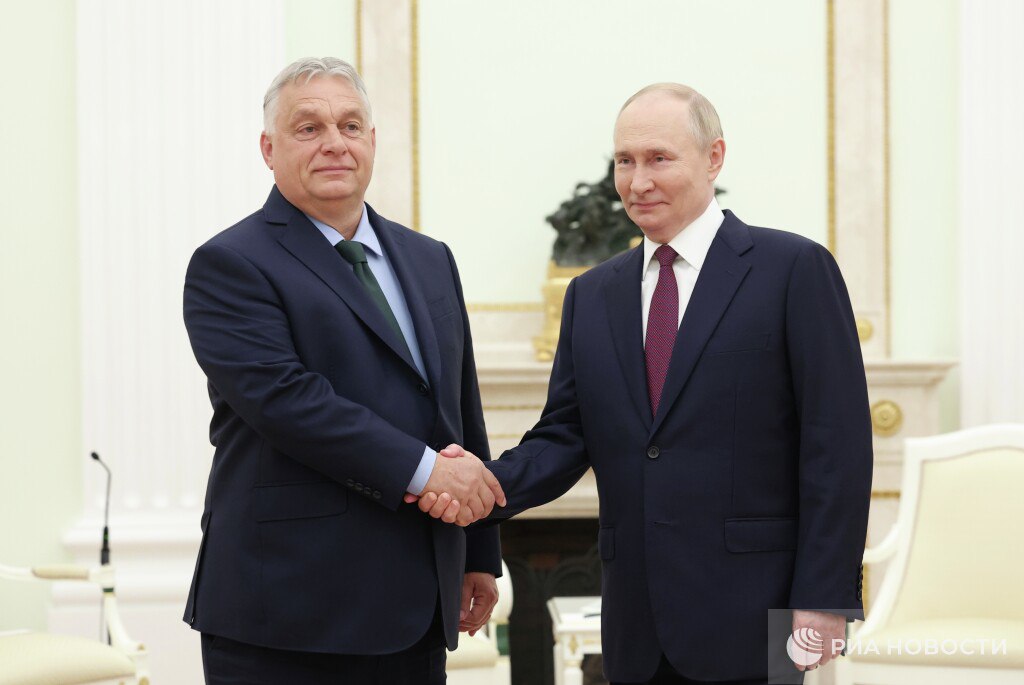
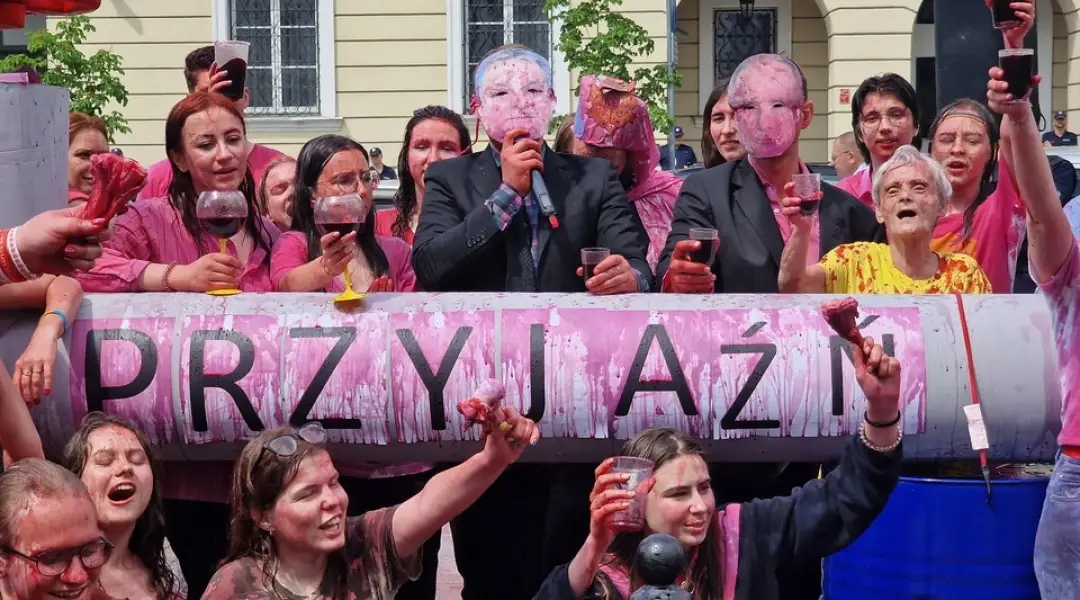

Hungarian opposition leader Péter Magyar accused Prime Minister Viktor Orbán of preparing a false flag operation to cling to power, after Orbán deployed troops to "protect" Hungarian energy infrastructure from an alleged Ukrainian attack that experts say has no basis in reality.
"Comrade Prime Minister… We know what a false flag is. Don't do this, because it is a very serious crime," Magyar told a campaign rally in Veszprém on Thursday, 27 February. He called on Orbán, if he loses the 12 April election, "to accept your defeat with dignity and peace and hand over power."
The warning came hours after Orbán announced the troop deployment in a video posted to X and Facebook—itself released just hours after a Median poll showed Magyar's TISZA party leading Orbán's Fidesz 55-35 among decided voters, a 20-point gap that has widened from 12 points in mid-January.
The pretext: a pipeline Russia bombed
Orbán's stated justification for the troop deployment is the shutdown of the Druzhba (Friendship) oil pipeline, which he characterizes as a Ukrainian "blockade" of Hungarian energy.
"Since 27 January, no oil has been arriving in Hungary through the Friendship oil pipeline," Orbán said in the video. "The data clearly shows that this unprecedented shutdown has political rather than technical causes."
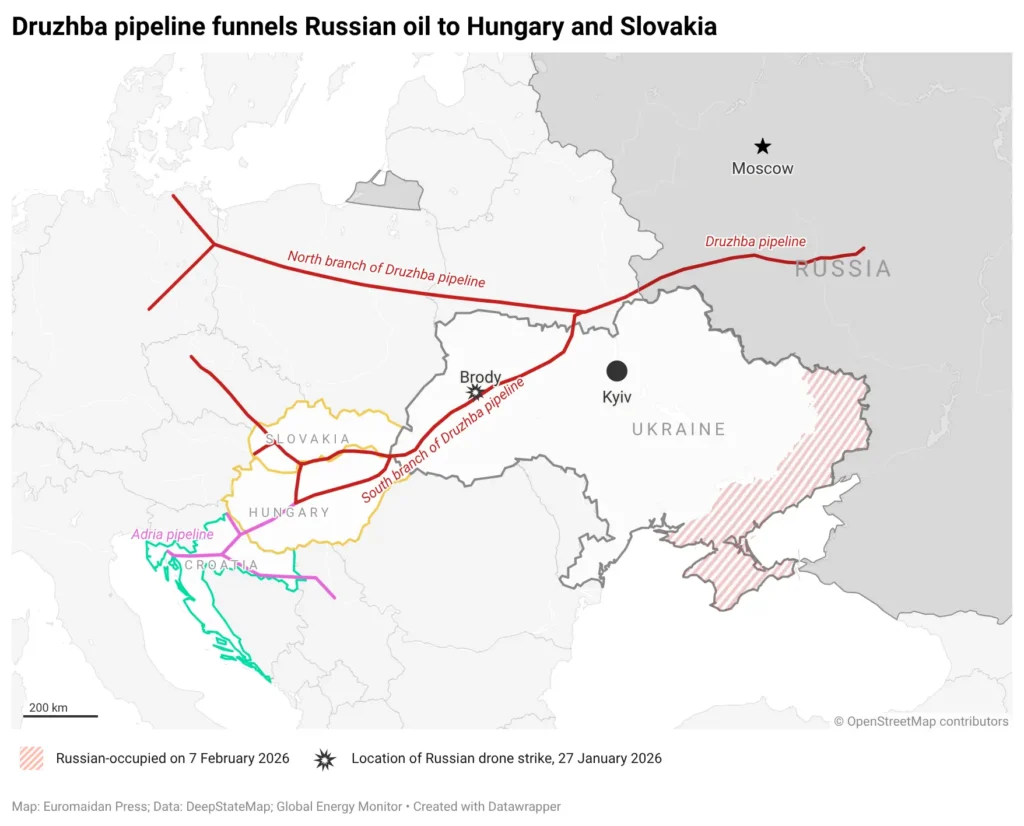
It has technical causes. On 27 January, Russian drones struck the Brody oil pumping station in Lviv Oblast, severely damaging high-pressure pumps, control systems, and auxiliary equipment. A storage tank fire took ten days to extinguish. Ukraine's Foreign Ministry told the European Commission that "full responsibility for the suspension of oil transit lies solely with the Russian Federation."
Orbán did not mention the Russian strike in his video.
On 25 February, the EU's Oil Coordination Group confirmed that there is "no immediate risk" to Hungarian or Slovak energy security. Both countries have begun drawing on strategic reserves, and the Adria pipeline through Croatia is actively supplying non-Russian crude. Hungary's own oil company MOL has admitted it can meet 80% of its supply needs from non-Russian sources.
What Hungary actually stands to lose is not energy security but a profitable financial arrangement. As Euromaidan Press has reported, Hungary buys discounted Russian crude, refines it, sells products at European market prices, and pockets the difference—while sending Moscow roughly €130 million per month in export revenues that help finance Russia's war against Ukraine. Hungary will survive without Russian oil. Orbán's political business model will not.

False flag warnings from across the political spectrum
Magyar is not alone in his assessment. Multiple security and political analysts have warned that Orbán's escalation fits a deliberate pattern.
Electoral expert Róbert László of Political Capital told Hungarian outlet Népszava: "I do not claim that it will happen, but all signs point to the fact that the Orbán government can prepare a false flag operation." László and election geographer Mátyás Bódi identified late March or early April—just before the vote—as the most likely window.
László added that such an operation could target the Hungarian community in Transcarpathia, Szabolcs-Szatmár-Bereg county, or even Budapest, and might involve a simulated attack.

Gergely Gulyás, the Minister heading the Prime Minister's Office—effectively Orbán's chief of staff—told The Times (UK) that "we don't know if it is a pretext for declaring an emergency to postpone the election or just about swaying public opinion, while talk of a false-flag operation is a legitimate fear."
Gulyás's acknowledgment is striking: a cabinet-level official conceding that false flag concerns are legitimate, even while publicly denying any intent to postpone the vote.
Former Hungarian Foreign Minister Géza Jeszenszky told Magyar Hang that it would be hard to believe Ukraine, exhausted from four years of war, would attempt to open a new front against a NATO member. The idea that Ukraine would launch a kinetic attack on Hungary, Jeszenszky said, is something "only the most uninformed person could believe."
Former US Army intelligence officer Jon Sweet and national security expert Mark Toth, writing in The Hill, warned that Orbán "is now attempting to campaign against Zelenskyy instead of Magyar" and that "Hungarian voters should be wary of a possible false-flag attack."
Trending Now
The escalation ladder
The troop deployment did not come out of nowhere. It followed a weeks-long campaign to manufacture a war atmosphere ahead of the April vote.
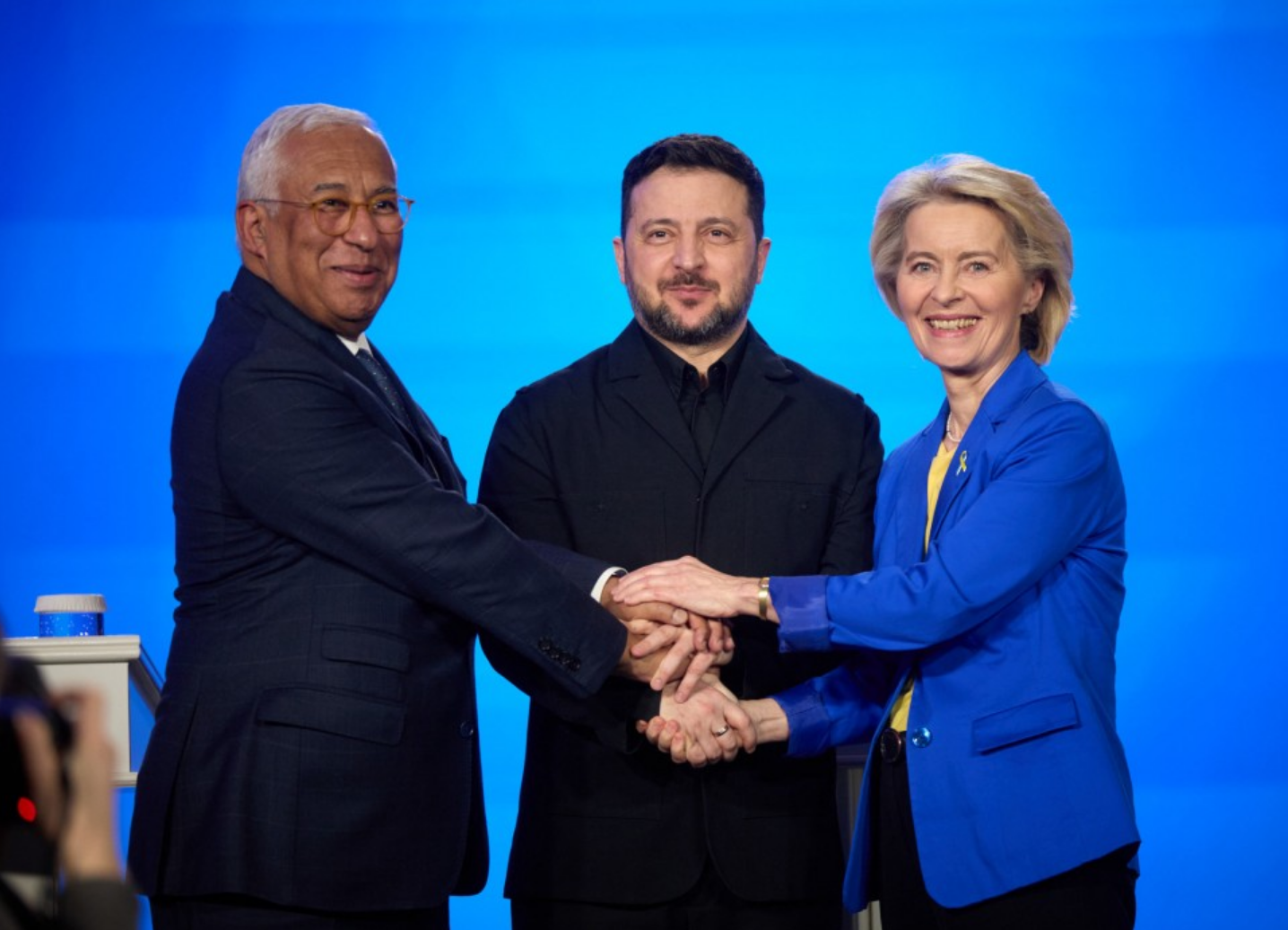
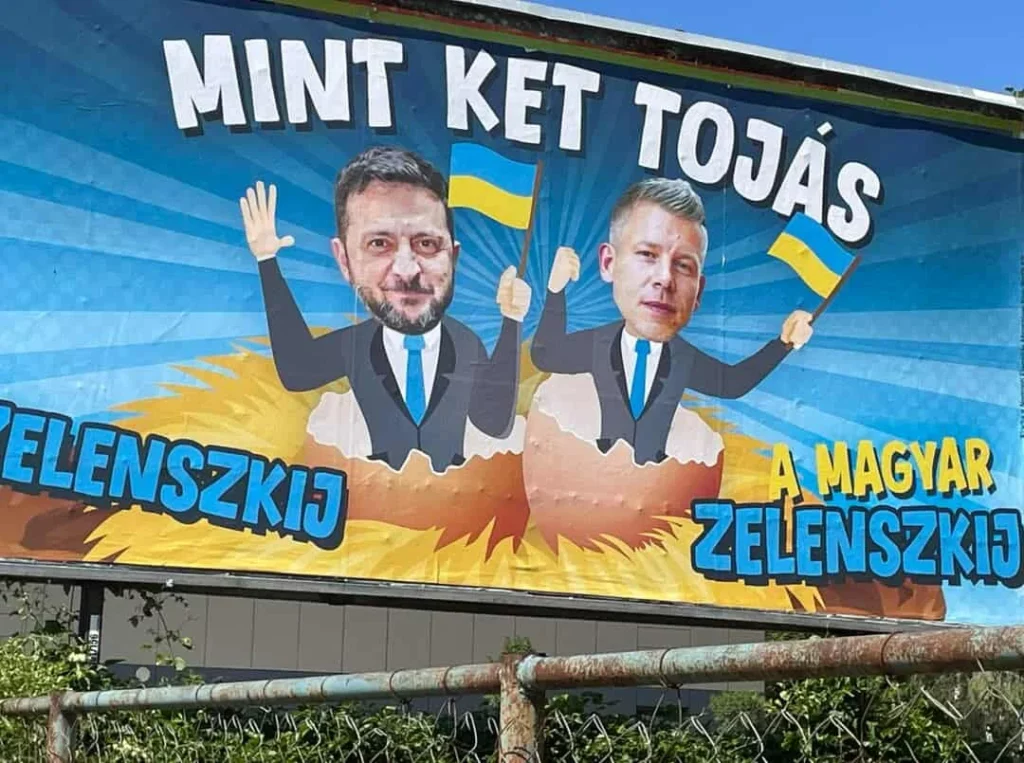
Billboards across Hungary show AI-generated images of Ukrainian President Volodymyr Zelenskyy flanked by European officials, hand outstretched as if demanding money.

Other ads, funded by a pro-government organization with Fidesz ties, depict Magyar as a puppet of Zelenskyy who would sell Hungary out to foreign interests and drag the country into war.
On 19 February, Fidesz's Budapest branch published a 33-second AI-generated video showing a little girl asking her mother when her father is coming home. The next frame: a blindfolded Hungarian soldier, kneeling on a muddy battlefield, shot in the head. "For now this is only a nightmare, but Brussels is preparing to make it reality," the caption reads.
Magyar called it "soulless manipulation." At a press briefing, Gulyás did not deny the video was AI-generated, saying: "Such is the reality of war."
The day after deploying troops, Orbán published an open letter to Zelenskyy, accusing the Ukrainian president of coordinating with "Brussels and the Hungarian opposition" to install a "pro-Ukraine government" in Budapest. He demanded Zelenskyy "immediately reopen" the pipeline and show "more respect for Hungary."
The letter's explicit linking of the pipeline dispute to the election dropped any pretense that the troop deployment was about security rather than politics.
The government also issued a decree ordering three months of "coordinated defense activity" across Hungary—a formal escalation well beyond the initial troop announcement.
Why this playbook could still work
In 2022, Fidesz secured a larger-than-expected two-thirds majority after Russia's full-scale invasion of Ukraine, capitalizing on fears that the opposition would drag Hungary into the war. Orbán is reaching for the same playbook—but this time, the opposition is calling it out in advance.
Magyar warned at the Veszprém rally that if Orbán has genuine intelligence about a threat to Hungary, "he shouldn't parade around in Facebook posts" but should "contact our NATO allies, hoping that they will talk to us and share information important to national security with us, hoping that they are not afraid that this information will immediately end up in Moscow."
Despite TISZA's 20-point polling lead, Orbán remains dangerous. Fidesz has amended the electoral law twice since Magyar's rise—abolishing the campaign spending ceiling and gerrymandering more than a third of electoral districts. Modeling by the Carnegie Endowment suggests TISZA may need around 55% of the popular vote just to secure a simple parliamentary majority, while Fidesz could win a constitutional supermajority with as little as 45%.
Budapest's liberal mayor, Gergely Karácsony, told the Associated Press that Orbán's messaging and policies represent "a betrayal not only of Ukraine, but of Hungary's national interest."
Hungarians vote on 12 April. The troop deployment remains in effect.