
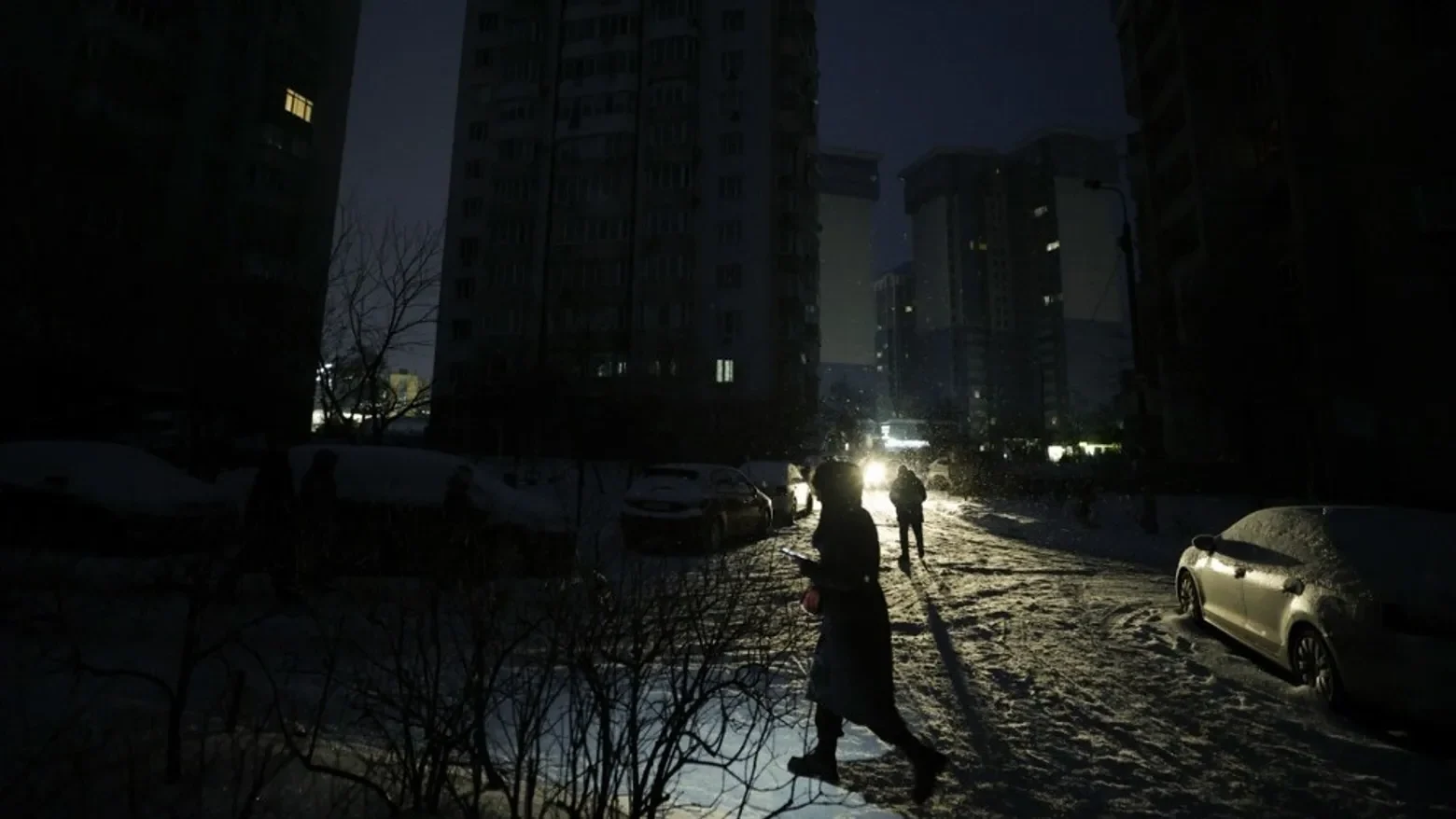

The winter of 2026 has brought Kyiv to a critical breaking point. As temperatures plummet to a dangerous -24°C, the city faces a systematic campaign of Russian strikes targeting the core of its energy infrastructure.
This is no longer a crisis of mere inconvenience; it is a battle for biological survival. Central heating is no longer a guarantee, and the local power supply is frequently cut or rationed due to physical destruction and extreme thermal demand.
The traditional social contract has shifted. Survival has been outsourced from the state to the individual, forcing Kyivans to engineer their own independent systems for heat, water, and light just to keep their living spaces habitable. This DIY infrastructure is the only thing standing between a functioning home and a frozen shell of a building.
To navigate this environment, residents rely on a specific toolkit of survival hardware:
- Power: Connectivity is maintained via portable power stations (like EcoFlows), lithium-ion batteries with Uninterruptible Power Supply (UPS) systems, and powerbanks. Gasoline or diesel generators power heavy domestic and commercial loads.
- Light: Small battery- and USB-powered LED lamps provide essential interior illumination. Flashlights have become a necessity for navigating unlit city streets and pitch-black high-rise stairwells during total blackouts.
- Heat: Indoor warmth is managed through thermal layering, hot water bottles, and gas stoves, with electric heaters used sparingly during brief windows of grid availability.
Engineering the home power plant
When the city goes dark, the modern apartment must transform into an independent power plant. Residents are forced to manage their energy consumption through practical necessity, with their setups determined primarily by their financial means and basic technical knowledge.
Sarah, a resident who sought a sense of normalcy, initially invested 40,000 UAH (~$900 USD) in a sophisticated German battery system. For a time, it allowed the illusions of peace: the fridge hummed and the lights stayed on.

The system is designed to charge automatically whenever electricity was available from the city grid; when the power was cut, it would immediately switch over to the stored autonomous supply without interruption.
However, even high-end technology can break down in these conditions. When her system stopped working, she transitioned to a 14,000 UAH (~$300 USD) portable power station to run the bare essentials.
Repairing the original system was not an option, as electricians are currently in such high demand that finding one available to visit an apartment is nearly impossible.
This smaller device now provides her with eight to ten hours of "digital survival." She rations this supply solely for her router, laptop, and a single lamp to stay connected and productive.


Maintaining a home connection is a priority because mobile internet becomes extremely unreliable during power cuts, leading to a sense of total isolation and making it difficult to plan or execute work.
The portable station is also highly practical for daily use; Sarah simply plugs an extension cord into the unit to power whatever devices she needs at that moment.
In the Obolon district, Iryna has optimized her beauty salon with a specialized lithium battery and UPS. Costing approximately 11,500 to 14,000 UAH (~$260-$330 USD), this system acts as a charger and converter that switches to battery power with a faint click the moment the grid fails.
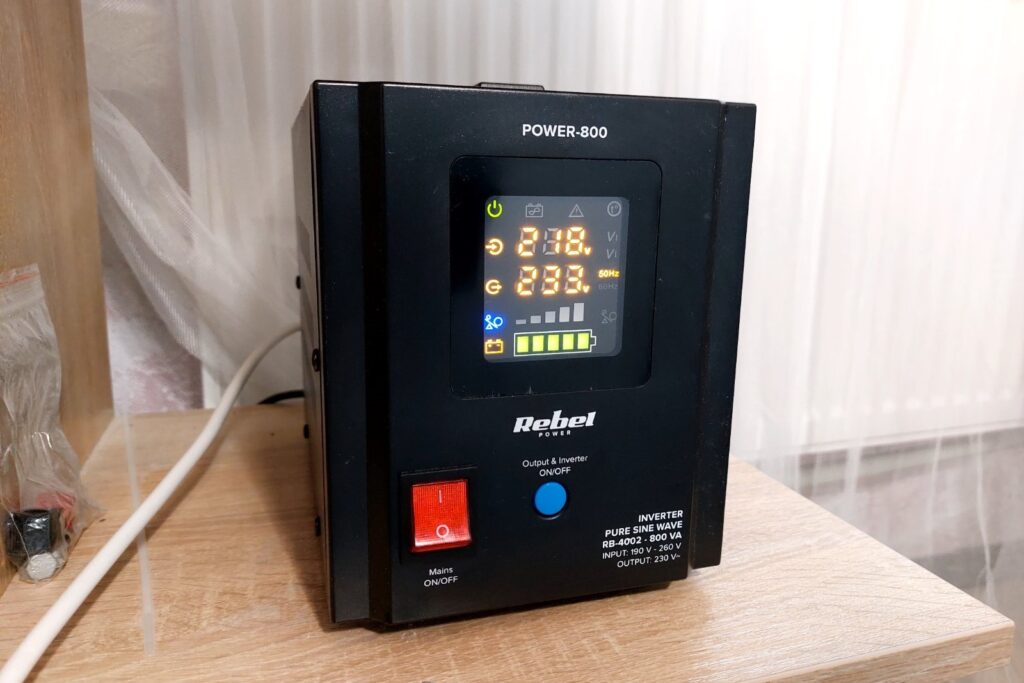
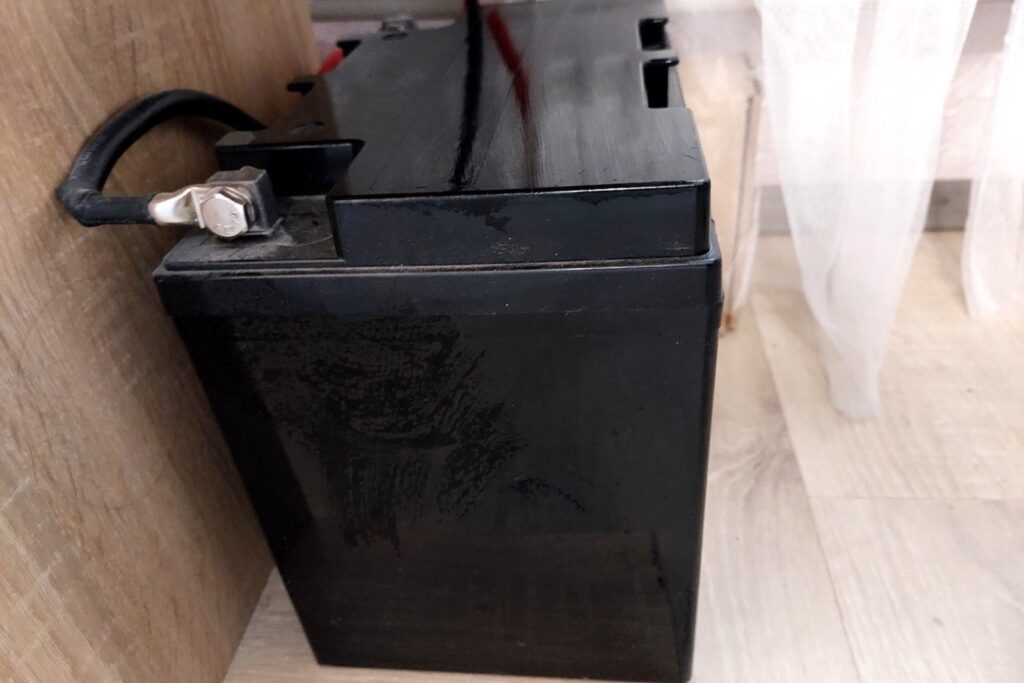
This seamless transition allows her to operate her work tools for up to eight hours without interruption. For Iryna and her clients, the backup system is an investment in professional dignity; the work continues smoothly so that clients often do not notice the blackout has even occurred.
In contrast, Bohdan operates with a much more basic setup, utilizing a dedicated battery for his WiFi router and a power bank for his devices. However, even these minimalist kits reach their limit during total system collapses.

In January, Bohdan’s block faced a two-week period of absolute electrical failure caused by damaged wiring in the old building. During this time, connectivity vanished entirely as there was no way to charge even basic batteries, proving that personal engineering is still tethered to the fragile city grid.
This collapse left his home effectively unlivable; with no light, heat, or power, Bohdan was forced to spend the majority of his time at his workplace to access essential utilities.


Portable illumination: navigating a city in shadows
In a city where streetlights are usually dark, light has evolved into a personal accessory. It is no longer a feature of a room, but a small halo that moves with the resident. Sarah relies heavily on a headlamp, which has become an essential tool for navigating both her darkened apartment and the unlit streets.
Inside her pole dance studio, Sarah maintains her business through standalone, rechargeable devices: two portable lights and a Bluetooth speaker completely independent of the building's wiring.

Iryna finds that two LED desk lamps provide enough light to maintain high-precision work during a blackout, further decoupling her livelihood from the state of the power grid.
Bohdan similarly finds that a simple flashlight is his most effective tool. Since his work is confined to a laptop screen, he has become comfortable in the dark as long as he has a focused beam to navigate his immediate surroundings.
This shift toward localized lighting has redefined the interior of the Kyiv home, where rooms remain black except for the moving beams of LED torches.

The decentralized economy
The necessity of energy has dictated the rhythm of the city’s economy. Business owners like Oleksandr, who runs a printing agency in the Lukianivka district, have split their operations to survive the grid's instability.
His office operates on two tiers to manage limited power. Upstairs, designers work on battery-powered inverters. These allow them to prepare layouts and communicate with clients during long hours of darkness.
An inverter is a device that converts direct current (DC) from a battery into alternating current (AC), which is the standard form of electricity required by most household electronics and office equipment.


Downstairs, heavy industrial printers and cutting machines sit in cold silence. Their energy demands are far too high for any portable battery or small inverter system.
The result is a “stressful rhythm” of constant readiness to switch modes. The moment the city light returns, the production team sprints to launch machinery and finish as much work as possible before the next blackout.
Cultural spaces like Spaska have adopted a hybrid approach. The venue operates using solar panels installed on the roof that produce 400 watts per hour even during the weak daylight hours of winter.
This energy charges a 5kW battery which can last 4-5 hours for concerts. If the panels aren't switched on in advance or the batteries drain before shows, the team must scramble to connect the stage - minus the high-intensity lights - to a backup EcoFlow station.


While the setup makes the venue more resilient than most, there are still incidents where even these prepared systems are not enough to cover the total energy demand during extended outages.
Total autonomy in the private sector
In the private sector, the scale of independence is even more pronounced. Residents like Anatolii manage a sophisticated dual-system to maintain a functioning household outside the city center. This setup is a necessity rather than a luxury; in a private house, the loss of power often means the immediate and total loss of water and heat.
He utilizes a tiered energy strategy. For short-term needs like lighting, mobile charging, and internet, he uses portable batteries. His primary backup is an EcoFlow system coupled with an additional battery and inverter.

Anatolii manages his power supply through a relentless mental calculus designed to stretch battery capacity across unpredictable outage windows. The system’s primary function is to power the circulation pump for his gas boiler, which requires a constant electrical current to distribute heat.
Beyond this, he prioritizes the router and fiber-optic modem to maintain a connection to the outside world, alongside charging essential devices like phones and laptops.
High-draw appliances are strictly regulated under this protocol; for example, television use is limited to short intervals to avoid a total system shutdown. During deep freezes, the refrigerator is treated as a luxury he cannot afford to power, and it is simply left unplugged to save energy for the heating system.
This approach requires Anatolii to manually disconnect all non-essential hardware, ensuring the house remains functional until the grid returns.
For the "heavy lifting," he relies on a 5kW gasoline generator. This is the only tool in his arsenal capable of powering the water pump, which is essential for basic sanitation and hydration.
This autonomy comes with a heavy logistical price and constant monitoring. The generator consumes up to two liters of gasoline every hour, meaning a 25-liter canister provides only about ten to eleven hours of continuous operation. Anatolii must maintain a steady reserve of fuel canisters at home and make frequent trips to the gas station to restock.
Beyond the fuel, there is the labor of maintenance; the generator requires regular oil changes and technical check-ups to ensure it doesn’t fail during a critical power outage when the grid might be down for days.

Iryna faces a nearly identical struggle in her own private home, where the dependency on electricity is absolute. Her water supply comes from a well powered by an electric pump; without power, the taps run dry.
To maintain basic household functions - the ability to shower, cook, and heat the home - she also relies on a high-capacity generator. She notes that a proper unit starts at approximately $1,000 USD and requires rigorous upkeep, comparing the oil and filter changes to maintaining a car.
The financial burden of this autonomy is significant. Iryna reports spending 12,000 UAH (~$280 USD) on generator fuel over two months of heavy use. This cost is paid in addition to a standard 4,000 UAH (~$100 USD) monthly electricity bill.
Despite the high costs, the generator is the only tool that allows her to warm the house during the most brutal periods of the winter, providing a sense of control over an otherwise unmanageable environment.
The essential struggle for warmth
While electricity can be stored in batteries, heat is a far more elusive resource. In buildings where pipes fail and central systems stop, the tools of survival become starkly primitive.
Bohdan’s experience represents the minimalist reality facing many in the city’s older housing stock. When his building’s heating failed for two weeks in January, his apartment became a concrete refrigerator where the air remained a constant 0°C.
Survival in these conditions depends on thermal layers. Bohdan’s primary tools are four layers of heavy clothing and hot water bottles tucked into his bed. He also uses his gas stove to leak a few precious degrees of warmth into his freezing apartment.
To maximize this limited heat, some residents have revived ancient techniques. Placing a brick or large stone on the gas stove burner allows it to absorb and retain heat, acting as a makeshift radiator that continues to warm the air after the flame is extinguished.

It is a relentless daily struggle against the "energy-sucking" effect of constant cold. Sarah describes this sensation as a physical weight that drains the spirit and makes daily tasks feel impossible.
In her dance studio, Sarah uses a small fan heater, but mainly compensates for dropping temperatures by relying on physical activity during classes to generate natural body heat.
She considers herself fortunate that her studio still has access to central heating at all, however limited, as many other spaces have been forced to close or invest in expensive and noisy generators just to keep their interiors above the freezing mark.
Even in apartments with relatively stable infrastructure, the experience remains exhausting. While some districts, particularly on the Left Bank, face indoor temperatures dropping to 0°C, residents in "luckier" areas still live in a persistent, localized chill.
They cope by layering heavy clothing, wearing thick socks, and staying under blankets during the coldest hours. This constant, moderate cold is often more disheartening than a sudden freeze; it creates a relentless physical drain that steadily depletes a person's energy.
The physical requirement
Beyond the technical and the thermal, sometimes the most essential tool for survival in Kyiv is simple physical stamina. Technical solutions fail to address the logistical difficulty of a city designed for a functioning grid.
For Oleksandr, living on the 23rd floor of a high-rise makes the blackout a daily physical gauntlet. When the elevators stop, the journey to his apartment becomes a taxing climb that requires significant endurance.
His routine involves climbing dozens of flights of stairs twice a day - up and down. Doing this while carrying heavy bags of groceries or water requires a level of fitness that few were prepared for.
This level of constant exertion has become an unplanned requirement for urban living, forcing residents to calculate every trip outside based on their remaining energy.

The limits of innovation
Most homes and businesses have built up their own toolkit for winter survival, but these tools only address the environmental challenges. They offer no protection against the intensified scale of missile and drone attacks coming from Russia.
The weather is a predictable enemy, but the night-time strikes are not. Residents live with the knowledge that their survival depends on factors far beyond their control.
The most sophisticated battery system provides no shield when a Shahed drone strikes a home. The burden of managing a generator is constantly interrupted by the reality of aerial destruction. While batteries can be recharged and fuel can be bought, the lives lost in the attacks cannot be restored.
For the threat that comes from the sky, the tools of engineering reach their limit. The final line of defense remains the bomb shelter, the air defense systems, and sometimes prayer.


