- Ukraine's southeastern counteroffensive continues into its fourth week
- After clearing Russian infiltrators from the disputed gray zone east of Pokrovske, the Ukrainians are now targeting settlements the Russians firmly control
- Pushing back the Russians from entrenched positions creates space and time for the wider Ukrainian force to prepare for the spring's anticipated fighting
For the first three weeks of their southeastern counteroffensive, Ukrainian forces focused on the most immediate and urgent goal: to clear Russian infiltrators from the kilometers-wide "gray zone" separating Ukrainian and Russian lines.
But the operation has outrun its original scope. What began as a defensive cleanup triggered by Starlink bricking Russia's stolen satellite terminals is becoming the most significant Ukrainian ground advance in months.
In the critical, 30-km sector between the Ukrainian-controlled town of Pokrovske in Dnipropetrovsk Oblast and the Russian-controlled town of Huliaipole in Zaporizhzhia Oblast, a pair of powerful Ukrainian battlegroups has achieved this objective.
Now the Ukrainians have shifted their aim. They're no longer just targeting infiltrators in the gray zone. Instead, they're advancing toward settlements the Russians once firmly controlled.
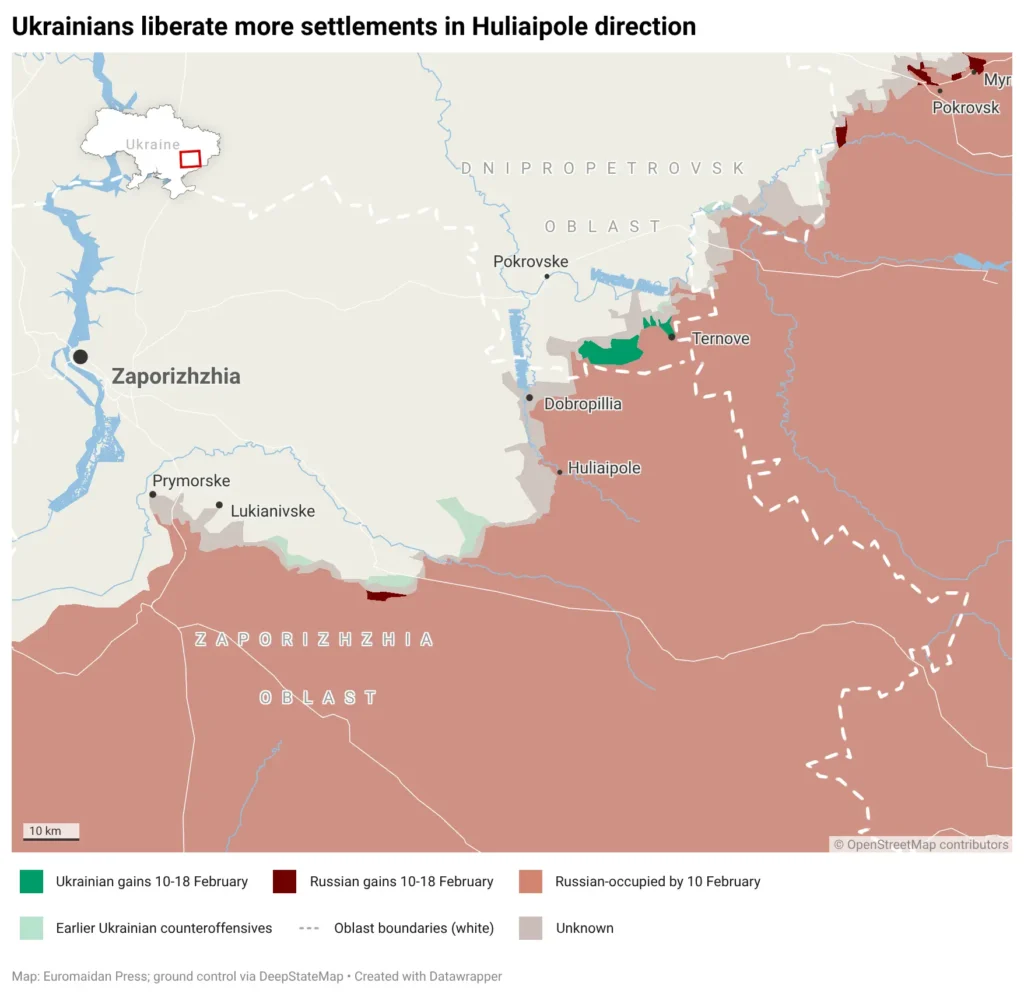
First to be liberated: Ternove. In recent days, the Ukrainian 425th Assault Regiment routed the Russian 69th Covering Brigade and regained full control of the village.
The liberation of Ternove is a sign that the Ukrainian counteroffensive, which kicked off in early February right as Russian forces were experiencing a communications meltdown, isn't a mere clearing operation intended to eject Russian troops from the gray zone in order to shore up faltering Ukrainian defenses.
No, the Ukrainians aim to push back the Russians in the southeast, buying space and time for the Ukrainians to more broadly reshape the battlefield ahead of a likely Russian offensive in the spring.
Bricked comms
Early this month, Elon Musk’s Starlink bricked Russia’s stolen and smuggled satellite terminals all along the 700-mile front line of Russia’s 48-month wider war on Ukraine. At the same time, the Kremlin recklessly blocked military access to non-government social media platforms, including Telegram, which many Russian troops had used for front-line communication.
The twin moves threw the Russian armed forces in Ukraine into disarray. Many drones couldn't fly. Many headquarters couldn't coordinate their subordinate units. Assault groups got lost—and got ambushed.
Trending Now
Sensing opportunity, the Ukrainian armed forces went on the attack in several key sectors. Especially in the southeast, where Dnipropetrovsk Oblast meets Zaporizhzhia Oblast. As recently as late last year, outgunned and outnumbered Ukrainian troops were falling back in this area. Now they're lunging forward.
The Ukrainians' progress is slowing as the Russians deploy more artillery, more first-person-view drones (likely including more unjammable fiber-optic models), and more air power, including precision glide bombs.
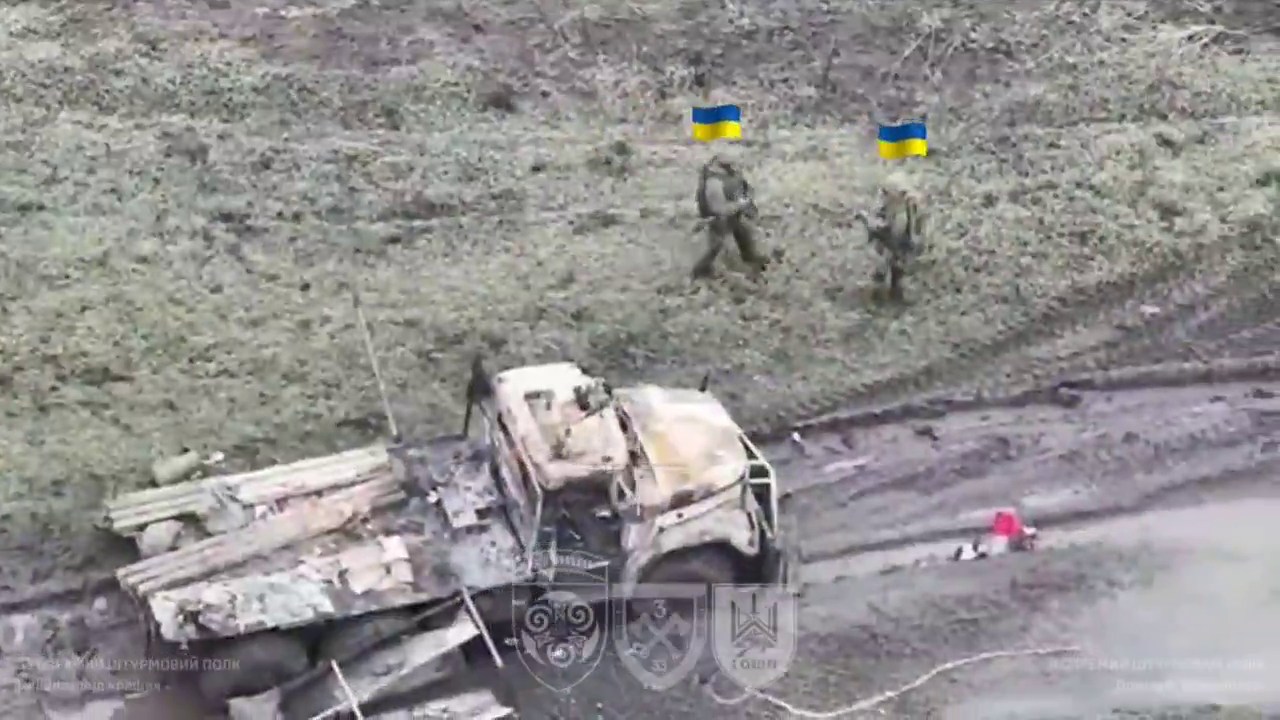
Russia rushed reinforcements to its fracturing southeast. They rode in unarmored and in broad daylight
Casualties are high on both sides. The destruction is widespread as the fighting escalates.
To liberate Ternove, the 425th Assault Regiment had little choice but to heavily damage the settlement. "After entrenching in the northern part of Ternove and striking practically every single building in the southern half with artillery and FPV drones, Ukrainian forces advanced further south and established full control over the village," AMK Mapping observed.
The Ukrainians pushing east will make it harder for the Russians to resume pushing west once the Russians fully restore their degraded communications. "Russia lost, in three weeks, at least four months of infiltrations far behind the lines," mapper Clément Molin explained.
"This will buy time to better Pokrovske defenses, as well as the H15 highway leading to Zaporizhzhia," Molin added. "Ukraine already is building multiple new defensive lines."