
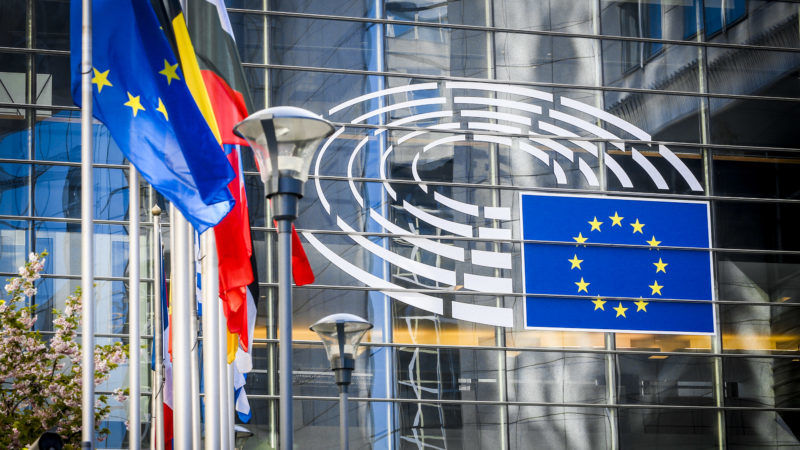
The European Parliament approved a €90 billion ($107 billion) loan package for Ukraine on 11 February 2026, splitting the funds between defense procurement and economic support amid Russia's ongoing full-scale invasion, the parliament's press service reported. The package, funded via joint EU debt issuance, ties Ukraine's repayment to future war reparations from Russia.
€60 billion for defense, €30 billion for the economy
MEPs adopted three legislative acts under the Parliament's urgent procedure. The package allocates €60 billion to bolster Ukraine's defense capabilities and arms procurement. The remaining €30 billion will go toward macro-financial assistance and budget support through the EU's Ukraine Facility.
Defense procurement will "in principle" prioritize Ukrainian, EU, and European Economic Area/European Free Trade Association industries. If certain equipment cannot be promptly obtained from these countries for delivery to Ukraine, targeted derogations will permit procurement from third countries. Financial assistance will be disbursed according to Ukraine's financing needs, based on a financing strategy drawn up by Kyiv and reviewed by the European Commission.
Czechia, Hungary, and Slovakia—all currently under pro-Russian governments—opted out of backing the loan. The proposal on the support loan passed with 458 votes to 140 and 44 abstentions. The Ukraine Facility amendment received 473 votes to 140 and 32 abstentions. The EU long-term budget amendment secured 490 votes to 130 and 32 abstentions.
The Council must still formally adopt the package. Once it does, the Commission could release the initial tranche at the start of Q2 2026.

Conditions tied to democratic reforms. EU borrows, Russia ultimately pays
The entire package is conditional. Ukraine must keep advancing democratic governance, uphold the rule of law, and protect human rights, including minority rights. Kyiv must also pursue its anti-corruption drive and continue building up democratic institutions.
The loan will be financed through common EU borrowing from capital markets. The EU's long-term budget headroom guarantees the debt, and annual EU budgets will cover servicing costs. The Commission estimated these costs at around €1 billion for 2027 and around €3 billion per year from 2028 onward.
Ukraine will repay the principal only once it receives war reparations from Russia. This structure effectively shifts the ultimate financial burden to Moscow.
EU leaders endorsed the support loan at a Brussels summit on 18 December 2025. The European Commission presented the legislative proposals on 14 January 2026. The €90 billion covers an estimated two-thirds of Ukraine's financial needs for 2026-2027.
Read also
-
Trump gives Orbán “complete and total endorsement” ahead of Hungary’s tightest election in years
-
Baltic leaders call on Europe to claim its seat at Russia-Ukraine peace talks
-
$1 billion in trade cuts, a crude oil shipping ban, and a crypto crackdown: what the EU’s proposed sanctions package would hit