

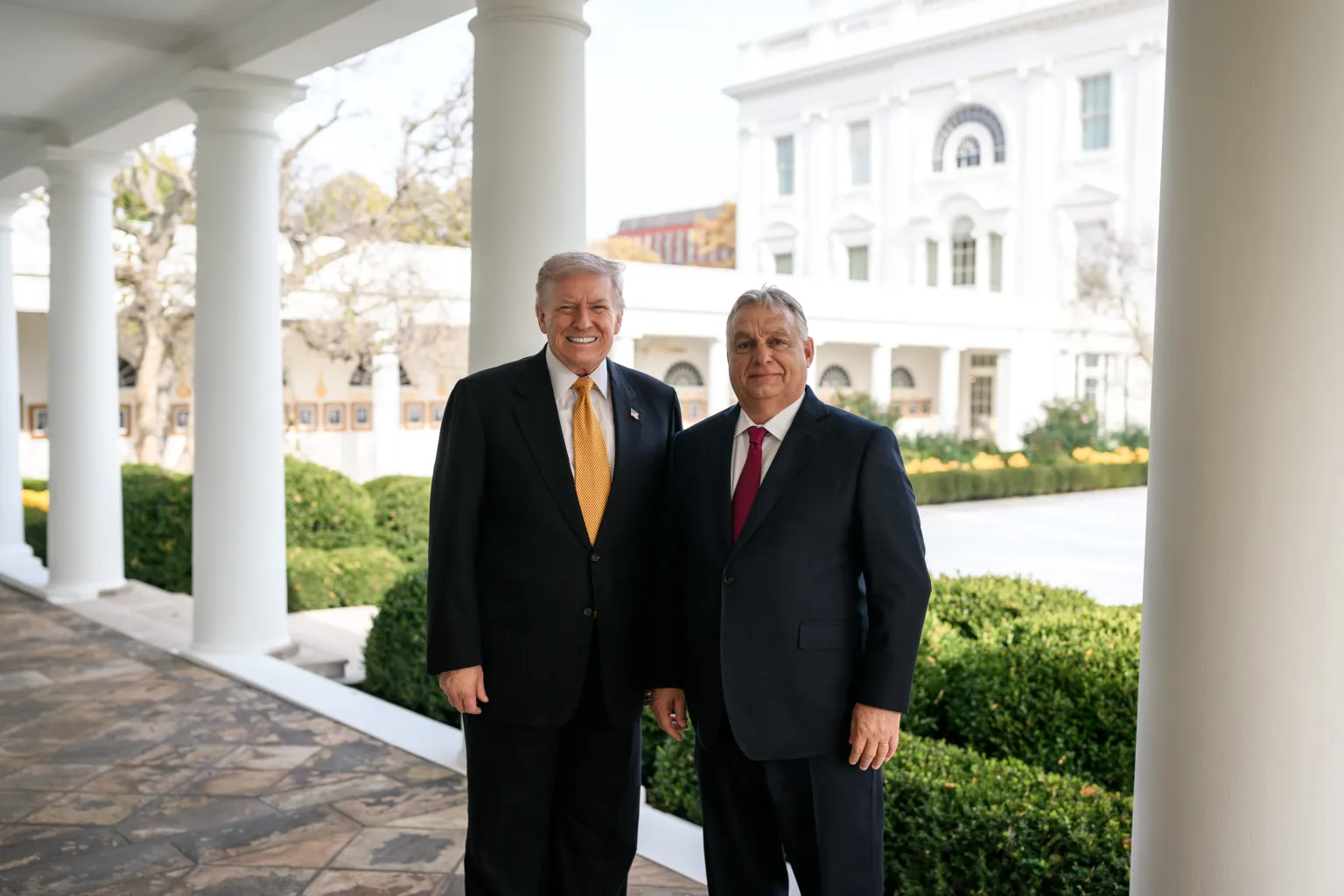
On 5 February 2026, US President Donald Trump endorsed Hungarian Prime Minister Viktor Orbán for re-election in Hungary's 12 April parliamentary election, calling him "a true friend, fighter, and WINNER" in a post on Truth Social. Orbán, who has governed Hungary since 2010, faces the most serious challenge to his 15-year grip on power from former ally-turned-rival Péter Magyar and his Tisza party, which leads Fidesz in most independent polls, although government-aligned surveys show a tighter race.
Beyond Trump and Orbán's amity, the endorsement also reflects the Trump White House's policy towards Europe. Trump's December 2025 National Security Strategy explicitly vowed to bolster "patriotic European parties," a phrase Brookings described as amounting to "a policy of constitutional regime change" in Europe. Orbán's Fidesz is the prototype for this vision: nationalist, Eurosceptic, and closer to Moscow than any other EU government. For Ukraine, this means Washington is actively backing the European leader who has blocked EU weapons shipments, vetoed financial aid packages, and opposed Kyiv's EU and NATO accession—all while continuing to buy Russian oil that funds the war.
Trump and Orbán: a decade-long alliance
Orbán was among the first European leaders to endorse Trump's 2016 presidential bid, and the relationship has only deepened. Trump endorsed Orbán for re-election in 2022 and again praised him as "fantastic" at the Gaza peace summit in Egypt in October 2025. In November 2025, Trump granted Hungary a one-year exemption from US sanctions on Russian oil—despite Hungary's own MOL refinery acknowledging it could supply around 80% of its landlocked refineries' intake via the Adriatic pipeline if Druzhba flows dropped, albeit with higher technical risks and logistics costs.
"Miracle[s] can happen," Orbán replied when Trump asked whether Ukraine could win the war during their November White House meeting—a studied evasion that aligned neatly with Trump's framing of the war as unwinnable.
According to Putin, Trump proposed Budapest as the location for a potential Russia-US summit on Ukraine because "we have good relations with Hungary, and both you and I have good relations with Viktor."
Orbán's Russophilia and anti-Ukrainian record
The Jamestown Foundation—a Washington-based think tank founded in 1984 that specializes in security analysis of Russia, Eurasia, and China—has documented how Orbán is weaponizing anti-Ukrainian sentiment for the April election. Fidesz launched a state-funded referendum campaign against Ukraine's EU membership, recycling the same "party of peace" vs. "party of war" disinformation playbook that delivered its 2022 victory.
Trending Now
Orbán's record speaks for itself. He has claimed the US "accepted Russia won the war" and predicted Ukraine's formal partition into three zones. He visited Putin in Moscow in November 2025—his fourth meeting with the Russian president since the full-scale invasion began.
Hungary is the EU's largest purchaser of Russian pipeline gas via the TurkStream pipeline and, together with Slovakia, the only EU member still importing Russian crude oil via the Druzhba pipeline, sending billions in revenue to Moscow's war economy. Moreover, investigations by IStories, an independent Russian media outlet, have exposed a $10bn covert oil trade network linking Putin-connected figures to Orbán's closest allies.
Hungary's 12 April 2026 election will test whether Trump's backing can overcome Orbán's declining domestic support. Six out of eight candidates Trump has endorsed abroad won their elections. But with Magyar's Tisza party leading by double digits, Hungary's 9.6 million voters may have different plans.
Read also
-
Trump cracks Western sanctions unity with Hungary exemption on Russian oil
-
Sanction me softly: Trump, Orbán, and the oil that binds them
-
Hungarian PM Orbán claims US already accepted Russia won the war. He predicts formal Ukraine division into three zones
-
Russian oil flows through Hungary unchecked—investigation traces deals to PM Orbán’s closest allies
-
Trump sought Russophile Orbán’s advice on Ukraine after winning election, RFE/RL sources say
-
Orban meets Putin in Moscow as EU sidelined from Ukraine peace talks


