

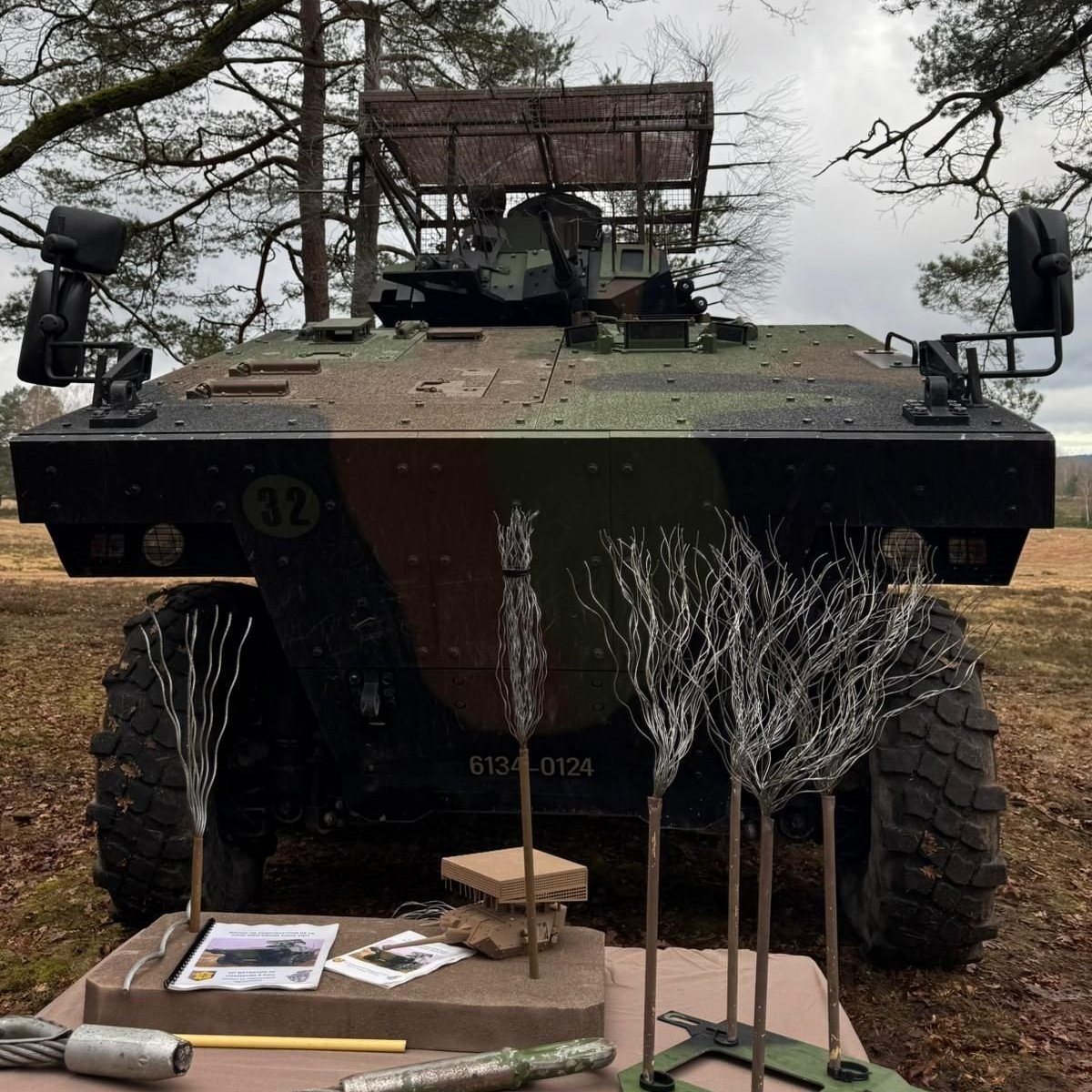
Imitation is the sincerest form of flattery. And that's why the Russian military should feel pretty flattered right now. A photo that circulated online recently depicts a French military armored vehicle sporting the same "dandelion" anti-drone armor that the Russians recently developed to defend their own vehicles from Ukrainian drones.
The French dandelion is more than a curiosity. It's a quiet admission that Ukraine's drone war isn't some Eastern European oddity—it's what modern combat looks like, and NATO's vehicles aren't ready for it.
Russian anti-drone innovations—including "cope cages" and "turtle," "hedgehog" and dandelion armor—is often crude and silly looking. But it works. The Ukrainian military understands this, which is why more and more Ukrainian vehicles are getting their own Russian-style add-on armor.
Now the French are borrowing from the Russians, too. Whether and when more French vehicles will get the dandelion armor is unclear. The eight-wheel VBCI armored vehicle might be a one-off test case; it might also be the demonstrator for a wider application of anti-drone protection across the French vehicle fleet.
Looks like the French are Embracing the "Hedgehog concept" on the VBCI. pic.twitter.com/O3nceV43VG
— T-90K (@T_90AK) January 16, 2026
How dandelion armor works
Dandelion armor is a riff on the hedgehog armor the Russians applied to some tanks and infantry fighting vehicles starting last year.
Hedgehog armor is made up of thousands of short lengths of unwound aluminum industrial cabling. Welded to a metal cage bolted atop a vehicle, the metal "hairs" can detonate an incoming first-person-view drone before it strikes the vehicle's hull.
The dandelion armor welds the thin metal hairs to thicker stalks that branch like trees, extending the protection farther from the vehicle.
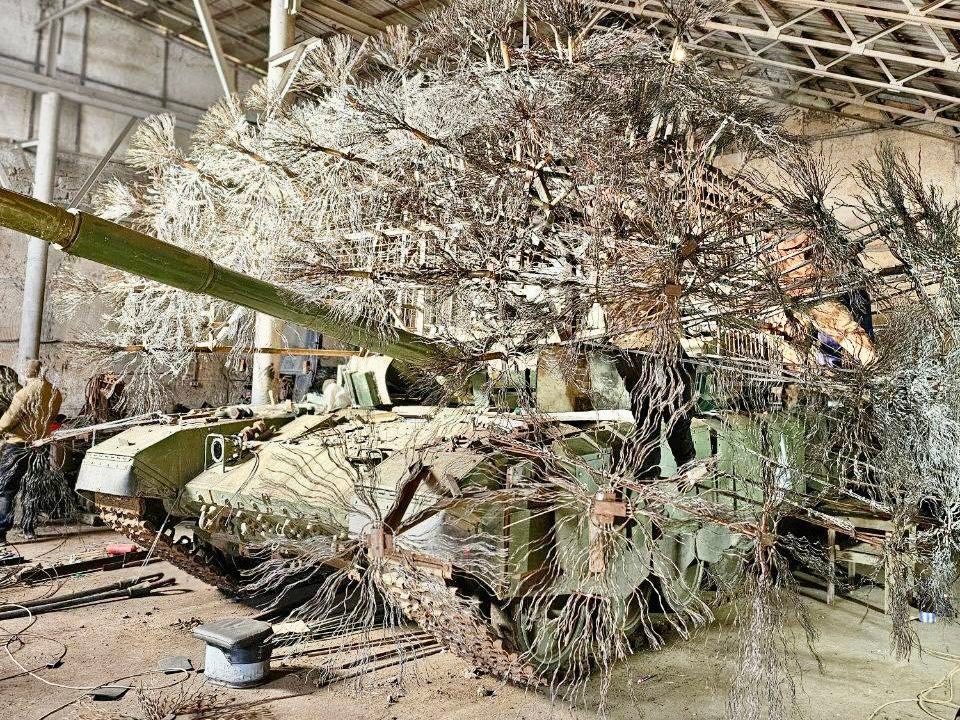
A 2025 patent explains the idea behind the dandelion armor. "The tree-like structure comprises multiple tiers," observer AndreiBtvt summarized. "Each tier contains flexible rods of varying lengths and cross-sections. The upper tiers are made of thin-section rods, while the lower tiers consist of thicker-section rods."
"The number of rods increases from the bottom tier to the top," AndreiBtvt added. "The rods are connected to each other using easily detachable coupling elements. The flexible rods are made of fiberglass rebar of various diameters. The coupling elements are made of shaped sheet metal or impact-resistant plastic."
"Between the upper tiers of the tree-like structures, a fine-mesh net made of high-strength synthetic material (e.g. Kevlar-type) is stretched."


Trending Now
From cope cages to dandelions: four years of anti-drone armor
The dandelion armor marks the next step in the Russian military's accelerating vehicular evolution. The vehicles underneath the add-on armor might be old. The armor itself improves on an ever-faster cycle that's currently just a few months long.
In 2022, there were cope cages—encasements with metal slats or mesh that, installed atop or around an armored vehicle's turret, might block incoming FPVs.
A year later, the first turtle tanks appeared. Now entire vehicles were wrapped in drone-blocking metal shells. And early last year, the Russians added hundreds of thick metal spines to some cope cages or turtle tanks, betting—correctly, it turned out—that the resulting porcupine tanks would absorb even more drones.
Later in 2025, the spines became thinner metal hairs. The hedgehog tanks wearing potentially tens of thousands of these hairs were the best-protected vehicles of Russia's wider war on Ukraine until the dandelion armor gained popularity.
Ukrainian troops first mocked all this add-on armor—and then copied after observing some of the best-protected Russian vehicles deflecting dozens of FPVs. A couple of months after the Russians introduced hedgehog armor, the first Ukrainian hedgehogs appeared. Now the French are making their own version of the dandelion armor.
The Russian anti-drone innovations, and the Ukrainian copies of the same, are reactions to the extreme danger that tiny drones pose to armored vehicles on both sides as Russia's wider war grinds toward its fifth year.
The appearance of the first French hedgehog is, for its part, a tacit admission by the French that the drone war in Ukraine isn't an aberration. It's the kind of war every country should expect to wage in the coming years.
Looks like the French are Embracing the "Hedgehog concept" on the VBCI. pic.twitter.com/O3nceV43VG
— T-90K (@T_90AK) January 16, 2026


