

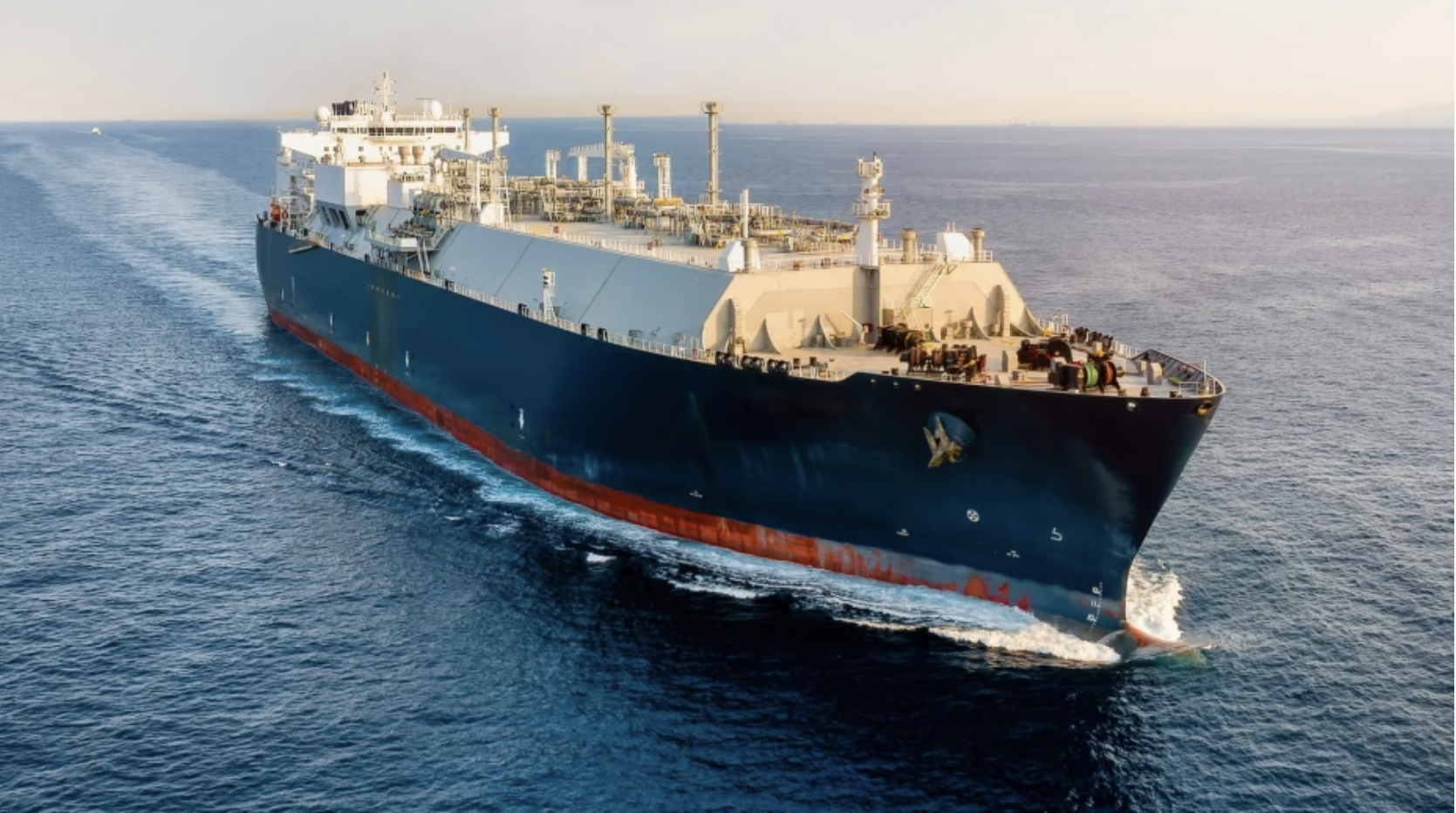
A Greek joint venture has signed its first deal to supply American liquefied natural gas to Ukraine—through the same Southeastern European pipeline network that for decades carried Russian gas in the opposite direction.
Atlantic See LNG Trade, a company formed by Greek construction group Aktor (60%) and state gas supplier DEPA Commercial (40%), will deliver up to 1 TWh (~89 million cubic meters) of BP-supplied LNG to Ukraine’s Naftogaz starting in March, the company announced on 30 January.
“Greece had been at the end of a pipeline of a Russia-dominated energy supply system. Today, Greece becomes a launch point, the entry into Europe for American energy trade.”
The gas will arrive at Greece’s cterminal near Athens and travel northward through Bulgaria, Romania, and Moldova into Ukraine’s system via what officials call the “Vertical Corridor”—five countries’ gas operators working in sequence to push American gas from the Mediterranean to Ukraine, Reuters reported.
It is the same Trans-Balkan pipeline infrastructure that once moved Russian gas southward into Europe. “Greece had been at the end of a pipeline of a Russia-dominated energy supply system. Today, Greece becomes a launch point, the entry into Europe for American energy trade,” US Energy Secretary Chris Wright said at an Athens energy conference in November.
Three new routes
The March delivery follows a separate shipment of roughly 100 million cubic meters of American LNG that Naftogaz received through Poland’s Świnoujście terminal in late January, in partnership with Polish state energy company Orlen. Naftogaz CEO Serhii Koretskyi said that volume alone could heat approximately 700,000 families for a month during extreme cold.
Naftogaz plans to import up to 1 billion cubic meters of US LNG in 2026.
Together with contracted deliveries through Lithuania, Ukraine now has three parallel routes for American gas—none of which existed two years ago.
Naftogaz plans to import up to 1 billion cubic meters of US LNG in 2026 overall, Koretskyi stated. In 2025, US LNG deliveries reached 600 million cubic meters, with another 300 million cubic meters contracted for the first quarter of 2026.

Ninefold increase
Russia destroyed 60% of Ukraine’s gas production capacity in 2025 through 24 combined strikes on Naftogaz facilities. The company’s deputy supervisory board chair, Natalia Boiko, said production in 2025 could fall more than 30% below the previous year’s levels.
Trending Now
Ukraine’s total gas imports in 2025 hit 6.5 billion cubic meters—a ninefold increase over 2024.
If attacks continue, Ukraine may need to import roughly 4.4 billion cubic meters by the end of March 2026—at a cost of approximately €2 billion ($2.36 billion), Bloomberg reported already in October.
Ukraine’s total gas imports in 2025 hit 6.5 billion cubic meters—a ninefold increase over 2024, according to ExPro Consulting estimates published in January 2026. Naftogaz alone imported more than 5.5 bcm, using its own funds alongside loans from the EBRD, the EIB, Norway, and Ukrainian banks.
The longer game
The Greek joint venture’s first commercial deal is the beginning of a much larger shift. Atlantic See LNG Trade has already secured a long-term supply agreement with US producer Venture Global starting in 2030, covering 700 million cubic meters annually over 20 years. Ukraine and Romania have expressed interest in buying up to 3.7 billion cubic meters from the venture between 2030 and 2050, DEPA said.
“Most of the gas that now comes into Greece does not stay in Greece.”
Naftogaz signed a memorandum with Atlantic See LNG Trade in November, extending cooperation through 2050. In late December, Ukraine and neighboring countries launched two additional routes within the Vertical Corridor framework, expanding the pipeline network’s capacity.
Greek Prime Minister Kyriakos Mitsotakis put the shift plainly at the November conference: “Most of the gas that now comes into Greece does not stay in Greece.” The EU’s ban on Russian gas imports—set to take full effect by late 2027—makes the corridor not just a wartime emergency route but a permanent fixture of Europe’s redrawn energy map.
Read also
-
Europe scrambles to ship generators to Ukraine as thousands of Kyiv families remain without heat three days after Russian strikes
-
Russia hit Ukraine’s energy for 257 times this cold season. What makes latest damage different could take months or years to repair
-
No, Hungary, banning Russian gas isn’t a violation of EU law


