The ice on the sidewalk is no longer just frozen water; it is weeks of accumulated snow and slush compacted into a thick, ridged crust that makes every step potentially treacherous.
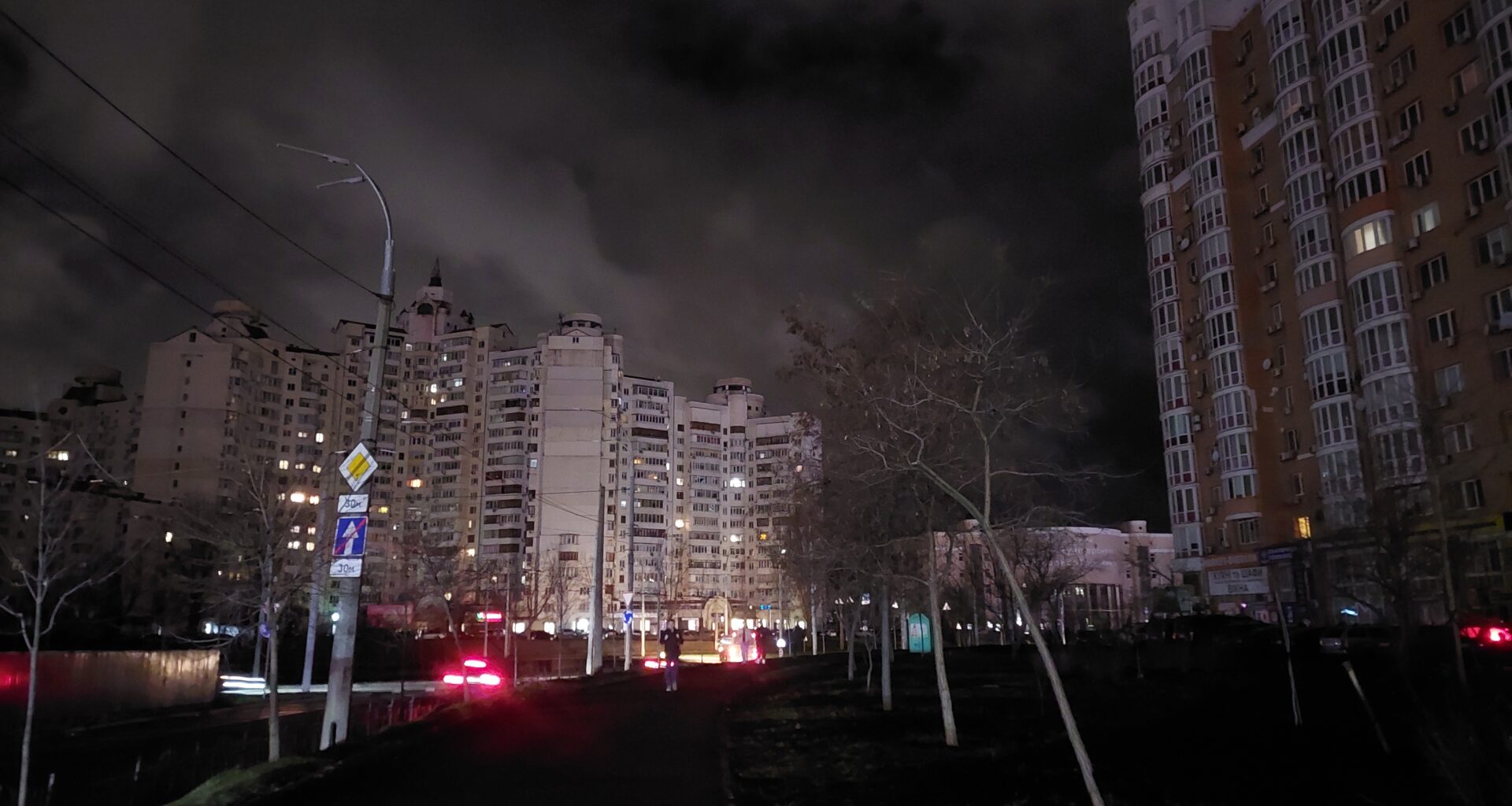
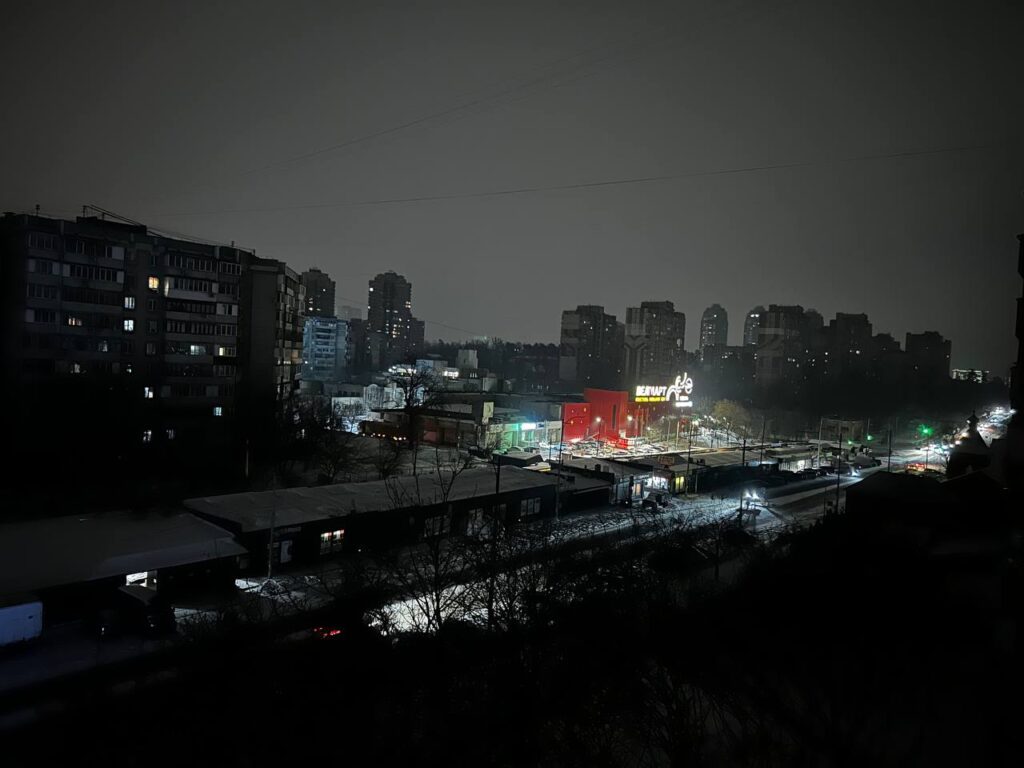
The streetlights barely function. Between 5:00 PM and the midnight curfew, a personal light is now an essential tool for navigating the city.
The visual silence outside is deceptive. Turning off the quiet residential streets, the air suddenly becomes loud, filled with the constant, mechanical roar of generators. They sit on every sidewalk, vibrating against the pavement. They are the only things keeping businesses open and the heart of the city beating.
Behind the black windows
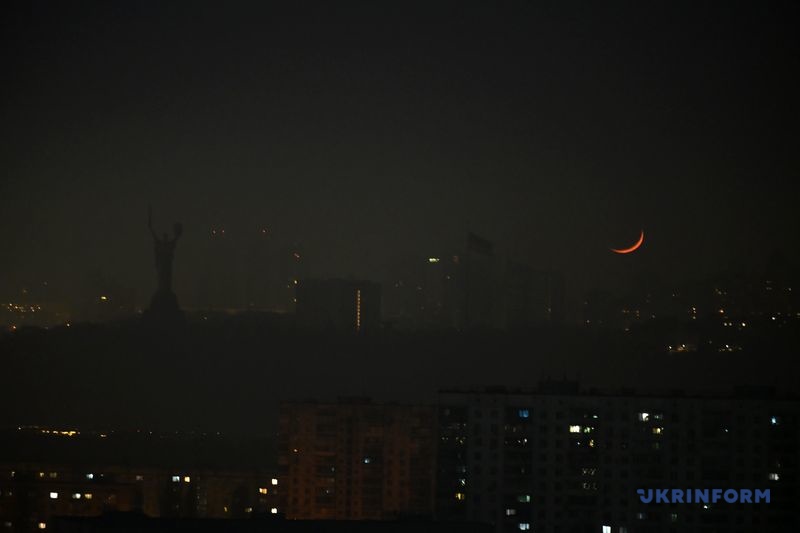
The apartment blocks are monoliths of dark glass. Only a few patches of light dot the buildings where people have figured out some way to bypass the darkness with battery-powered LEDs or the flicker of a single candle. Inside, the situation varies by neighborhood, but the common denominator is the darkness.
Neighborhood luck is the new currency. The fortunate get a few hours of electricity a day, during which time the entire household becomes a frantic hub of activity: charging every device, running the washing machine, and heating as much water as possible.
Others endure 40-hour blackouts, without any heat and water whatsoever.
The basics: Water and heat
In many districts, running water is a luxury; when it does flow, it is often a dark, rusty sediment. Hanna and Hlib, a couple living in the city center, must go down into their basement to collect water from a pipe. It is orange with rust, but it is all that is available.
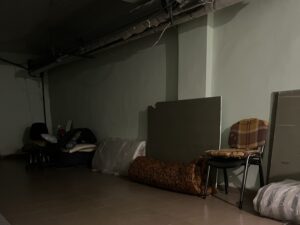
Central heating has become unreliable at best. Radiators in many buildings froze during the intense December-January attacks, breaking systems so severely that some rooms may never have heat again.
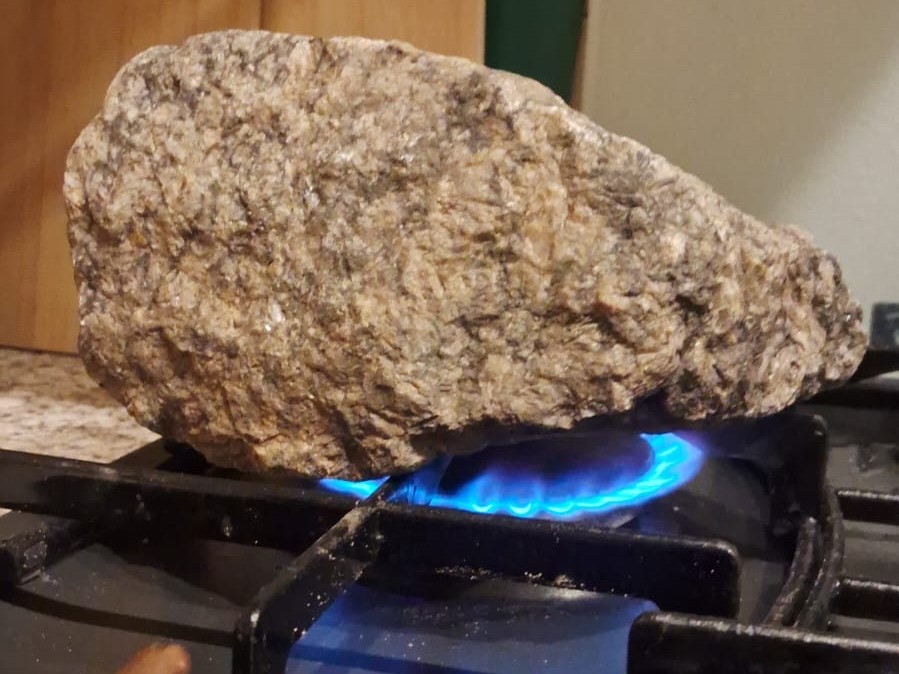
Survival is a matter of practical improvisation. Hanna and Hlib place large stones or old cast irons on their gas stove to radiate heat. Before bed, they heat sheets with old rubber water bottles and huddle around clay pots inverted over candles.
For many, a gas stove is the last remaining defense against the freezing temperatures. Illia sleeps on his kitchen floor where the gas burners keep the air at +12°C, while the rest of his apartment sits at a dangerous +2°C. He recently visited his friend to take a proper shower for the first time in 2 weeks.
Nataliia, a grandmother living alone, spent two weeks in a room that reached +9°C, only venturing into the corridor to collect hot meals from a neighbor who had a functioning gas stove, before falling ill with bronchitis.
Days after she left for her daughter’s home, her neighbors’ radiators exploded from the frost, flooding her apartment. While she recovered, her family spent three days bailing out ankle-deep water in a space that had dropped to +6°C.
The technology of survival
New equipment has defined this winter. Power stations like EcoFlows provide the energy to run laptops, internet modems, and small appliances. Fiber-optic internet cables can work without local electricity, but the wires remain vulnerable to the extreme cold. Mobile internet is unreliable during blackouts.
But these power stations are expensive; at prices that can rival several months’ rent, they are a luxury few can afford in an economy where earning a living has become a logistical nightmare.
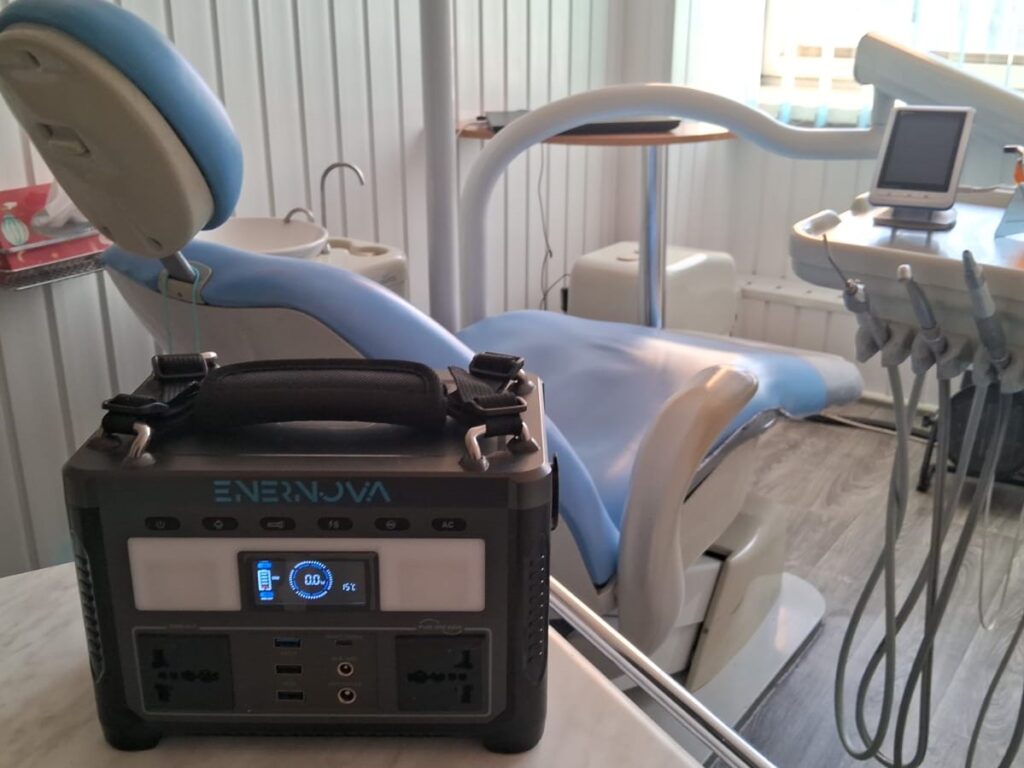
Hlib uses a smaller, more affordable power supply at his dentistry clinic. It powers a single lamp and a micro-engine for three hours, but it cannot heat the room. He treats patients in the dark, in temperatures of +8°C.
For those who cannot afford these large batteries, technology is stripped down to its barest essentials. Phone torches, power banks with USB lights, or small battery-powered LEDs are now the only way to move through dark apartments after the early winter sundown.
Community infrastructure
When the formal systems fail under the intense pressure of Russia’s terror campaign, the residents take over. In Pechersk district, Tetiana and her neighbors realized that waiting for professional help was no longer an option.
"We tried to call a plumber," Tetiana says, "but as you can imagine, everyone is busy fixing the whole system after the daily attacks, so it was impossible."
The neighbors decided to fix the block’s heating themselves. They arranged shifts to occupy the building’s attic, where the heating equipment is located, using a diesel generator to defrost the heating system.
"We spent a few days and nights in shifts in the attic, monitoring the system to ensure nothing went wrong. There was a high risk of fire because we were working by ourselves with almost no specialized equipment," she explains.
Through this dangerous, ad-hoc effort, they managed to heat the water supply risers. "Now we have a bit of heating at least."


Life in the dark
Life inside these frozen apartments has shrunk to the smallest possible footprint. With the grid failing, the home is no longer a place of comfort, but a space to be managed.
To survive the interior chill, people wear full winter layers - thermal underwear, coats, and hats - just to sit in their living rooms. Balconies have been repurposed into makeshift freezers to keep food from spoiling while the actual refrigerators remain offline.
The psychological toll is as heavy as the physical cold. You live in a state of constant, exhausting calculation - measuring the percentage of a battery against the remaining hours of the workday, or the liters of drinkable water left against the uncertainty of the next blackout.
The sanctuary down the street
The local supermarket is no longer just a place to buy food; it is a "Point of Invincibility" by another name. The hum as you enter is deafening, powered by a massive industrial generator.
Inside, people aren't just shopping; they gather along the walls at makeshift charging hubs. They stand in silence, eyes fixed on the glowing screens of phones plugged into every available socket in the only building around with reliable power.
Nearby, cafes are packed with the "laptop class" gathering wherever the generators are, chasing the rare hours of connectivity to do some work. For many, these businesses provide the only functional bridge to the outside world.
When the home is dark and the mobile signal has vanished, the local cafe offers a temporary reprieve - a place where the economy continues to churn.
A shared safety net
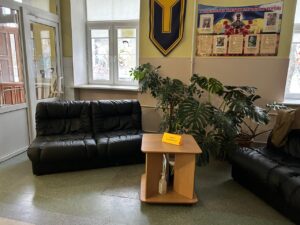
In schools, teachers like Hanna have turned classrooms into emergency refuges - another version of the “Point of Invincibility.” These spaces provide a final safety net for those who lack the resources to buy their way out of the cold.
"We provide a place for people to sleep in the classrooms, putting down mats and warm blankets," Hanna explains. She says these makeshift shelters are often populated by families who fled Russian-occupied territories. Living in rented apartments with no savings for expensive backup power, they find themselves entirely at the mercy of the grid.
To combat the chill, the teachers distribute tea, cookies, and donated warm clothing to those in need. Sometimes there is hot food, though the social connection matters just as much. "We just talk to each other to keep the spirits high," Hanna adds.

The deep freeze
The temperature reached -24°C this week. In these conditions, the city’s infrastructure is stretched to a breaking point. When the power stays off for 20 hours at a time, systems freeze solid.
Tetiana and Anatolii live in a private house on the outskirts of the city. Their home is entirely dependent on electricity for heating and water, a vulnerability that became a crisis at the end of December.
As Russian drones circled outside their windows and the internal temperature plummeted, they fled to their granddaughter’s apartment. When they returned 2 weeks later, the entire heating system had frozen.
It was only after their grandchildren bought them an expensive EcoFlow that they were able to spend two days manually defrosting the pipes. Now, their survival is confined to a single room. They use gas to heat the kitchen - the only space where they stay and hide during Russian aerial attacks.
"We entirely depend on the EcoFlow and power banks to have any chance to heat the house and be able to shower or wash dishes," they explain. The device is the only thing keeping the house functioning, even as the sky outside remains a source of constant threat.
For others, like Hanna’s colleague Alina, whose radiators exploded and left her apartment flooded at +2°C, there is no defrosting. She was forced to flee to the countryside with her children to find a house with a wood-burning furnace.
And the ever-looming threat
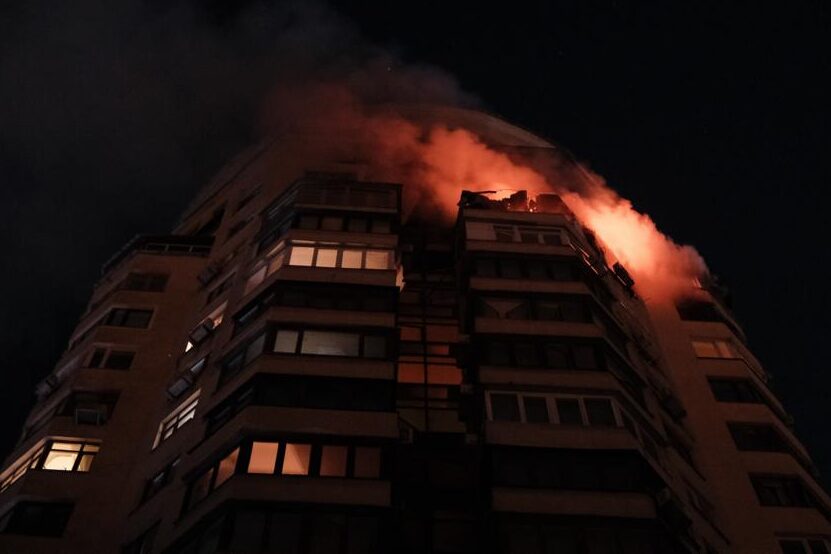
The weather, however, is only part of the terror. Russian ballistic missile attacks have intensified in scale and frequency this winter. And the threat of a Shahed kamikaze drone slamming through your bedroom wall during the night is as potent as ever.
Everyone’s story in Kyiv is written in different shades of luck. But everyone understands that luck is a finite resource. The most unlucky ones are already dead. The rest are navigating the cold, waiting for the light to come back on.