
- A third Russian has been droned while wearing "penguin" camouflage
- The heat-trapping camo can hide the wearer from thermal drones that see heat
- But it's ineffective against optical drones that see in the visible spectrum
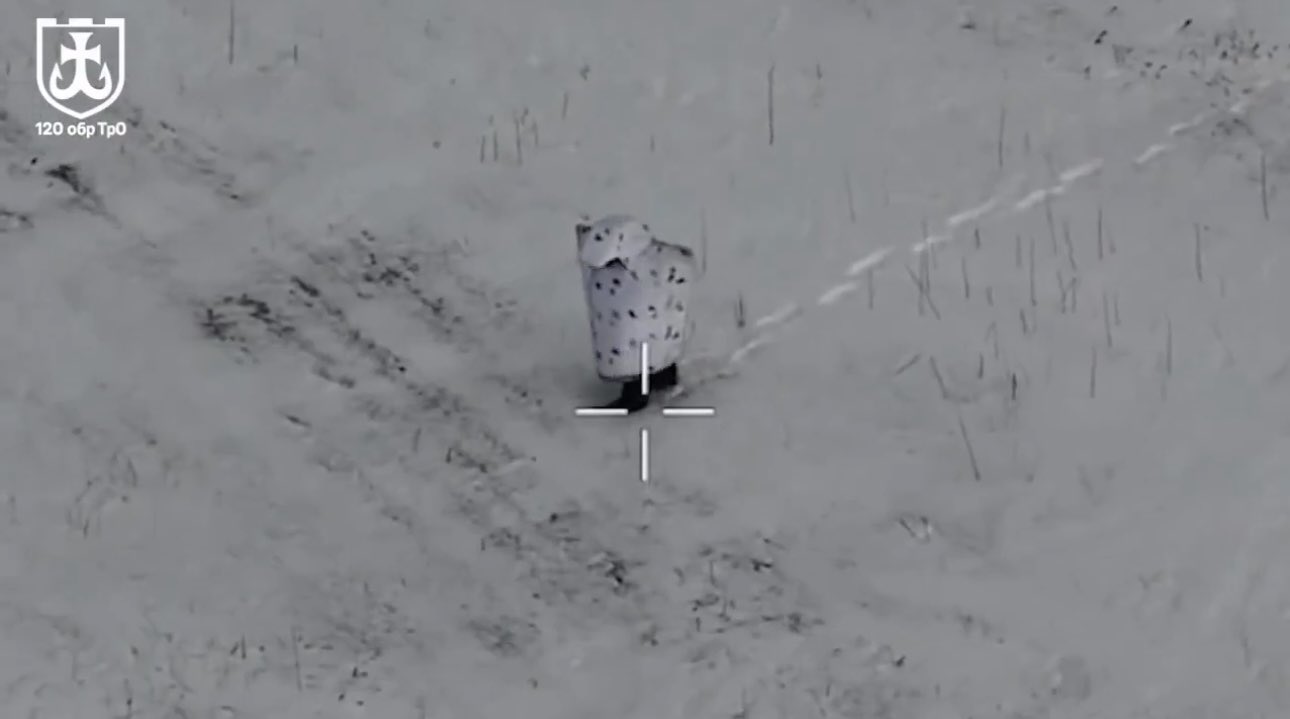
For the third time in six days, Ukrainian drone operators have spotted, and struck, solitary Russian infantry trying to sneak along the snow-covered front line in Ukraine while wearing white thermal camouflage.
Camouflage that makes the wearer look a lot like a giant penguin.
Don't blame the camo, however. Apparently made of heat-trapping Oxford 210D fabric—popular in camping gear—the roughly $200 ponchos should help the wearer blend in on a snowy landscape. But only when viewed through the heat-sensing infrared sensors on Ukraine's thermal drones.
Viewed through the daylight sensor on an optical drone, a thermally camouflaged "penguin trooper" is no more invisible than any white-clad soldier. Whichever Russian regiment bulk-purchased the penguin ponchos has erred in sending its penguin troopers across the treeless no-man's-land in broad daylight.
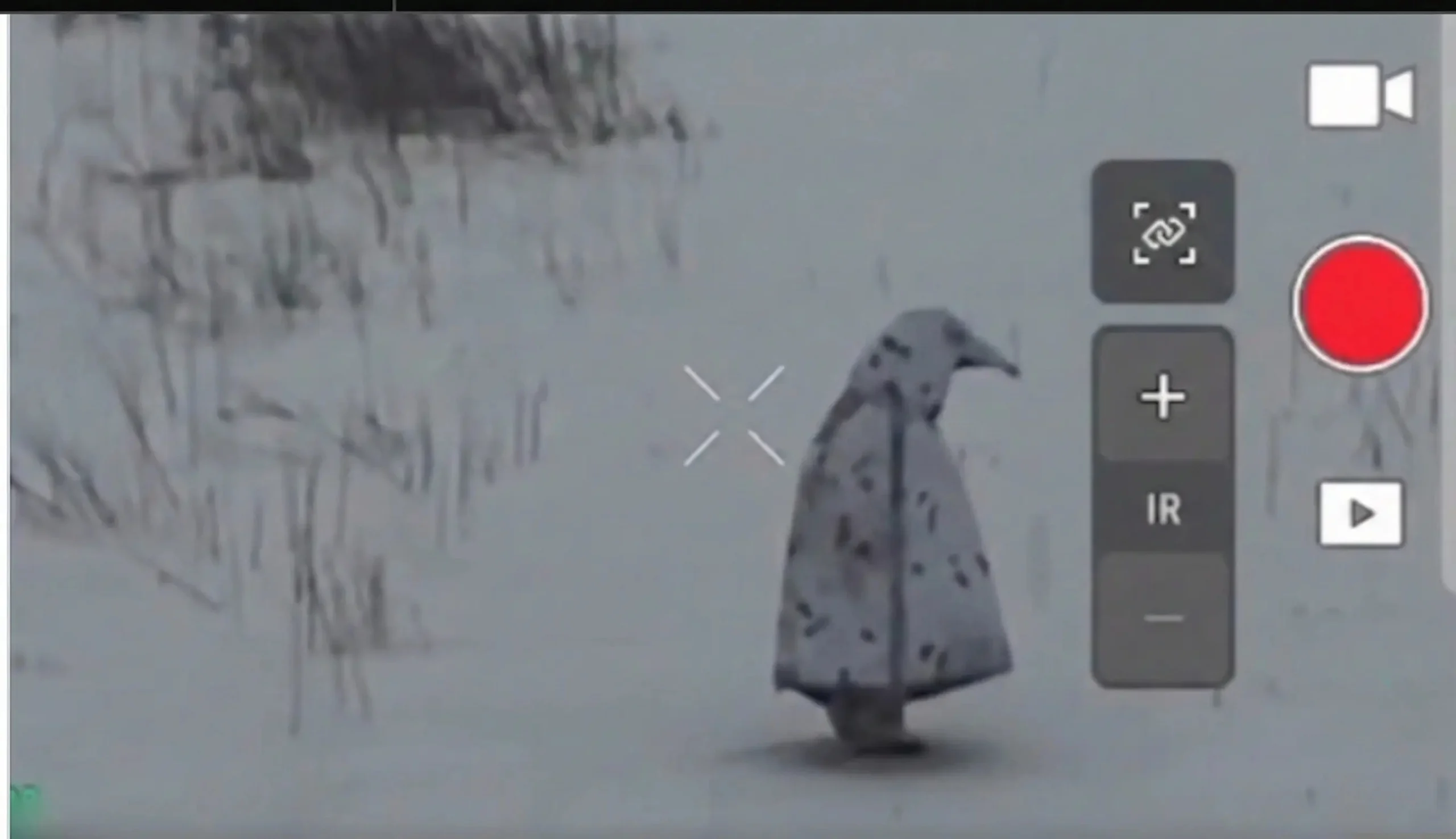
A Russian soldier dressed as a penguin was doing a pretty good job avoiding thermal drones
More alarmingly for the Russians, the regiment keeps repeating its mistake—and persists in sending more penguin troopers on suicidal treks across the winter landscape.
As thick winter fog blankets the snowy battlefield, the Russians and especially the Ukrainians are equipping more and more of their explosive drones with inexpensive thermal cameras.
The cameras can peer right through fog and smoke that might otherwise obscure an assault group from overhead surveillance. The stark contrast between the cold, snowy landscape and a hot human body makes thermal surveillance even more effective in winter.
It’s not for no reason that thermal camouflage is becoming standard kit for Russian and Ukrainian infantry. But the best purpose-made thermal camo can cost thousands of dollars per outfit, making it cost-prohibitive for many units.
Do-it-yourself camo
Thus, the widespread improvisation. The Ukrainian army has advised its troops to wear mylar emergency blankets if they can’t get their hands on custom-made camo. The Russians have been observed experimenting with the kinds of heat-trapping toilet tents that campers and beachgoers pop open for a little privacy while vacationing.
A toilet tent, it turns out, tends to catch the wind and drag its wearer around. Other than that, “it’s not too bad,” a Russian instructor reported.
Trending Now
The penguin poncho is also not too bad. The video that depicts the first fatal droning of a penguin trooper on Jan. 26 also includes a brief shot from an attacking drone’s point of view. In the drone’s thermal camera, the Russian is barely visible.
It’s possible the Ukrainians spotted that Russian with a daylight-optimized optical camera before attacking. In other words, if the penguin troopers had marched out at night, or had sought cover under trees, they might’ve avoided the drones that killed them.
The same sloppy deployment doomed the third penguin trooper. He was detected in daytime while trotting along a snowy path winding through brown fields of dead grass. His white poncho stood out on the surrounding landscape.
There are other problems with the penguin camo. It’s also apparent from the videos of the first two strikes on penguin troopers that the ponchos they’re wearing badly obscure their vision. Watch as the penguin troopers walk a few steps, pause and pivot their entire upper bodies left and right to look around.
It’d be even harder to see at night. There’s a good chance the penguin troopers were damned if they did, damned if they didn’t. Marching out in daytime meant they could see a little—but were more visible to optical drones. Marching out at nighttime might’ve meant better protection from drones, but near total blindness.
The killing of a few of Russian penguin troopers doesn’t change the fact that thermal camo is critical for combatants on both sides of Russia’s 47-month wider war on Ukraine. But it's imperative to use the camo in the right place ... and at the right time.