
Key US military sites are undefended against drones, the Department of Defense discovered.
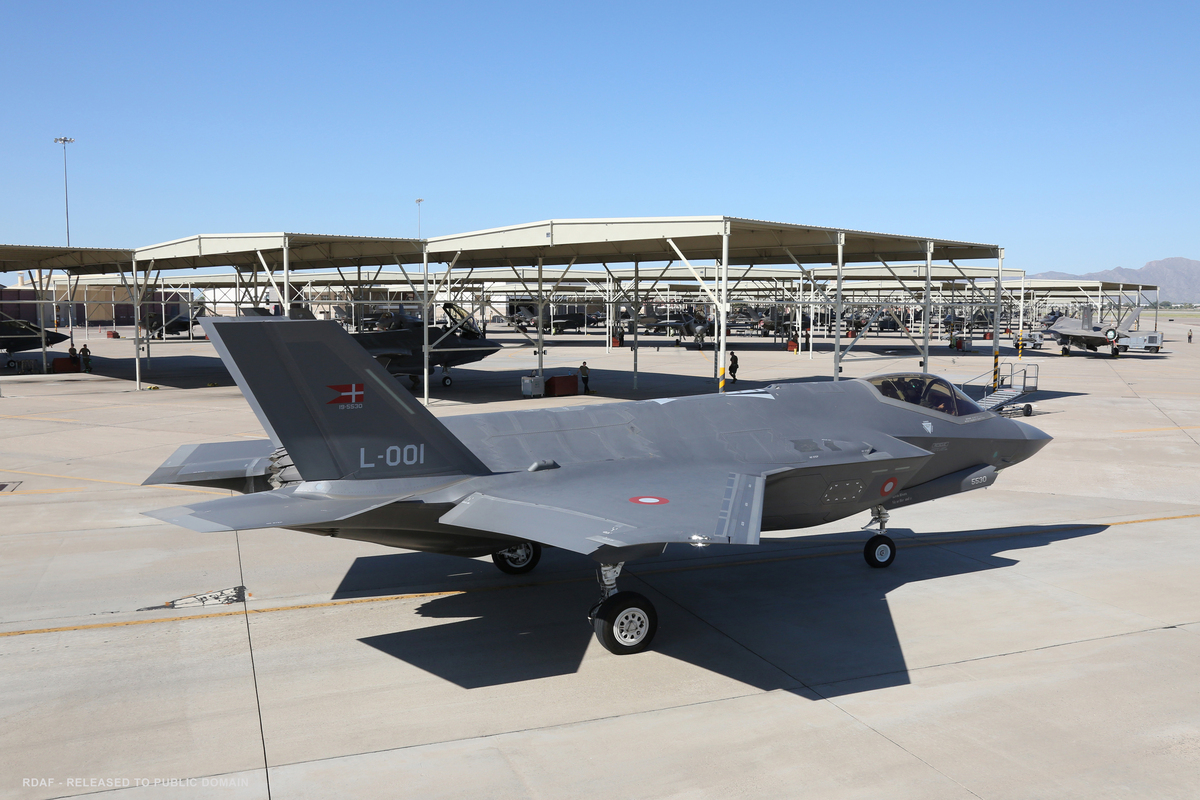
These sites include the Luke Air Force Base in Arizona, where 75% of the world's F-35 pilots train; a key aircraft plant in California; and a major naval facility in Virginia.
Top-level bureaucratic confusion over which installations to protect is the main reason for these lapses, according to the DoD Inspector General’s 20 January report, after visiting sites that had multiple drone incursions — and did nothing about it.
The Security Service of Ukraine (SBU) already demonstrated what can happen when you don’t drone-proof your bases.
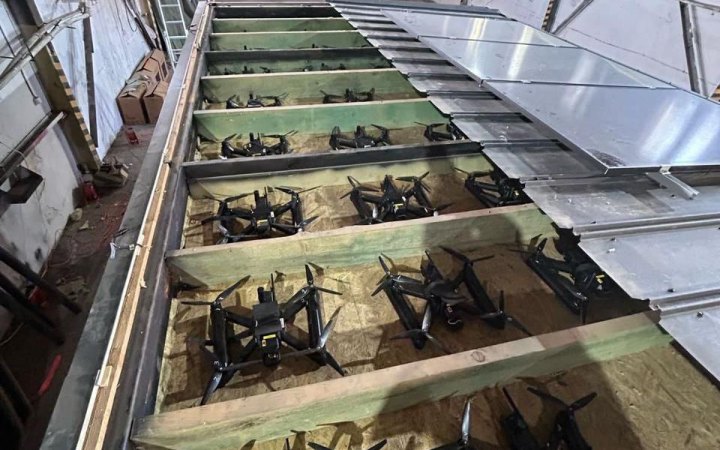
During Operation Spiderweb in June 2025, the SBU snuck over 100 drones into Russia, where unsuspecting truck drivers transported them next to five Russian airbases. The drones were then activated, hitting at least 20 strategic bombers and destroying at least 10.
This was a wake-up call to other countries, experts said. Historian Phillips O’Brien wrote that Europeans and Americans should find their vulnerability “terribly worrying.”
Ukraine doesn’t pose a threat to its allies, on whom it depends to survive. But if Ukraine was able to achieve this in Russia, there’s no reason why terrorists or foreign powers couldn’t do the same in the US — or in other countries.
“The next attack on the US won’t come from across the continent with ballistic missiles, it’s going to come from across the parking lot,” James Poss, a former Air Force intelligence official told journalist Sasha Ingber in July.
It seems the US government and military still haven’t taken these lessons to heart.
These are similar conclusions drawn by Lyuba Shipovich, head of the Ukrainian nonprofit Dignitas, during her stateside visit in 2025.
“We went to the North Carolina National Guard, I asked them what they had to work with drones. They have one person — in the entire National Guard — responsible for drones,” Shipovich told Euromaidan Press.
“When I asked them ‘how do you plan to defend North Carolina’ (from drones), they asked me ‘what do you mean defend?’ Like, they’re not even prepared to defend.”
Bureaucratic mess
According to the Inspector General's report, the US DoD "did not provide clear policy for designating a facility or assets as covered" against drones.
Facilities may need to be covered when they fall into one of nine functions: nuclear deterrence, missile defense, national security space, protecting presidential succession, air defense, combat support, special combat operations, working with high-yield explosives, and major weapons tests.
The DoD created a list of covered facilities in 2018. But the inspectors found that some facilities weren’t covered, even though they perform critical missions related to the nine categories.
For example, the Luke Air Force Base is described as an "indispensable tool in future homeland defense, Joint and coalition irregular warfare and major combat operations" by the US Air Force.
However, because training was not explicitly listed in one of the nine mission areas, DoD officials decided that training isn't covered.
This means that they didn’t ensure anti-drone capabilities to protect the US’s most expensive, cutting-edge fighters, which cost hundreds of billions of dollars to develop.
Trending Now
In another example, the DoD wasn't able to tell inspectors whether the Air Force's Plant 42 in Palmdale, California was covered or not. The plant makes parts for and maintains military aircraft, including unmanned systems.
A series of drone incursions happened at the plant and air force officials told inspectors that drone defense was denied "during the active incursions."
Different branches of the US military have different policies for getting anti-drone packages through the bureaucracy.
“Therefore, a large percentage of installations do not have operational approval to use [counter-drone] capabilities,” the report noted.
The DoD has also issued more than 20 policies that failed to offer clear guidance on counter-drone deployment on military sites inside the US.
These findings agree with the results of the US's 2025 exercises on defending military bases from drone attacks. The exercises revealed confusion about rules of engagement for disabling drones, and who has the authority or responsibility for protecting different bases.
In 2025, the DoD created the Joint Interagency Task Force 401 to coordinate counter-drone efforts.
The inspection report recommended that this task force review existing policies and define "(1) clear roles, responsibilities, and authorities; (2) requirements for covered designation for facilities and assets; and (3) a standardized and streamlined process" for anti-drone packages.
Europe also at risk
The threat of drones also extends to Europe. Molfar Institute found that Moscow may be preparing for drone operations against European countries.
In late 2025, unidentified drones were detected in Poland, Germany, Sweden, Denmark, Norway, Belgium, Estonia, Spain, the United Kingdom, Finland, and Lithuania. Some were discovered near military sites, such as the French nuclear submarine base at Île Longue.
Molfar found that this list of countries “closely matches” the countries in which Russian operatives tried to acquire mobile SIM cards, to plug into their drones.
SIM cards can allow operators to use mobile networks in that country to control their drones. In fact, Ukraine may have used a similar trick during Operation Spiderweb, hijacking Russian mobile networks to help guide their drones and destroy the Russian bombers.
European countries are in disagreement over the extent of Russia’s threat, which Russia may be trying to exploit, observers said.
While nations like Poland and the Baltic states believe they are already at war, states farther west still see themselves on a peacetime footing.