
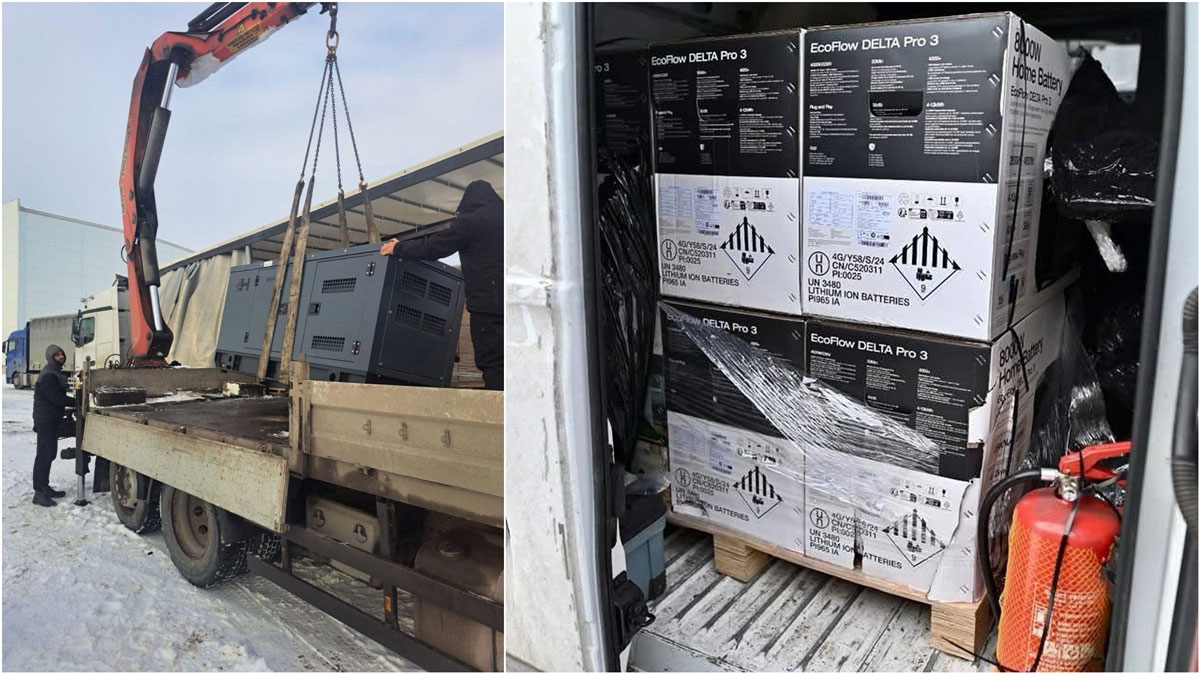
Germany will provide Ukraine with 33 mobile combined heat and power plants, according to the country's ambassador to Ukraine, Heiko Thoms, in an interview with Suspilne.
In recent months, Russia intensified its daily terror drone and missile attacks to focus specifically on Ukraine’s power grid. Amid freezing winter conditions, Russian forces continue to strike power stations, substations, and other electricity infrastructure across the country. Most oblasts of Ukraine are enduring scheduled outages, with some areas receiving only a few hours of power per day. The largest energy crisis has hit Kyiv, where electricity cuts and partial disruptions to heating and water supplies have continued for over two weeks.
"What happens here every night is war crimes. This is done exclusively to terrorize the civilian population. You need support now, and you will receive it," Thoms said. "I believe we are already the largest partner in the energy sector. We provide not only generators or energy storage systems, but sometimes also transport for repair work in the energy sector. Now we are also transferring 33 mobile power plants — combined heat and power plants."
The ambassador explained that one such mobile power plant can provide heat and electricity to tens of thousands of people. "So these 33 units are capable of providing electricity to millions of people in Ukraine," Thoms noted. "The challenge is connecting them — just as with generators — but we will work together to do this as quickly as possible."
The German announcement comes amid a wave of international support for Ukraine's energy infrastructure. On 18 January, Poland's Stand With Ukraine Foundation launched a fundraising campaign "Warmth from Poland for Kyiv." Within 10 days, the initiative collected 8 million zlotys (approximately 80 million hryvnias) to purchase generators. The first batch arrived in Kyiv on 26 January, with additional units planned for regions most affected by Russian strikes, including Kharkiv and Sumy oblasts.
Following the Polish example, Ukrainian Foreign Minister Andriy Sybiha on 19 January instructed all Ukrainian diplomatic missions abroad to initiate urgent fundraising efforts for the energy sector. On 21 January, the World Congress of Ukrainians, together with Ukraine's Ministry of Foreign Affairs, launched an international fundraising campaign for energy equipment.
The Netherlands and Denmark announced on 21 January that they would allocate 43 million euros to support Ukrainian energy infrastructure. Lithuania followed on 22 January, with Foreign Minister Kęstutis Budrys stating his country would send generators worth over 2 million euros.
Ukraine's embassy in Slovakia announced a collection on 23 January for urgent alternative power needs. Within three days, over 530,000 euros were raised. The first truck with generators worth 130,000 euros will be sent to Chernihiv on 29 January, and another worth 100,000 euros to Sumy and Sumy oblast.
On the same day, Prime Minister Yulia Svyrydenko reported that international partners had announced new aid packages totaling over 6,000 units of large energy equipment to stabilize the system. Czech activists raised nearly 4 million euros in four days to purchase generators and batteries for Kyiv residents, according to information released on 25 January.
On 27 January, the European Union transferred a batch of 447 generators worth 3.7 million euros to Ukraine. Over a hundred of these will go to Kyiv to ensure the operation of critical infrastructure facilities.
Finland has also joined the support effort, sending a total of 70 humanitarian shipments. The aid included power transformers, generators, mobile boilers, electric motors, cables, and components for network restoration and modernization.