

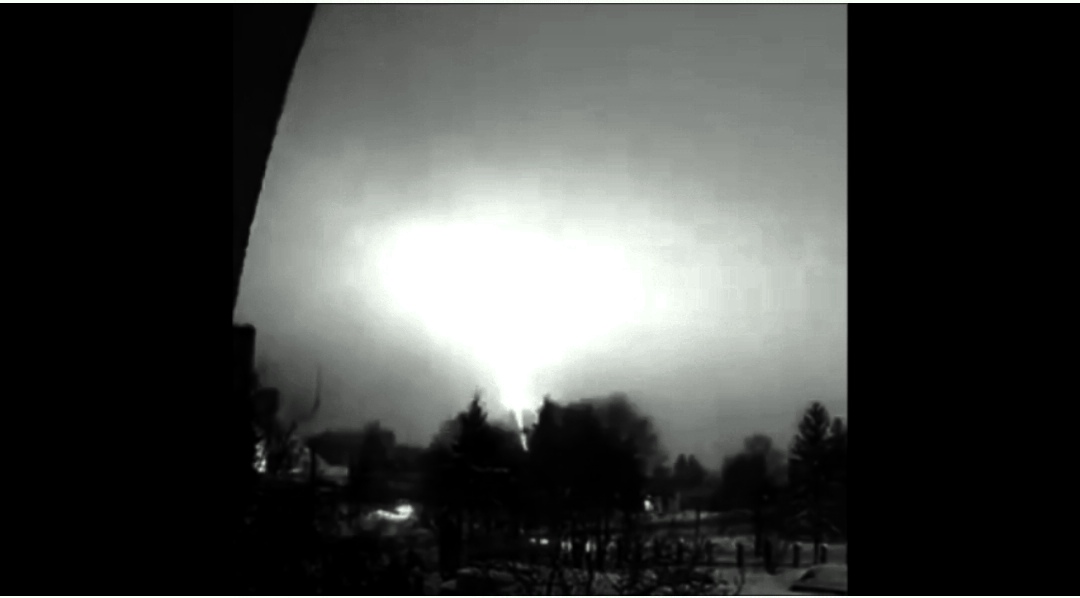
The International Institute for Strategic Studies (IISS) has reported that Europe abandoned at least intelligence projects years ago that could have helped it track the Russian Oreshnik. At least three such projects were never fully completed by the countries involved.
In addition to launching Oreshnik missiles from the Kapustin Yar test range, Russia has also pre-deployed such a system in Belarus, putting most European capitals within its strike range.
What has been done from the European side?
Currently, the US is effectively the only provider of early-warning capabilities for Russian missile launches. European countries try to fill the gaps themselves but face technological and financial challenges, the IISS analysts note.
- In the 1990s, France launched the Spirale project (Système Préparatoire Infra-Rouge pour l'Alerte). Two Spirale satellites were launched into orbit in 2009, but the project was not further developed.
- In 2019, the EU launched TWISTER, a satellite network for missile launch detection, but the project has yet to be operationalized.
- In 2025, Germany began work on ERNST 12 U, which remains only a technology demonstrator today.
Europe still lacks independent early-warning capabilities for Russian missile launches, which poses a serious threat to the continent, IISS analysts emphasize.
How the US provides early warning of Russian MRBM launches
The US SEWS system uses the SBIRS satellite network, which can detect missile launches by infrared signature. Its capabilities are complemented by the British early-warning radar, AN/FPS-132, at the Fylingdales Air Base, which tracks hundreds of objects up to 5,600 km away.
This radar entered service back in 1963, has undergone several modernizations during its operational life, is operated by the Royal Air Force, and is also integrated into the US Ballistic Missile Early Warning System (BMEWS), which can detect the flight of intercontinental ballistic missiles over the North Pole, per Defense Express.
In practice, Europe currently lacks its own capabilities for early detection of missile launches. This creates a threatening situation for the entire continent, especially in light of incidents involving Russian MRBMs Oreshnik and cruise missiles 9M729 Novator targeting the Iskander-M1 missile system.
Frequently asked questions
Europe previously initiated three key projects to track such threats: France's Spirale satellite system, the EU's TWISTER satellite network, and Germany's ERNST 12 U technology demonstrator. However, these projects were either never finished, remain non-operational, or exist only as technology demonstrators.
Europe currently lacks independent early-warning capabilities and depends almost entirely on the United States for missile launch data. This information is provided through the US SEWS system and SBIRS satellite network, which are complemented by the British AN/FPS-132 early-warning radar.
The Oreshnik is a medium-range ballistic missile that Russia has already used in strikes against Ukraine, including targets near the Polish border. Additionally, Russia has pre-deployed these systems in Belarus, which places most major European capitals within their potential strike range.


