
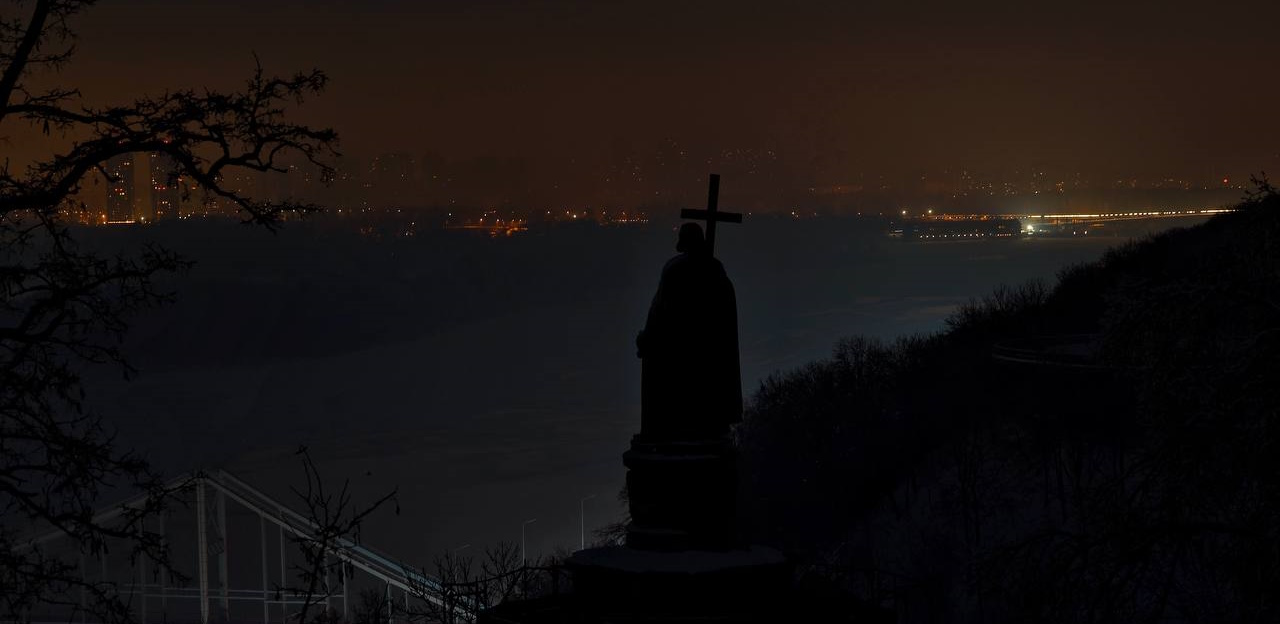
Ukrainians were not born to live in war. Every day of Russia’s winter terror is a tragedy for the Ukrainian people, made even more painful by the loss of faith in the West’s ability to stop this war.
To survive, people are forced to organize their daily lives according to wartime rules. You have to wake up at 2 or 3 a.m., when electricity or water is available, if you want to have charged power stations and a clear head in the morning.
While Ukrainians wait every day for Russia to be punished by the international justice system for more than 190,000 war crimes and give their most precious lives for a just peace, they are forced to invent new ways to survive.
The consequences of this are unusual, profound, and sometimes almost invisible, yet it is precisely these consequences that are shaping a new reality for Ukrainians.
Resilience points feel like parties, until you remember why they exist
Most Ukrainian teenagers do not remember what it means to live in peace. The war has lasted for nearly 12 years, since Russia annexed Crimea without consequences, beginning when they were too young to retain clear memories.
Since 2014, Moscow’s terror has only intensified, not diminished, and has reached every classroom in Ukraine. Three schoolgirls—Sonia, Tonia, and Victoria, whom I met at a dimly lit point of resilience, say that everyone in their class wears jackets and that the temperature does not rise above 7°C or 45°F.
The point is crowded with teenagers. They wander around, charging their gadgets, meeting new people, putting on makeup in the bathrooms, and giggling constantly.
Laughter echoes among girls who resemble anime characters, while boys pass by, winking and making plans to get acquainted near power outlets and free tea.
“In the evenings, I mostly go out for walks. You can’t sit at home when there’s no electricity,” says Tonia, 13.
She lives with her cousin, her parents, and a dog in one of Kyiv's apartments, located not far from a thermal plant which has been constantly under Russian terrorist strikes.
“When there’s shelling, we watch the skies together, and if it gets closer, we run to mom and dad’s room,” she says.
Tonia adds that she wishes “the West would send us more weapons so air defense can shoot down more missiles.”
Another girl, Sonia, also 13, says that after the blackouts, “teenagers started talking to each other more in real life,” instead of sitting at computers.
“If it weren’t for the point of resilience, we wouldn’t know each other at all,” she laughs.
Just minutes earlier, she had been teaching her new friends dance moves in a semi-dark corridor.
From the outside, clusters of teenagers gathering together genuinely resemble a party.
Another teenager, Victoria, adds that she “can’t stay at home” because she feels like she is “losing her mind.”
“I can help my mom around the house and then come here to hang out. Everywhere else is cold,” she says.
Face-to-face interaction among teenagers has increased because they gather at points of resilience and other public spaces.
But this socialization is forced, born of danger and deprivation rather than normal life. It does not replace proper education, nor does it provide the safety and stability of a warm home or a functioning school.
Warmth measured in fur, not kilowatts
One of the more unexpected consequences of Russian shelling is that Ukrainians are reassessing the role of pets within their families. Amid the cold, blackouts, and failing heating systems, animals have become not only companions but also sources of literal and emotional warmth.
Ukrainian folk survival wisdom advises pulling a cat under the blanket: the warmth, people say, multiplies instantly.
Some Kyiv residents even pitch tents over their beds, and almost immediately, a cat leaps inside to “heat” the newly created room.
Oleksandr, a Kyiv resident, lives with his wife and three British Shorthair cats, Tisha, Luna, and Siri, a few kilometers away from one of the stations that Russian forces regularly target with imprecise ballistic missiles.
“They sleep next to us all the time,” he says. “It warms you not only physically. They’re warm, soft, especially when they climb onto you, but emotionally as well.”
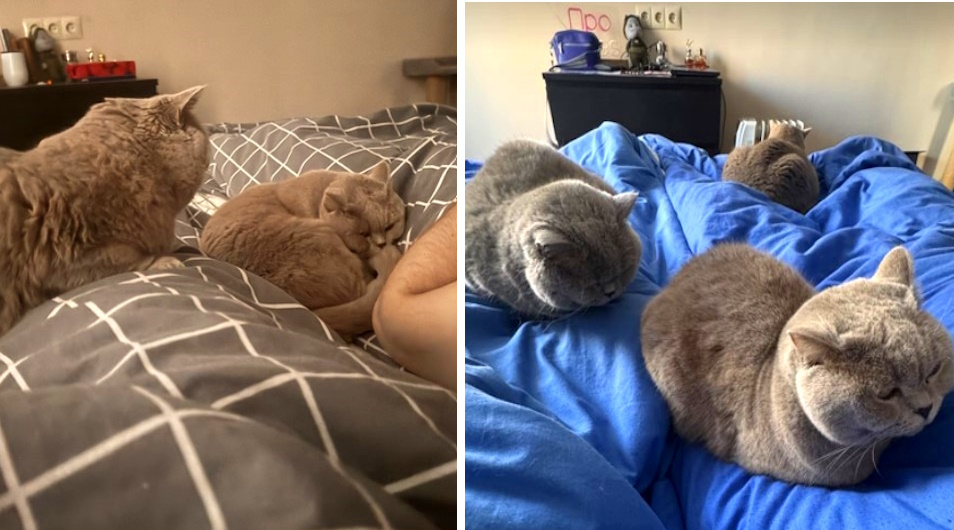
When the power or heating is cut off, life becomes especially hard. The air in their apartment is so cold that you can see their breath. They move slowly, bundled in layers, conserving heat as much as possible.
“We have no water at all, no heating, and electricity only comes on for two hours a day,” Oleksandr adds.
In those moments, the cats help the family, if only briefly, to escape dark thoughts and focus on something positive.
His family is one of the millions that, even in such conditions, do not want to trade their country for any capitulation deal proposed by Russia in the US-initiated talks over the end of the war.
No light, no internet: only thoughts remain
With the power outages, Ukrainians have started reading more.
“There’s more time, the internet isn’t always available, and there’s a need to distract yourself. But the brain can’t handle heavy information like in deep literature,” says Kyiv resident Tetiana.
By “deep literature,” she means classics that explore questions about the world and the future. In Ukraine, she adds, “the future is a complicated question for us.”
“My friends are reading more, too, but lighter literature. One of my friends, for example, reads a lot of poetry. They read books that support them emotionally,” Tetiana continues.
During dark nights, people also try to turn inward.
“Many people are now turning to psychological literature, trying to understand themselves. You start forgiving people whom you thought were impossible to forgive before the war,” she says.
She describes the immediate goal of Russia’s attacks as “so that in a month we sign peace on Putin’s terms and leave Donbas.” In her view, the world must unite against him, as it once did against Hitler.
Trending Now
“The Ukrainians have been begging the West for four years to show that this is unacceptable. After all the killing of women and children… But we see with Trump that apparently, this is actually possible,” she notes.
If he sees that, Tetiana adds, and realizes what he achieved in Ukraine, it will give him free rein.
“They think Putin will never come to them. They think they don’t matter to Putin. We thought the same ten years ago. Friendly relations, shared business, movies… we thought that could never happen,” she adds.
The threat feels distant to some, but for the Ukrainians, it is immediate and real. Many people realize now that complacency can be dangerous. The illusions of safety can vanish overnight.
Maybe this is the plan—Russia turns winter into a weapon of displacement
He often left Kyiv even before Russia started its terror campaign. A resident who asked to remain anonymous is a lucky owner of a cluster of small summer cottages by a scenic lake, a quiet refuge far from the noisy city streets.
The cottages have a fireplace, and now, with autonomous heating, they feel like little fortresses. Yet even far from the energy infrastructure that Russian missiles often target, he can hear the drones buzzing overhead.
Before the war, he came to the cottages to recharge, write music for parties—he is a professional DJ.
Today, they are a lifeline. Though power shutdowns are ongoing, solar panels and batteries keep him creating and surviving.
"The city used to be a symbol of comfort and safety. Now it is a place of terror, of frightened girls, of cold, dark dwellings," he says.
After recent heavy strikes, three of his friends have already reached out to him.
“They asked, jokingly, how my retreat was holding up. But I know they’re really checking whether it’s possible to survive the winter in a house with heating and firewood,” he explains.
He adds that they agreed that if the situation worsens, they will come to him.
“People are cold and in the dark. That’s why they want to come here. And I think this is just the beginning. A major blackout is still ahead," he believes.
His car carries a small arsenal of survival: a tent, an electric saw, a screwdriver, axes, sleeping bags, a cooking pot, a water filter, a week’s worth of food, a gas stove, and batteries with a 220-volt inverter.
Even with this set of tools, such escape is only possible for those who can leave office work behind and own a car.
Frozen roads and snow slow an already sparse transport system, and the nearest supermarket is five to seven kilometers away.
Across the country, strikes are pushing people out of cities, forcing them to scatter across regions in search of warmth and safety.
Maybe this is exactly what Russia wants.
"This is how to party": Kyiv courtyard raves highlight a different path from Russia
Perhaps everyone has seen apocalyptic films where a family gathers together, eating and holding hands, until the walls start to shake. Then the camera cuts off.
A scene like this appears in the film "Don't Look Up", where people who know the disaster is approaching try to warn the indifferent world. But it is busy only with political games and the rare metals.
The Ukrainians have been living in a similar reality for 12 years. To understand their feelings, a foreigner must imagine a situation where someone is constantly trying to kill them for four years in a row. You can't get used to it, but you can grow tired of it. That's why Ukrainians began organizing "parties of resilience", gathering to dance and support one another.
It started when residents of one apartment complex, where Russian “Shahed” killed people just days ago, organized a party right in the middle of the courtyard, with music, dancing, and a barbecue. They don't have gas inside, so cooking is only possible on inconvenient gas burners.
— I’ll bring the vodka
— I’ll bring the mood
— I’ll bring a record for our best DJ in the world, they wrote in their chat.
At the parties, they grilled kebabs, chatted, and sang a little by the fire because it’s much better than freezing alone at home without electricity, heating, or gas.
In the footage picked up by major media outlets, dozens of Kyiv residents can be seen around a DJ setup. People in warm jackets and hats moved rhythmically to the music and shouted, "All I need is love tonight."
“This is how to party! We partied and became famous all over the world!” they proudly claimed in their chat.
Such gatherings have become a tradition: other buildings also started outdoor picnics. They help people come out of isolation, when being alone with grief can easily make you lose your mind.
Beyond the psychological effect, these parties unite people in Ukraine and encourage self-organization and other initiatives, such as building points of resilience that the city lacks.
Because only together can you survive a catastrophe, and true strength arises only in unity. This is different from the post-Soviet mentality, which is used to relying on the authorities. This is the main difference from Russia.
Read also
-
Documents reveal Soviet repressions against those resisting Holodomor genocidal famine
-
“He said we deserve genocide”: Journalists unmask Russian “Dr. Evil” torturer of Ukrainian POWs
-
Russia fires nuclear-capable Oreshnik after receiving security guarantees plan for Ukraine. But its warhead less effective than standard bomb