

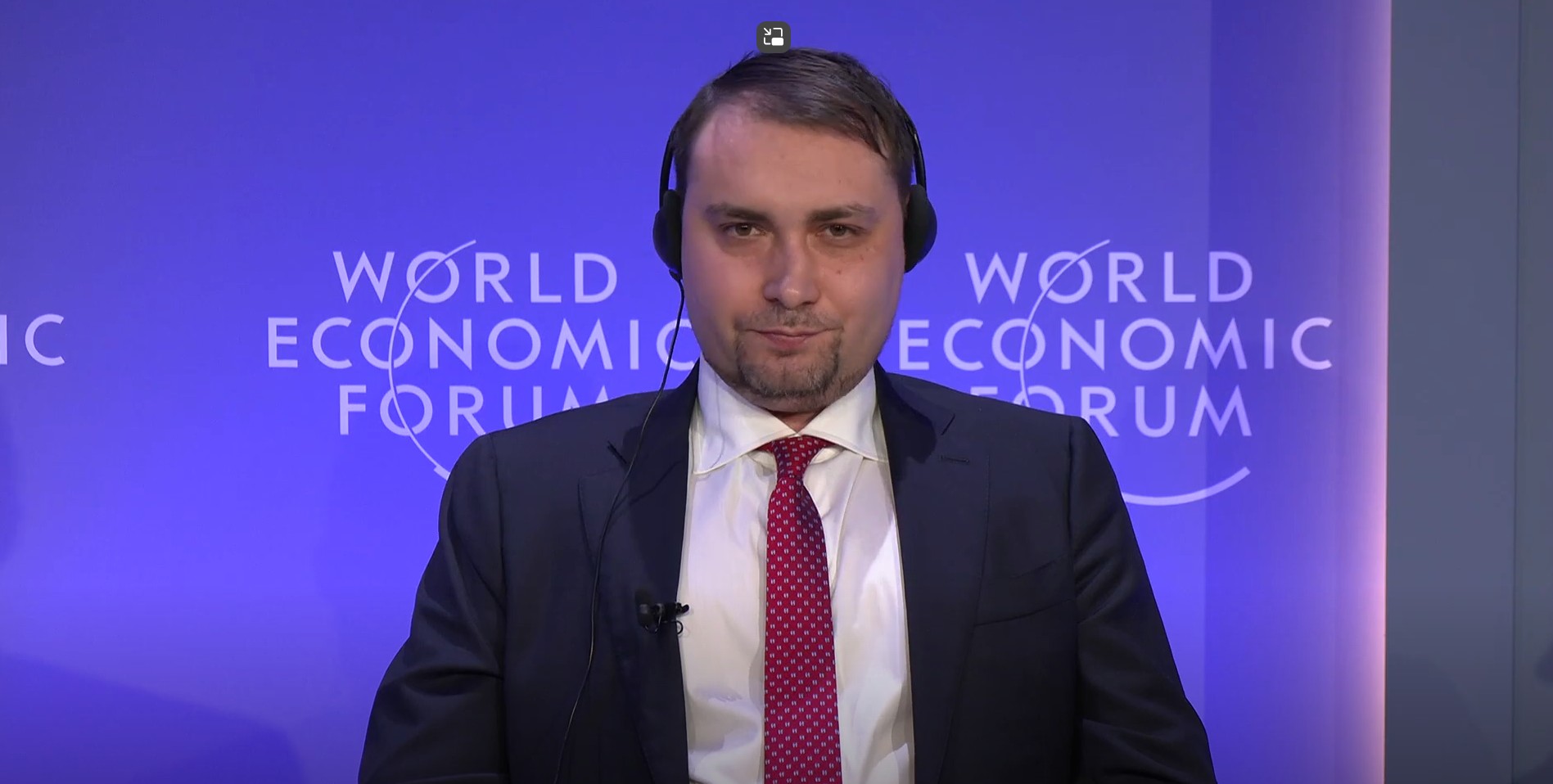
Ukraine’s lead peace negotiator arrived at Davos on 20 January with a message for Western allies worried about Russia’s strength: Moscow is so desperate it’s being swallowed whole by Beijing.
“The more sanctions worked and external pressure increased, the more Russia fell into China’s hands.”
Kyrylo Budanov, who flew to Switzerland directly from preparatory talks with Trump’s team in Miami, told the World Economic Forum that China is “de facto absorbing” Russia—a framing that matters because he’s now the man Kyiv has tasked with negotiating an end to the war.
“The more sanctions worked and external pressure increased, the more Russia fell into China’s hands,” Budanov said. “And now everyone sees this openly.”
The message to Washington, Brussels, and the watching world: the country you’re being told is “winning” can’t build a missile without Chinese permission.
“Without them, the war would have been over long ago.”
Russians themselves know this. A source close to the Kremlin told The Moscow Times in November: “Without them, we would not have been able to make a single missile, let alone a drone, and the whole economy would have collapsed long ago. If they wanted it, the war would have been over long ago.”
“Russia paid huge amounts for this—much more than any country paid for such goods before.”
Budanov traced the progression. Early in the invasion, Russia scrambled for basic electronics—“thousands of washing machines and computers” shipped in to harvest microchips. Then came machine tools. Then weapons materials. Each step pulled Moscow deeper into dependency.
“Russia paid huge amounts for this—much more than any country paid for such goods before,” Budanov said. “But they basically had no other option.”
The Bank of Finland found that Russia now pays 87% more than other countries for the same Chinese components. China accounts for 57% of Russia’s imports, up from 23% before the invasion. Yet Russia ranks just eighth among China’s trading partners—behind even Vietnam.
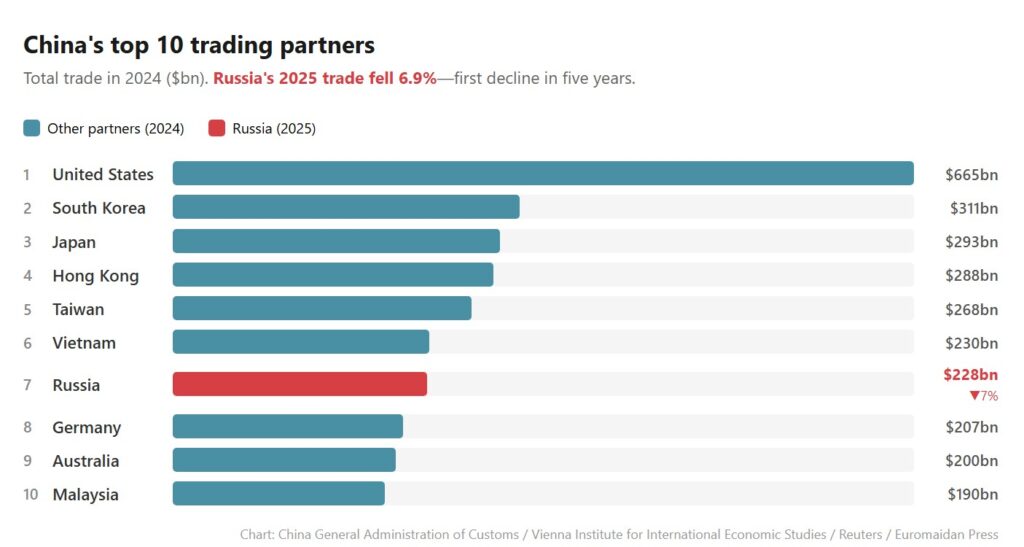
Tech flows the other way
For decades, Russia armed China. Now the relationship has inverted.
“Cooperation has moved to a new level—there’s an exchange of military technologies, specifically from Russia to China,” Budanov said.
Leaked documents reviewed by the Royal United Services Institute confirm Russia already agreed in 2023 to train Chinese paratroopers and transfer airborne assault technology—capabilities analysts say could help Beijing seize Taiwan.
Trending Now
“China has not transferred a single finished unit of weapon.”
Budanov noted one limit: “China has not transferred a single finished unit of weapon. Whatever we think of China—good or bad—it hasn’t done this.”
Beijing doesn’t need to. It sends components Russia can’t make, buys Russian oil at discounts Moscow once dictated to Europe, and watches the yuan replace the dollar in Russian trade.
Leverage for the negotiating table
Budanov’s Davos appearance came hours after meeting Trump’s representatives in Miami. He pushed back against suggestions Ukraine was being sidelined: “We are in the process. This process, thank God, does not go on without us.”
“It’s painful for Russians to admit it.”
But his China remarks weren’t just analysis—they were positioning. If Russia needs Beijing’s blessing to keep fighting, that’s leverage. For Ukraine. For Trump. For Europe.
“It’s painful for Russians to admit it,” Budanov said. “But they know it perfectly well.”
Frequently Asked Questions
Budanov argues that international sanctions have forced Russia into a state of extreme dependency where it can no longer manufacture essential equipment, such as missiles, without Chinese permission. Data shows that China now provides 57% of Russia's imports, and Moscow is reportedly paying 87% more than other countries for the same Chinese components.
Budanov argues that international sanctions have forced Russia into a state of extreme dependency where it can no longer manufacture essential equipment, such as missiles, without Chinese permission. Data shows that China now provides 57% of Russia's imports, and Moscow is reportedly paying 87% more than other countries for the same Chinese components.
In a reversal of their historical roles, Russia is now transferring advanced military technologies to China, including airborne assault technology and training for paratroopers. Additionally, Russia provides Beijing with heavily discounted oil and has allowed the yuan to replace the dollar in much of its international trade.


