

Russia recorded its highest number of serious and particularly serious crimes in 15 years during 2025, with 627,900 cases registered, according to Ukraine's Center for Countering Disinformation report.
The surge marks the third consecutive year of rising violent crime—a trajectory directly tied to Russia's war against Ukraine.
The spike exposes an internal security crisis the Kremlin has tried to conceal. Combat veterans are returning to civilian life in growing numbers, including tens of thousands of former prisoners recruited under programs launched by Wagner Group and later the Russian Defense Ministry.
These men—armed with battlefield skills and criminal records now officially expunged—are increasingly appearing in cases involving murder, armed robbery, violent assault, and drug trafficking, according to the Global Initiative Against Transnational Organized Crime's report.
Putin's "new elite" commits hundreds of murders
The scale of veteran violence is staggering. Independent Russian outlet Vyorstka documented nearly 550 civilians killed and 465 injured by returning veterans, the majority by former prisoners, according to The National Interest.
The British Ministry of Defence assessed that Russian senior leadership "highly likely considers the issue to be a matter of growing concern," the outlet reported.
180,000 convicts recruited since 2022
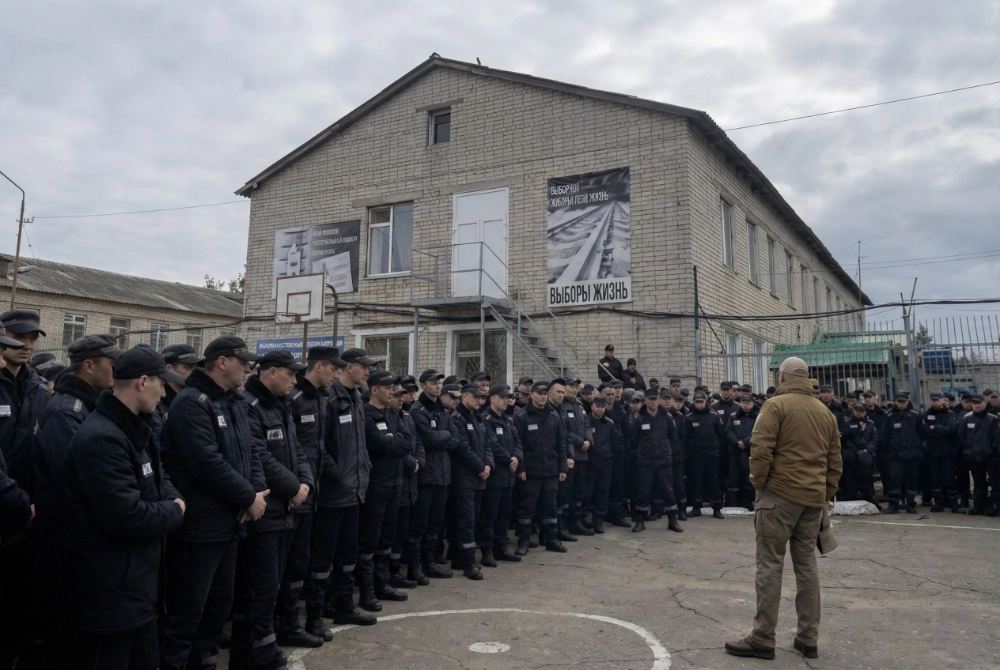
Russia has recruited approximately 180,000 convicts to fight in Ukraine since Wagner pioneered the practice in 2022. The paramilitary group's founder, Yevgeny Prigozhin, personally toured prisons offering pardons and high salaries to murderers and robbers willing to serve six months at the front.
Those who survived returned as free men. Many brought battlefield trauma, combat skills, and the same violent tendencies that originally landed them behind bars.
Russia's police force is collapsing
The crime wave comes as Russia's law enforcement capacity deteriorates. Interior Minister Vladimir Kolokoltsev revealed that half of all patrol officers had left the force in the past year, pushing total vacancies to over 172,000 positions, according to "Russia to Face Crime Wave as War Veterans Return" by Russia Post.
In some regions, nearly a third of police jobs are unfilled. Military contracts offering several times typical police salaries are drawing officers to the front instead.
Former Interior Minister Anatoly Kulikov warned that after the war ends, Russia could face a serious wave of crime from demobilized soldiers—a pattern he compared to post-WWII "banditry" among returning Soviet conscripts, Defence24 reported.
Kremlin fears its own veterans
The Kremlin is quietly preparing for the political implications. As it gears up for 2026 State Duma elections, the regime plans to channel 70-80 war veterans into parliament through programs like "Time of Heroes"—not to reward them, but to prevent their uncontrolled radicalization after returning from the front, according to the Center for Countering Disinformation.
The irony is acute: participation in Putin's war is officially marketed as a "social elevator" for Russia's poorest citizens. In practice, the war has become a catalyst for crime and domestic instability.
Armed, psychologically traumatized, and often criminalized veterans are emerging as a threat to Russia itself—an outcome the Kremlin prefers not to acknowledge publicly, as the Center for Countering Disinformation noted.
Organized crime recruits ex-soldiers
Organized crime groups are already recruiting ex-soldiers as contract killers, triggering a criminal arms race reminiscent of the 1990s, according to Defence24.
So-called "khaki gangs" made up entirely of veterans are clashing with established criminal networks. Russia's FSB dismantled 157 arms trafficking rings in just two months in 2025, seizing weapons flowing from the front.
Threat extends beyond Russia's borders
The human cost extends beyond Russia's borders. Europol notes the Kremlin is already leveraging criminal networks for sabotage and cyberattacks in the EU, Defence24 reported.
Battle-hardened ex-convicts are becoming key assets in hybrid warfare.


