

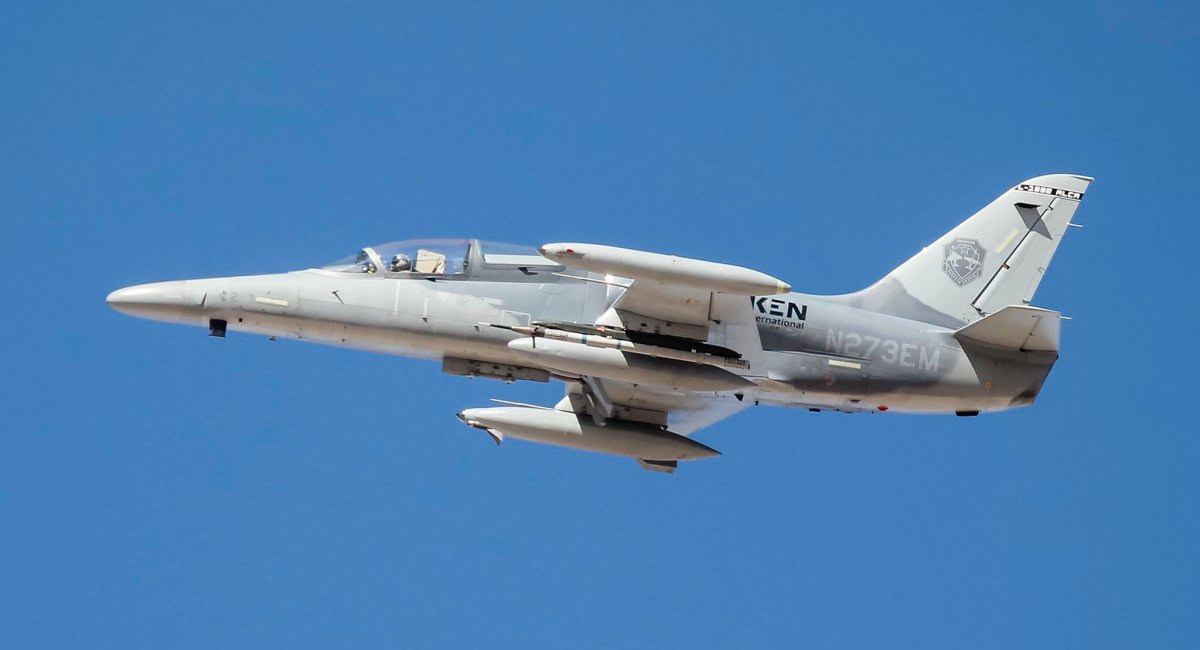
Ukraine may potentially receive L-159 light attack aircraft from the Czech Republic to counter Russian strike drones. However, the exact configuration and number of aircraft have not yet been officially confirmed, Defense Express reports.
According to open-source data, the Czech Air Force operates 16 single-seat L-159A aircraft and eight two-seat L-159T trainer-combat variants, making this scenario technically realistic.
How the L-159 was designed and why its combat record matters for Ukraine
The L-159 was developed in the 1990s after the dissolution of the Warsaw Pact and was officially inducted into the Czech Air Force in 2001. Its concept was based on a light attack aircraft optimized for operations in low- and medium-intensity conflicts.
The aircraft already has real combat experience. In particular, Iraqi Air Force L-159s were actively used between 2015 and 2022 during combat operations against Islamic State militants. Under these conditions, the aircraft proved to be a reliable platform for ground-attack and close air support missions.
For Ukraine, this experience is particularly relevant, as the war with Russia increasingly combines conventional combat with the mass use of drones, missiles, and asymmetric strike capabilities.
What capabilities could the L-159 offer Ukraine right now?
The L-159 can carry up to 2.4 tons of payload, including gun pods, unguided and guided aerial bombs such as GBU-12, GBU-16, and JDAM, as well as AIM-9 Sidewinder air-to-air missiles and AGM-65 Maverick air-to-ground missiles.
Its combat radius reaches up to 790 kilometers, with a maximum speed of around 920 km/h, making it sufficiently agile and cost-effective for prolonged patrol missions.
Analysts emphasize that if L-159 aircraft are transferred to Ukraine, they would not be a replacement for multirole fighters but rather an expansion of capabilities to counter Russian “Shahed”-type drones.
In this role, such aircraft could reduce the burden on air defense systems and expensive interceptor missiles, offering a more flexible, cost-efficient response to aerial threats.
Read also
-
“Not MANPADS — communications”: Expert says Russia’s real drone threat is turning Shaheds into 200 km FPV weapons
-
Germany pledges €60m for Ukraine’s frontline heating amid worst energy crisis of war – Sybiha
-
Lithuania exposes GRU sabotage network that targeted factories in four NATO countries – Reuters


