

India’s imports of Russian crude crashed 29% in December to the lowest level since the G7 price cap took effect three years ago. Russia’s fossil fuel revenues dropped to €500 million ($580 million) per day—the second lowest since Putin launched his full-scale invasion of Ukraine, according to the Centre for Research on Energy and Clean Air.
Every barrel India refuses is revenue Moscow cannot spend on missiles and drones striking Ukrainian cities.
The collapse marks a sharp reversal for New Delhi, which declared in September it would keep buying Russian oil despite US pressure. Every barrel India refuses is revenue Moscow cannot spend on missiles and drones striking Ukrainian cities.
From defiance to retreat
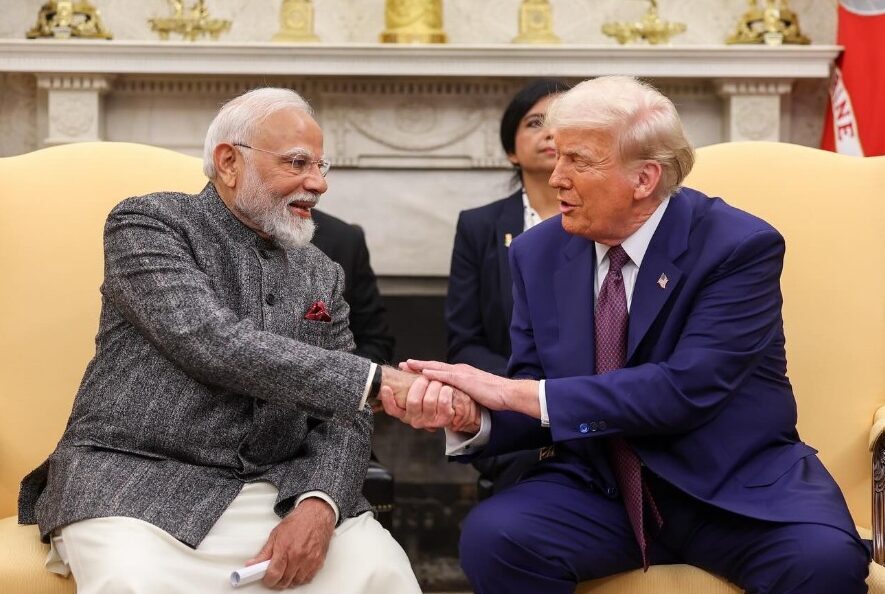
In August, President Trump imposed 50% tariffs on Indian goods—among the highest in the world—explicitly targeting New Delhi’s purchases of Russian oil. India pushed back. Officials pointed to Europe’s own continued imports from Russia and insisted they needed affordable energy for 1.4 billion people.
By October, Trump claimed Prime Minister Narendra Modi had promised to halt Russian purchases. Indian refiners immediately contradicted him—shipment data showed no reduction.
Buying is likely to plateau or decline further.
In December, imports fell to 1.3 million barrels per day, a third below June’s peak, according to ship-tracking data reported by Bloomberg. The Jamnagar refinery—India’s largest—cut Russian crude intake by half. State-owned refiners reduced purchases by 15%.
January looks no better. Buying is likely to plateau or decline further, with analysts estimating volumes around 1.2 to 1.4 million barrels per day.
Tankers with nowhere to go
The most visible sign of the shift floats off the coast of Oman.
At least twelve tankers laden with Russian crude are anchored there, some since mid-December. Russia is offering Urals crude at roughly $52 per barrel—about $8 below the current Brent benchmark of $60. One of the cheapest options on the market. Still no takers.
India’s refiners are actively seeking alternatives rather than waiting out the pressure.
This echoes a pattern from August 2025, when sanctioned tankers first piled up near Indian ports. The difference now: the backlog is larger, and India’s refiners are actively seeking alternatives rather than waiting out the pressure.
Indian Oil Corp., the country’s largest refiner, recently purchased Ecuadorian crude, which is expected to arrive in March—a rare transaction—and issued tenders this week for Middle Eastern and West African grades that can substitute for Russian Urals.
Trending Now
“Russia remains a core pillar in India’s slate for now.”
“Russia remains a core pillar in India’s slate for now,” Sumit Ritolia, lead analyst at Kpler, told Bloomberg. “But buying becomes more opportunistic, more diversified, and more compliance-sensitive as geopolitics and trade mechanics continue to evolve.”
No relief in sight
US Secretary of State Marco Rubio spoke with Indian External Affairs Minister Subrahmanyam Jaishankar on Tuesday, but trade negotiations remain stalled. Washington is now considering legislation that would impose penalties on any country purchasing Russian hydrocarbons.
Saudi crude, West African grades, Latin American barrels—all come at higher prices than discounted Russian oil.
India’s Ministry of External Affairs acknowledged the dilemma. Energy purchases are “dependent on the evolving dynamics in the global market as also the imperative for us to provide energy at affordable rates to our 1.4 billion people,” spokesperson Randhir Jaiswal said on Friday.
The alternatives cost more. Saudi crude, West African grades, Latin American barrels—all come at higher prices than discounted Russian oil.
So much for affordable energy for 1.4 billion people.


