

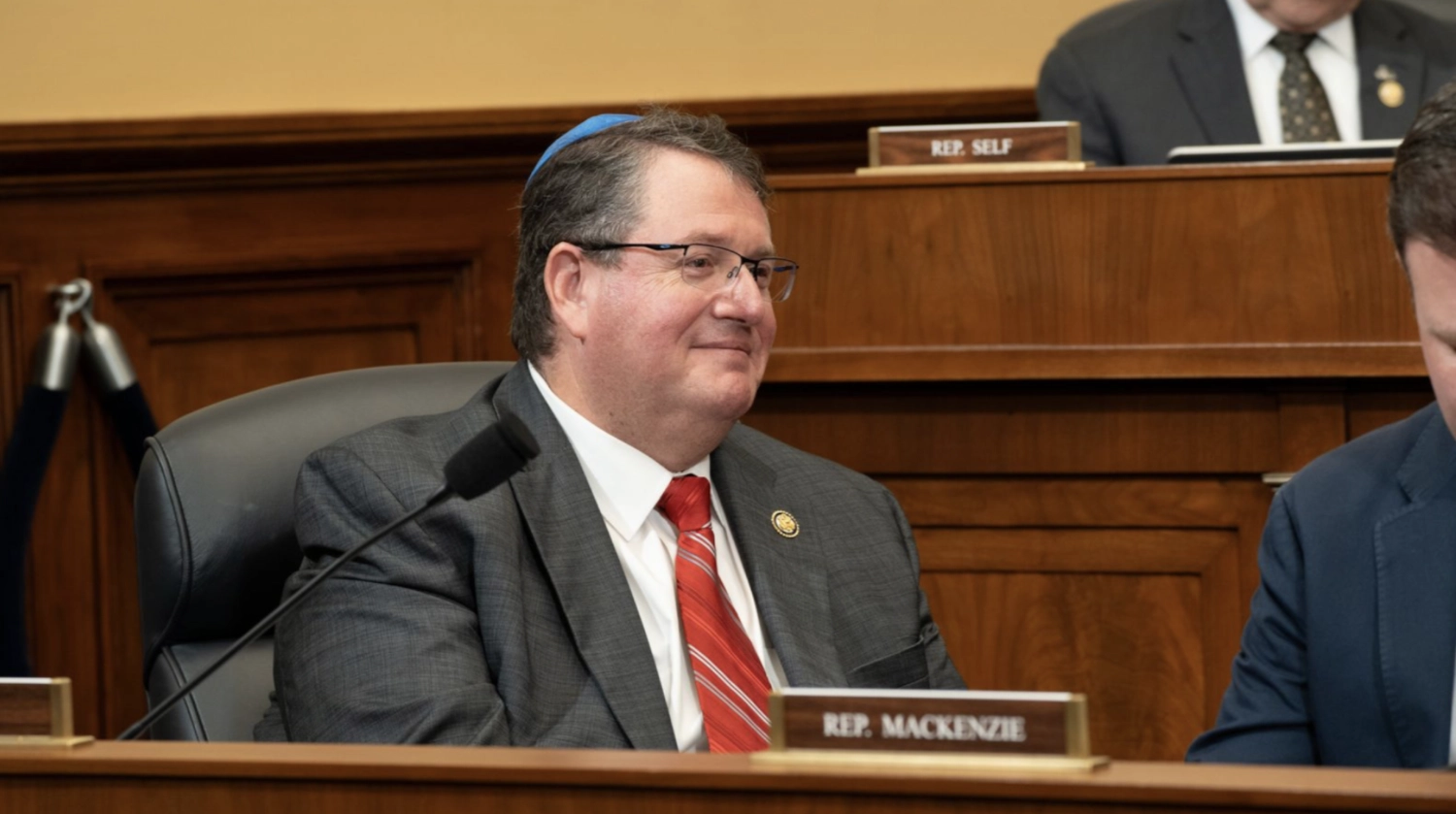
A Republican congressman introduced legislation on 12 January authorizing the US president to annex Greenland by any means necessary, escalating Washington's threats against a NATO ally just as Europe needs unity most to counter Russian aggression.
Rep. Randy Fine (R-FL), nicknamed "the Hebrew Hammer," introduced the Greenland Annexation and Statehood Act, which would authorize President Donald Trump "to take whatever steps necessary to annex or acquire Greenland as a territory of the United States." The bill also requires a congressional report on making Greenland a US state.
"Whoever controls Greenland controls key Arctic shipping lanes and the security architecture protecting the United States," Fine stated, calling the island "a vital national security asset."
Key developments in the Greenland crisis:
- Rep. Randy Fine introduced the Greenland Annexation and Statehood Act on 12 January
- The bill authorizes the president to annex Greenland "by any means necessary"
- Greenland's government says it "cannot under any circumstances accept" a US takeover
- Seven European leaders issued a joint statement defending Danish sovereignty
- Analysts warn the crisis is "an absolute gift to Putin"
- Danish and Greenlandic officials meet Rubio and Vance in Washington on Wednesday
Europe torn between defending Denmark and supporting Ukraine
The timing could not be worse for the transatlantic alliance. As Ukraine's war against Russian invasion approaches its fifth year, European leaders find themselves pulled in two directions: defending a NATO ally from Washington while simultaneously depending on Washington to help defend Ukraine.
The bind is excruciating. As CNN reported, Europe's priority for 2026 "remains to keep the US engaged in Ukraine," even if this leads to pressure on Copenhagen "to come to an accommodation" with Washington over Greenland. The alternative — angering Trump — risks the complete withdrawal of US support for Kyiv.
NATO scrambles to bolster Arctic security
European nations are scrambling to prove they can secure the Arctic — energy that might otherwise go toward Ukraine. NATO Secretary-General Mark Rutte said Monday that alliance members were working on "the next steps for how to collectively keep the Arctic safe."
Belgium's defense minister Theo Francken told Reuters that NATO should launch an operation in the Arctic. "We have to collaborate, work together and show strength and unity," he said, adding there was a need for "a NATO operation in the high north."
A senior British minister said the UK was working with NATO allies to bolster Arctic security. German Chancellor Friedrich Merz said he expected the US to continue protecting Greenland together with Denmark. EU Defense Commissioner Andrius Kubilius said the EU Treaty obliged member states to come to Copenhagen's assistance if faced with military aggression.
Why Russia benefits from NATO's Greenland crisis
Russia stands to benefit enormously from NATO's internal crisis, analysts warn.
The European alarm and the growing possibility of NATO's dissolution are "an absolute gift to Putin," Edward Arnold, senior research fellow at the Royal United Services Institute, told CNBC. "Putin's always known, and Soviet leaders before him knew, that Russia can't defeat NATO militarily. It's too powerful, so it needs to defeat NATO politically."
Jamie Shea, former NATO deputy assistant secretary general, said Putin would be "delighted to see further divisions and incoherence in NATO and a massive transatlantic crisis that could lead the US to stop its support for Ukraine and withdraw US troops from Europe."
Trending Now
The legislation validates Moscow's central argument for invading Ukraine: that great powers have the right to dominate their perceived spheres of influence. The Atlantic Council warned this could become "the worst crisis" in NATO's existence, with Trump's stance "in flagrant disrespect of international law" risking "dissolving the transatlantic community."
Denmark warns US attack on Greenland would end NATO
Danish Prime Minister Mette Frederiksen has been unequivocal. "If the United States chooses to attack another NATO country militarily, then everything stops," she told TV2. "That includes NATO and therefore post-World War II security."
Seven European leaders — from France, Germany, the UK, Italy, Spain, Poland, and Denmark — issued a joint statement declaring that "Greenland belongs to its people" and only Denmark and Greenland can decide its future. The Netherlands, Luxembourg, Slovenia, and Greece later added their support.
White House Press Secretary Karoline Leavitt defended Trump's position on Monday, stating the president believes that without US acquisition, Greenland "will eventually be acquired or even perhaps hostilely taken over by either China or Russia."
Chatham House noted that an attack on Greenland would end NATO — "not an exaggeration" — since "it is hard to see how the alliance would recover from a treaty breach as shocking as one ally attacking another to seize territory."
Greenland rejects US takeover ahead of Rubio-Vance meeting
Trump administration officials are set to meet with Danish officials about Greenland on Wednesday, the Guardian reported. The foreign ministers of Denmark and Greenland will meet with Vice President JD Vance and Secretary of State Marco Rubio in Washington.
Ahead of the meeting, Greenland's government stated Monday it "cannot under any circumstances accept" a US takeover. "As part of the Danish commonwealth, Greenland is a member of NATO, and the defence of Greenland must therefore be through NATO," the coalition government said. Prime Minister Jens-Frederik Nielsen added: "Our security and defence belong in NATO. That is a fundamental and firm line."
Meanwhile, every euro, every hour of diplomatic energy devoted to defending Greenland from America is one not devoted to defending Ukraine and Europe as a whole from Russia. The cost is invisible but real: weapons not bought, decisions delayed, attention fragmented.


