

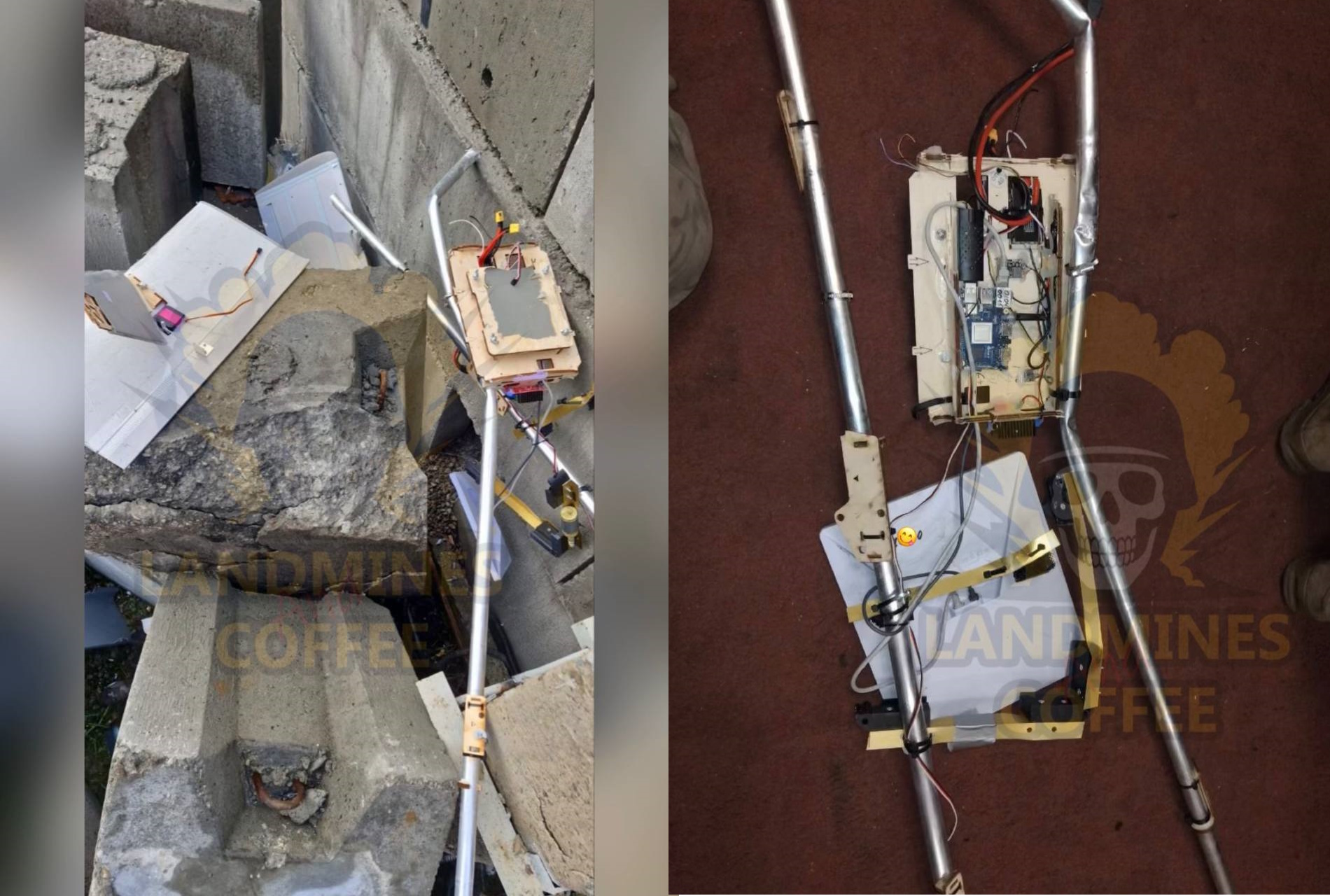
Ukrainian explosive ordnance disposal (EOD) specialists have identified a new and dangerous modification of Russian “Molniya” strike drones. Moscow forces have begun additionally booby‑trapping Starlinks by installing backup explosive charges, reports Dev.ua, citing Telegram channel "Mines and Coffee with Sandwiches!"
These charges are designed to detonate if the drone’s main warhead fails to explode after being shot down.
Backup detonation: a trap for sappers and trophy teams
According to EOD specialists, one such UAV was discovered approximately 40 km from the front line. After being intercepted, its main warhead failed to detonate and separated from the airframe upon impact.
The primary warhead consisted of two Soviet small-caliber anti-tank aviation bombs, PTAB-2.5KO, equipped with EDP-r electric detonators, and a Chinese blue-colored contact switch was used as the target sensor.
At the same time, the drone’s design included a separate backup charge specifically intended to destroy the Starlink terminal. This charge was assembled from:
- a 75 g TNT block,
- a VZD‑3M fuze,
- an MD‑5m detonator.
Sappers emphasize that if the main warhead fails to detonate, even a downed drone remains deadly during inspection, disassembly, or attempts to evacuate it as a “trophy.”
Starlink as a combat component: growing scale
The channel’s authors also claim that Russia has established a supply chain for Starlink terminals through documentation fraud, “parallel imports,” and account activation via third countries, despite SpaceX’s statements that it does not officially sell Starlink systems to Russia.
According to sapper estimates, the number of such kits has increased significantly. Russian troops are now widely installing satellite internet terminals on strike UAVs and are additionally attempting to prevent the safe recovery of the equipment after the drones are shot down.
In effect, this marks a transition to a new level of booby‑trapping where the threat is posed not only by the drone strike itself, but also by any attempt to come into contact with its wreckage.


