


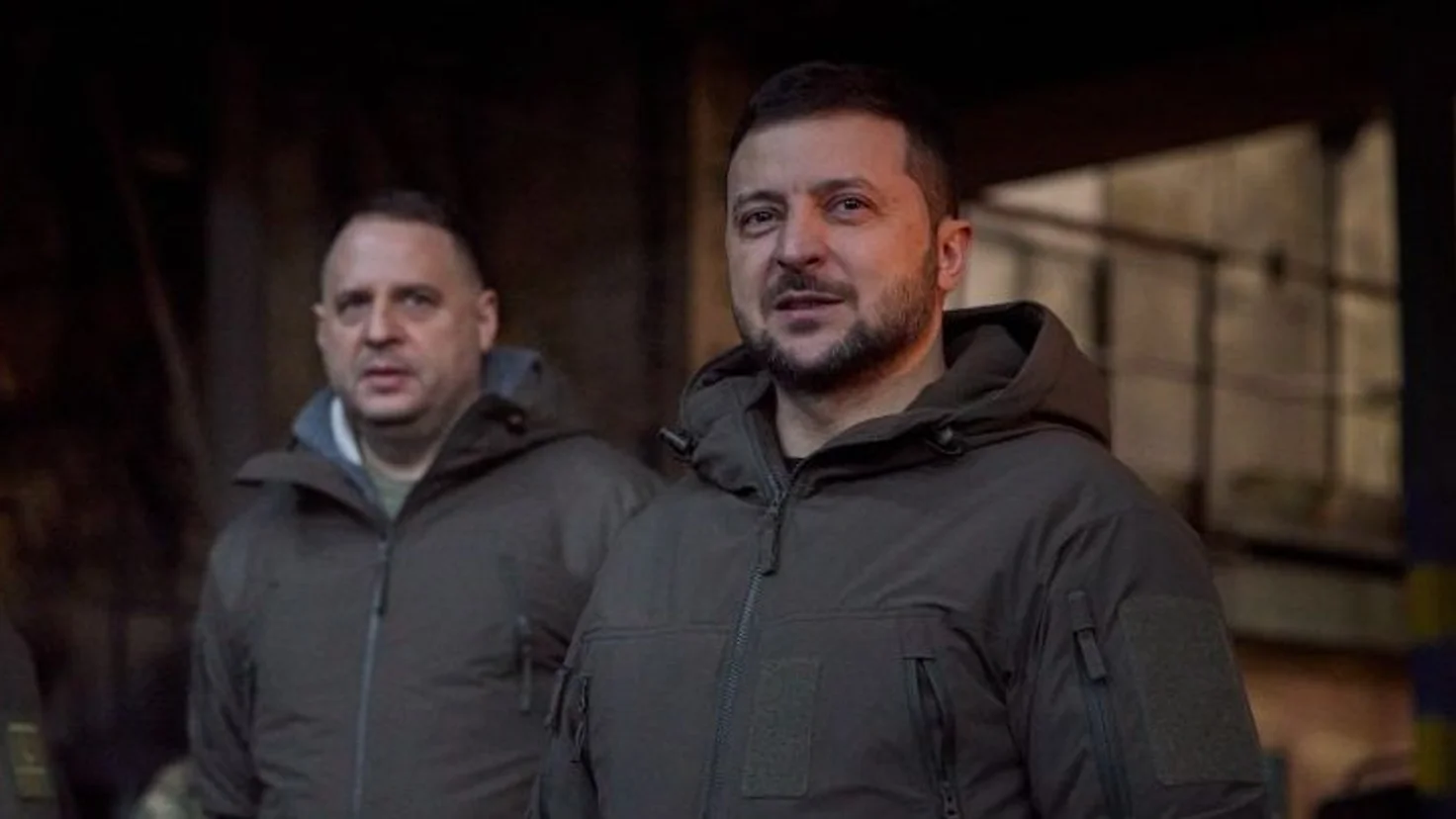
The first week of 2026 brought sweeping changes to Ukraine's wartime leadership. President Volodymyr Zelenskyy replaced the heads of military intelligence, civilian intelligence, the Security Service (SBU), and the State Border Guard Service while nominating a digital transformation pioneer to lead the Defense Ministry—all within days.
"Today, we have begun a substantial overhaul—internal changes to make Ukraine more resilient," Zelenskyy announced on 2 January.
The reshuffle follows the November downfall of Andriy Yermak, Zelenskyy's all-powerful chief of staff, who resigned after anti-corruption investigators raided his home as part of a $100 million embezzlement probe at state nuclear company Energoatom.
What changed
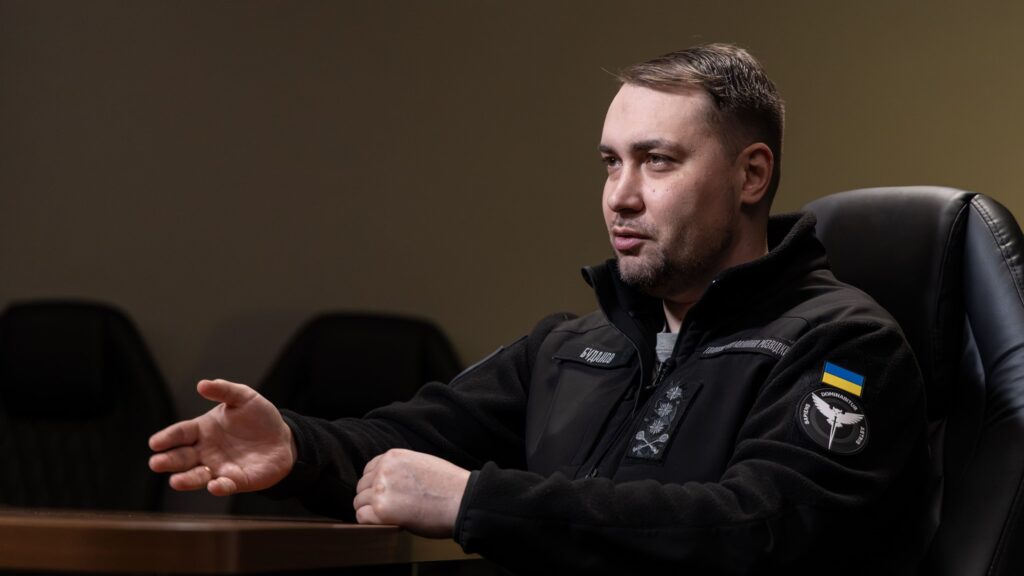
Presidential Office: Lt. Gen. Kyrylo Budanov, 39, now heads the Office of the President. Budanov transformed Ukraine's Main Intelligence Directorate (HUR) into one of Kyiv's most effective instruments of war—claiming responsibility for the October 2022 Crimean Bridge explosion, pioneering naval drone warfare that crippled Russia's Black Sea Fleet, and conducting strikes deep inside Russia. He has survived more than 10 assassination attempts.
Crucially for his new role: Budanov led Ukraine's delegation in secret talks with US and Russian representatives in Abu Dhabi in late November 2025. His deputy is Serhiy Kyslytsia, Ukraine's former UN representative known for eviscerating Russian diplomats' lies in real time at the Security Council.
Military Intelligence (HUR): Lt. Gen. Oleh Ivashchenko, previously head of the Foreign Intelligence Service (SZR), replaces Budanov. Before leading SZR, Ivashchenko served as Budanov's deputy at HUR from 2015-2024.
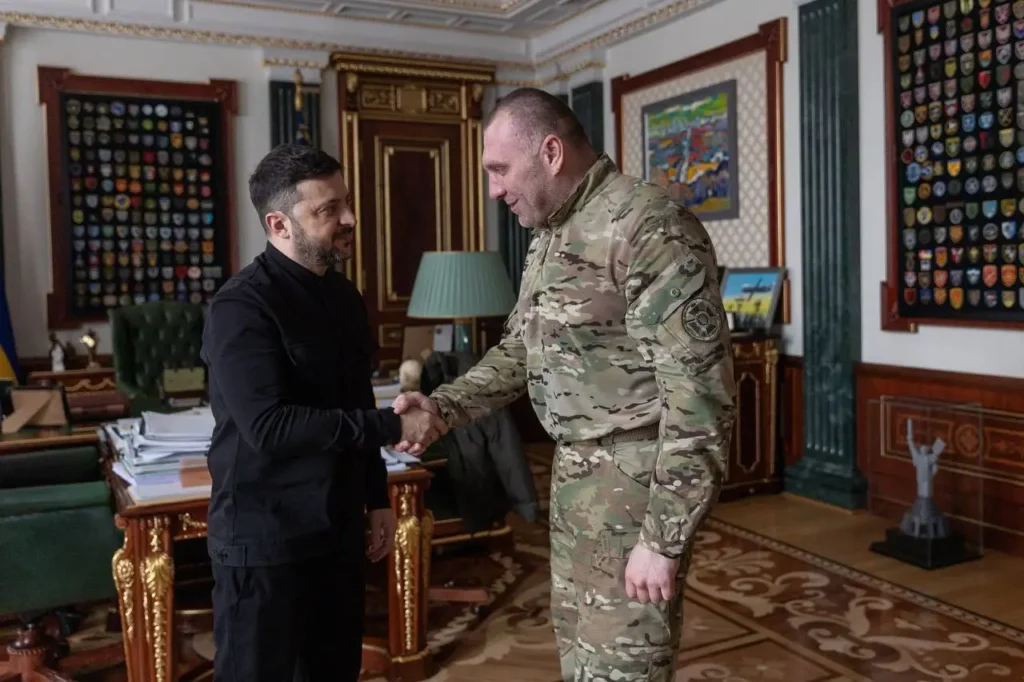
Security Service (SBU): Lt. Gen. Vasyl Maliuk has resigned under pressure. Maliuk was the architect of Ukraine's asymmetric warfare—his Operation Spiderweb destroyed over a third of Russia's strategic bomber fleet. His removal sparked rare public pushback from senior commanders, including Robert "Madyar" Brovdi and Joint Forces Commander Mykhailo Drapatyi.
Maliuk initially refused to resign, Ukrainska Pravda reported, telling Zelenskyy he had "several operations at the final stage, on the scale of Spiderweb" that abandoning "would be a crime." But after the president threatened to suspend him, Maliuk relented—concluding that "going into conflict with the president means harming the state."
Why the dismissal? Under his leadership, the SBU had arrested NABU detectives, accusing them of Russian ties—a move anti-corruption activists called an attack on investigators probing Zelenskyy's circle. But when NABU came for Yermak during the Energoatom probe, Maliuk switched sides: RBC-Ukraine reported that he "brought NABU and SAP leadership to negotiations with the president" rather than shielding Zelenskyy's chief of staff. MP Yaroslav Zheleznyak went further, claiming Maliuk refused Yermak's order to fabricate cases against NABU leadership.
Major General Yevhen Khmara, commander of the elite "Alpha" unit, serves as acting head.
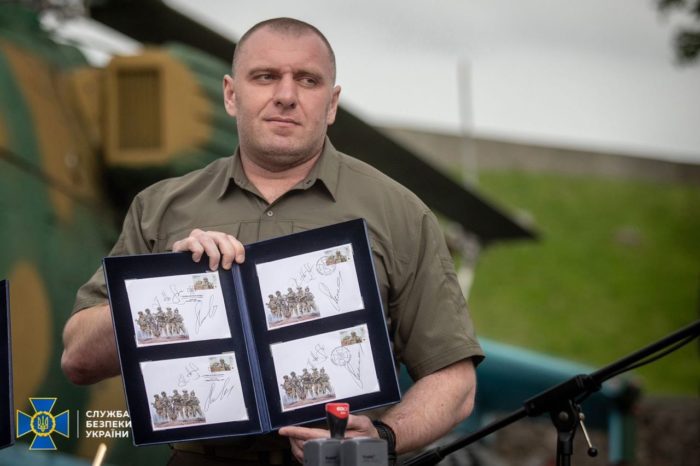
SBU Chief Vasyl Maliuk, architect of Ukraine’s historic “Spiderweb” operation that hit 41 Russian aircraft, resigns
Defense Ministry: Mykhailo Fedorov, 35, has been nominated as defense minister. Fedorov built Ukraine's drone warfare program from scratch—scaling production from volunteer workshops to approximately 200,000 drones monthly. His Diia app digitized government services for 20 million Ukrainians. He has long sought the Defense portfolio to implement his vision: a compact, tech-driven military that fights with machines rather than manpower.

Energy Ministry: Former Prime Minister Denys Shmyhal takes over the scandal-plagued portfolio. He was not the first choice—political scientist Volodymyr Fesenko revealed that "all other candidates refused. I know at least three people who were offered the job and said no" due to the catastrophic situation resulting from Russian shelling and the fallout of the corruption scandal in Energoatom involving Zelenskyy's dismissed right-hand man, Andriy Yermak.
Border Guard Service: Lt. Gen. Serhiy Deineko has been dismissed after years of criticism over illegal border crossings by draft evaders.
Why now?
Speaking to journalists on 3 January after meeting national security advisers from 18 partner countries, Zelenskyy framed the changes as dual preparation:
Budanov moves to lead peace negotiations, while Fedorov takes Defense to prepare for technological war if diplomacy fails.
"There is the first path—not as painful—a peaceful, diplomatic path. And it is number one for me personally," Zelenskyy said. "But if our partners don't force Russia to stop the war, there will be another path: to defend ourselves. And for this moment, fresh forces will be needed."
"That is why I am going with a parallel reset of all structures. Just in case."
However, Fesenko identifies three reasons behind the reshuffle.
- First, demonstrating renewal. "There was a demand in society and among elites for renewal—a feeling of stagnation," Fesenko told Euromaidan Press. The appointments of Budanov and Fedorov—both of whom clashed with Yermak—"prove that Yermak is not in charge."
- Second, institutional strengthening. "Zelenskyy understands that we need to concentrate resources and find new approaches to endure and win," Fesenko said. The war is grinding on, and Ukraine needs to fight smarter.
- Third, showing who's boss. "By appointing Budanov and moving various influential people, Zelenskyy is showing: he is the key figure in the power system, and he decides who works where."
Fesenko noted a striking pattern: "Among those who helped 'fire' Yermak were Budanov, Fedorov, and Maliuk... Now all three have been moved from their positions." He suggested this demonstrates that "the main person in the Ukrainian power structure is Zelenskyy—not the heads of security agencies, nor the people who influenced Yermak's departure."
State strengthening or political survival?
Not everyone accepts Zelenskyy's official framing. A competing interpretation has emerged: that the reshuffle is primarily about neutralizing political rivals.
The logic: In opinion polls, Budanov consistently ranks among the top three potential presidential candidates, behind only former Commander-in-Chief Valery Zaluzhny and Zelenskyy himself. A recent Socis poll found that in a hypothetical runoff between Zelenskyy and Budanov, the spy chief would win 56% to 44%.
By moving Budanov from military intelligence—where he built an independent power base and cult status—to the Presidential Office, Zelenskyy potentially separates him from the institution he built, subjects him to the political toxicity that destroyed Yermak, and positions himself to receive credit for any negotiating successes.
As RBC-Ukraine reported: "According to Ukrainian political tradition, the head of the President's Office often becomes a sponge that absorbs all the negativity directed at the government."
The same logic applies to Fedorov. As Defense Minister during a grinding war of attrition, he will inevitably be associated with every territorial loss and mobilization controversy.
Triukhan, an international lawyer and former diplomat, sees the reshuffle as Zelenskyy attempting to rebuild his power structure without fundamentally changing the system.
"The fact that President Zelenskyy deliberated for more than a month after being forced to fire Yermak indicates that he lacks a strategy for transitioning to a different, constitutional model of public administration," Triukhan told Euromaidan Press.
Rather than creating a government of national unity, Zelenskyy is pursuing "decentralization of power within his team"—making individual ministers more autonomous while keeping ultimate authority concentrated in his hands.
On Budanov specifically, Triukhan is cautiously optimistic: "He is the most qualified state-level manager for this role. Whether this will benefit him in the long run remains to be seen. We do not yet know if Zelenskyy is grooming a successor or trying to 'burn' a potential rival."
What changes for each institution
Foreign policy: Kyslytsia "will be the special negotiator for President Zelenskyy—responsible for international and diplomatic affairs within the Office of the President," Fesenko explained. Budanov "will support the President's activities as Supreme Commander-in-Chief and handle military-political affairs, also influencing the negotiation process, likely unofficially."
As for Foreign Minister Sybiha? "He handles the Ministry's work, but he does not take a direct part in negotiations to end the war. He hasn't before, and he isn't now."
Key foreign policy decisions will continue to be made in the Presidential Office, not the Foreign Ministry.
Triukhan sees a troubling pattern:
"Negotiations should be handled by diplomats. Here, we see Zelenskyy sticking to his pattern of distrusting professionals."
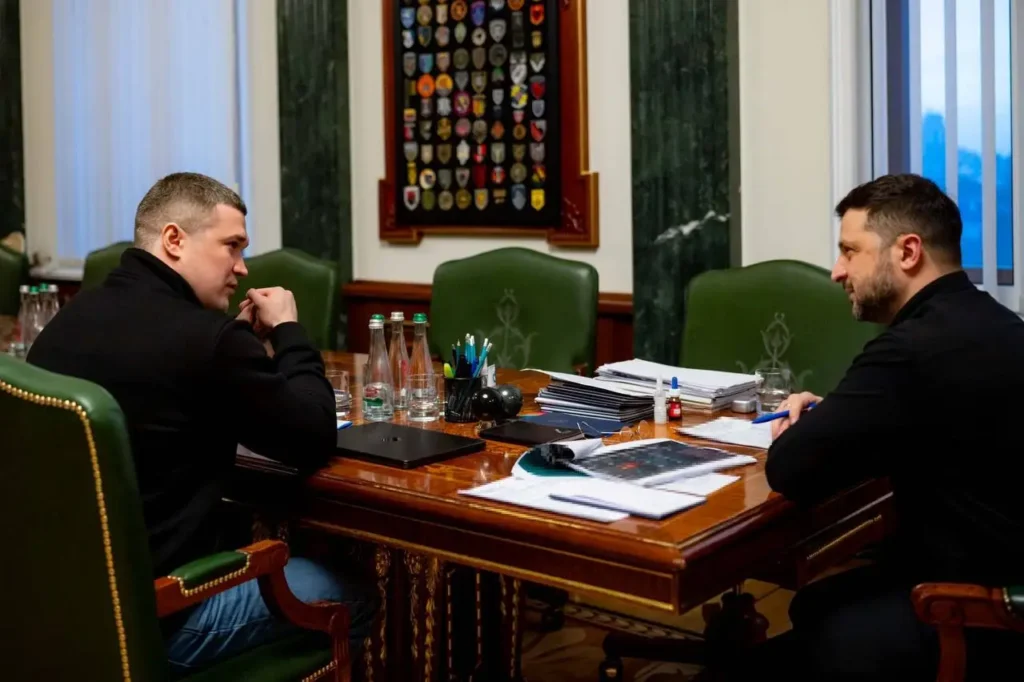
Defense Ministry: Fesenko outlined Fedorov's core thesis: "We cannot compete with Russia in terms of raw resources—neither in materials nor in manpower. We must fight asymmetrically, with an emphasis on modern technology."
Will Fedorov push to replace Commander-in-Chief Syrskyi? Zelenskyy told journalists he has no intention of removing him. But the two men now flanking the president both have issues with the general:Fesenko revealed that Budanov "did not support certain decisions regarding Syrskyi, specifically concerning the Kursk operation," while Fedorov has long advocated replacing Soviet-style commanders with tech-savvy officers.
Triukhan believes the pressure will tell:
"If Fedorov really becomes defense minister, then Syrskyi's days are numbered. He will inevitably replace not only Syrskyi but also the generals who are still trying to fight like a 'small Soviet army.'"
The replacements will come from "the younger generation of colonels and generals who have built their careers during this war, hold top-tier Western educations, and have already implemented modern technologies at the corps or brigade level."
SBU: The appointment of Yevhen Khmara—a combat commander with no experience in internal security operations—and the promotion of counterintelligence officer Oleksandr Poklad to First Deputy suggest the agency will "pivot toward the war effort rather than fighting political opponents," according to Triukhan.
HUR: The fact that Ivashchenko—whom some Ukrainian media sources link to Yermak's circle—was chosen to replace Budanov, rather than someone from Budanov's inner circle, raises questions about whether Zelenskyy truly wants a clean break from his former chief of staff.
As Inna Vedernikova of Zerkalo Nedeli wrote: "Let us remind the forgetful once again: this is not Yermak's system. This is Zelenskyy's system. All appointments were personally approved by the president."
Energy Ministry: Fesenko revealed the difficulty of filling this post: "All other candidates for the Minister of Energy refused. I know of at least three people who were offered the job and said no."
Why? "The catastrophic situation in energy due to Russian shelling. The fallout of the [Energoatom scandal with Yermak] and the scale of corruption problems discovered there. Candidates realized that if you take that job, you inherit a mountain of problems you might not be able to solve, a pile of risks, and zero reputational gain."
Shmyhal initially refused too, but "when the President asks persuasively, it's hard to say no."
The EU dimension
The EU ties funding to anti-corruption progress. Triukhan emphasizes that "for Europeans, it is vital to see practical results in the fight against corruption, the rebooting of the State Bureau of Investigation, the overhaul of the Prosecutor General's Office, and the completion of judicial reform."
Zelenskyy has already announced that one of Budanov's tasks is coordinating amendments to the SBI law—a signal that Brussels is watching. Whether the new team delivers results that satisfy the EU will be a key test.
What comes next
State Bureau of Investigation: Zelenskyy ordered a presidential bill to "update" the agency. Budanov has been tasked with amendments to the SBI law.
Border Guard Service: Interior Minister Ihor Klymenko is presenting candidates to replace Deineko.
Dmytro Kuleba: The former foreign minister—ousted under Yermak in 2024—met with Zelenskyy on 5 January. "I am glad that Dmytro is part of Ukraine's team," Zelenskyy said. His return would mark a clear break from the Yermak era.
Chrystia Freeland: Canada's former finance minister was appointed as Zelenskyy's unpaid economic adviser. Her USMCA negotiating experience could prove valuable given Trump's tariff-focused approach.
How to judge
Several metrics will reveal within months whether these changes serve the state or primarily the president:
- Battlefield: Has the enemy been stopped? Has Fedorov's technological focus translated into combat effectiveness?
- Diplomacy: Have negotiations yielded results? Has Budanov's involvement improved Ukraine's position with the Trump administration?
- Anti-corruption: Will pressure on NABU decrease after Yermak's departure? Will the SBI undergo genuine reform?
- Personnel patterns: If Syrskyi—unpopular but loyal—remains while effective commanders are sidelined, it will signal that loyalty trumps competence.
As Fesenko observed: "Every President of Ukraine, without exception, has tried to be the central figure in the power system." Under Zelenskyy, "a de facto presidential system has emerged. He is used to working as a sole leader from his time in business." But Fesenko believes this is temporary: "After post-war elections, the situation will change again, and we will return to a parliamentary-presidential model."
Whether this particular centralization serves Ukraine's interests—or merely Zelenskyy's political survival—may only become clear when the war ends and Ukrainians finally get to vote.


